*/
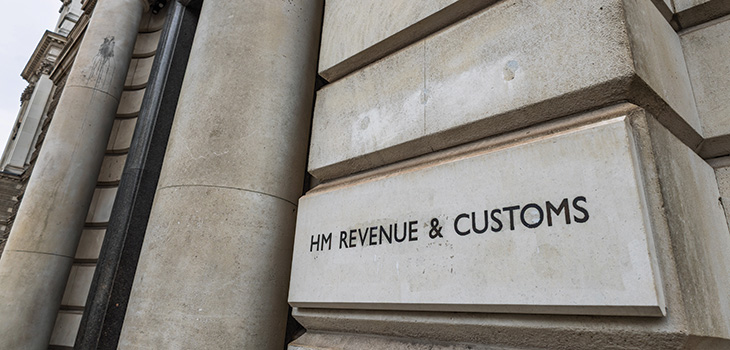
Why should you go to the tax Bar? Well, why do you want to be a barrister?
Is it because of the intellectual challenge? If so, there are few areas of law as challenging as revenue law. The statute book is as long as your arm (possibly longer) and no one could possibly know it all. Each instruction must be taken on its own merits and treated a little like a logic puzzle and a little like a detective exercise. You will need logic to help you piece together the elements of the tax code so that they make sense in your mind, and, in due course, in the judge’s mind. You will need your detective’s hat to sense when something does not smell right, and to judge which rabbit holes to go down, and how far.
Do you want a varied practice? If so, there are few areas of law as varied as tax. Tax is not a distinct code that sits as an island outside the rest of our body of law. It is more like the second layer on a cake. You cannot be a good tax lawyer without being a good trusts lawyer, because trusts come up all the time in tax planning. You must also be a good property lawyer, because if tax is charged on the ‘ownership’ of property you will need to argue when a purchaser becomes the owner of property (is it on exchange of contracts or completion?). And, very importantly, you must be a brilliant public lawyer because The Commissioners for His Majesty’s Revenue and Customs (HMRC) are subject to public law and increasingly the only way to challenge actions of the Commissioners is by a claim for judicial review.
Do you want to be an advocate? Tax cases often reach the highest level and in our Chambers of 11 barristers there have already been five Supreme Court appearances in the first six months of the year. Tax is a great specialism from which to get onto the government panel, and panel work yields many opportunities to be an advocate.
Tax probably is not for you if you prefer to go into an area of law that stands still, because the tax code is constantly changing and you can never rest on your laurels or assume you know the answer to a problem.
And tax might not be for you if you are bored by politics. Decisions as to what, how and who to tax are fundamentally political decisions, and so questions of statutory interpretation are often made by reference to Hansard and argument on what were the policy (read: political) reasons behind the taxing provision.
You will also have complete freedom to determine your own work-life balance in a way that is unique this part of the Bar. First, that is because HMRC makes an effort to be reasonable and fair litigators. Accordingly, you will not spend your career responding to aggressive correspondence intentionally sent at 5pm on a Friday or arguing about whether or not you could please have a one-week extension. This means a nicer weekend. It also means a nicer week, where you can think about and consider the issues which are central to the dispute between the parties.
It is also a career that you are free to lead as you wish. For some, this means working incredibly hard for ten months of the year, and having two months off completely. For others it is working from home and picking their children up from school most days. There is no one telling you how, where or how much to work. That takes some getting used to!

Why should you go to the tax Bar? Well, why do you want to be a barrister?
Is it because of the intellectual challenge? If so, there are few areas of law as challenging as revenue law. The statute book is as long as your arm (possibly longer) and no one could possibly know it all. Each instruction must be taken on its own merits and treated a little like a logic puzzle and a little like a detective exercise. You will need logic to help you piece together the elements of the tax code so that they make sense in your mind, and, in due course, in the judge’s mind. You will need your detective’s hat to sense when something does not smell right, and to judge which rabbit holes to go down, and how far.
Do you want a varied practice? If so, there are few areas of law as varied as tax. Tax is not a distinct code that sits as an island outside the rest of our body of law. It is more like the second layer on a cake. You cannot be a good tax lawyer without being a good trusts lawyer, because trusts come up all the time in tax planning. You must also be a good property lawyer, because if tax is charged on the ‘ownership’ of property you will need to argue when a purchaser becomes the owner of property (is it on exchange of contracts or completion?). And, very importantly, you must be a brilliant public lawyer because The Commissioners for His Majesty’s Revenue and Customs (HMRC) are subject to public law and increasingly the only way to challenge actions of the Commissioners is by a claim for judicial review.
Do you want to be an advocate? Tax cases often reach the highest level and in our Chambers of 11 barristers there have already been five Supreme Court appearances in the first six months of the year. Tax is a great specialism from which to get onto the government panel, and panel work yields many opportunities to be an advocate.
Tax probably is not for you if you prefer to go into an area of law that stands still, because the tax code is constantly changing and you can never rest on your laurels or assume you know the answer to a problem.
And tax might not be for you if you are bored by politics. Decisions as to what, how and who to tax are fundamentally political decisions, and so questions of statutory interpretation are often made by reference to Hansard and argument on what were the policy (read: political) reasons behind the taxing provision.
You will also have complete freedom to determine your own work-life balance in a way that is unique this part of the Bar. First, that is because HMRC makes an effort to be reasonable and fair litigators. Accordingly, you will not spend your career responding to aggressive correspondence intentionally sent at 5pm on a Friday or arguing about whether or not you could please have a one-week extension. This means a nicer weekend. It also means a nicer week, where you can think about and consider the issues which are central to the dispute between the parties.
It is also a career that you are free to lead as you wish. For some, this means working incredibly hard for ten months of the year, and having two months off completely. For others it is working from home and picking their children up from school most days. There is no one telling you how, where or how much to work. That takes some getting used to!

The Chair of the Bar reports back
Susie Griffin on the admin that keeps barristers from billable work
Clement Cowley, Partner at The Penny Group, explains how global events can influence the performance of pensions and ISAs, and why taking a long-term approach to investing is often the most effective strategy
Mário Barroso, Head of R&D and Method Development at AlphaBiolabs, discusses what family law professionals need to know about hallucinogens, from the main hallucinogenic drugs encountered in family proceedings, to their effects and the testing options available
Harmony Christian Ministries is the latest charity to benefit from a £500 donation from AlphaBiolabs via the company’s Giving Back initiative
By David Green

At the start of her term, Chair of the Bar 2026 Kirsty Brimelow KC set out a series of priorities for the year ahead. One of those priorities was children in the justice system
As the world becomes more digital, Barbara Vinagre Mota examines international research into the mental health consequences of judges’ exposure to graphic and immersive evidence, highlighting the importance of support systems
In an era of patient-centred care and growing concern over misconduct in medical settings, why do women still lack the right to choose women consultants for examination and treatment? Charles Davey investigates
Reviewed by Daniel Barnett
James McNeill Whistler at Tate Britain until 27 September Rothko in Florence at Palazzo Strozzi until 23 August Reviewed by Stephen Cragg KC