*/
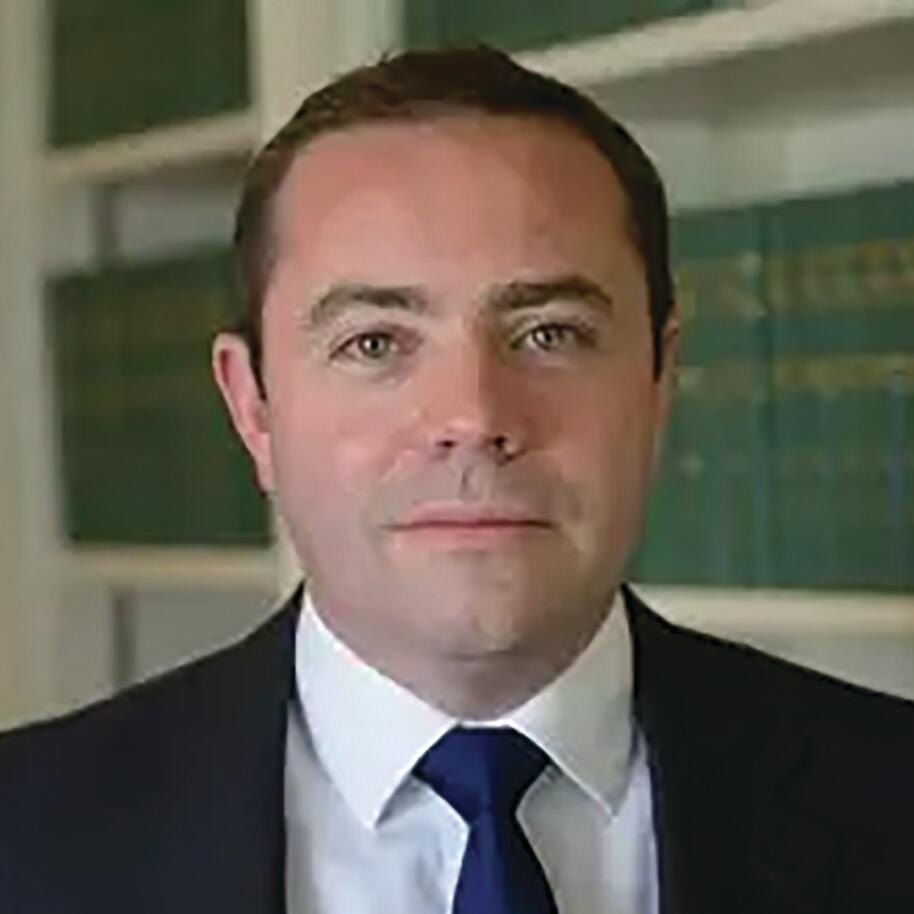
Practice area insight from Luke Harris
First of all: what do we mean by the Chancery Bar? Unlike most other fields, where the area in question is described by the type of work done (e.g. the criminal Bar, the employment Bar, the personal injury Bar and so on), the label ‘Chancery’ harks back to the old Court of Chancery, which was castigated by Charles Dickens in Bleak House and which was abolished as long ago as in 1875. One answer to the question ‘what is Chancery work’ is that the Chancery Bar does the same sort of work as was historically assigned to the old Court of Chancery, heavily suffused with the principles of equity which that court administered. Such work is now assigned to the Chancery Division of the High Court (part of the Business and Property Courts of England and Wales) and includes trusts and estates, probate, partnerships and company law. The Chancery Division is therefore the ‘home’ court of most Chancery practitioners.
At first blush, this may all sound rather dry but principles of trusts and equity lie at the heart of many modern business disputes, commonly described as ‘commercial Chancery’ matters. This is the subset of Chancery practice dealing with commercial disputes involving equitable or company principles, for example: company and partnership cases, commercial fraud and asset recovery, insolvency and restructuring and trusts and fiduciary obligations in a commercial setting. Commercial chancery is usually distinguished from ‘traditional Chancery’ which tends to involve such things as disputes over inheritance and wills (including fraud and forgery cases), private trusts, capital taxation and charity matters. In reality, though, the boundary between commercial and traditional Chancery is porous and these labels are just a convenient shorthand for describing where the centre of gravity lies in the work of individual practitioners and sets of chambers.
Life at the Chancery Bar is intellectually demanding. Not only do our cases usually throw up complex fact patterns but, as often as not, difficult or novel points of law. There is no shortage of food for thought. However, the demands of modern practice do not always allow for the luxury of time spent perusing old textbooks in the library basement so, as elsewhere at the Bar, it is important to be able to think hard and fast and be bold with your decision-making, even with the most conceptually difficult questions. True, Chancery practitioners inevitably spend less time in court than, for example, our criminal cousins and there is a strong emphasis on written advocacy and advisory work; but our cases are every bit as engaging with a great deal of human interest. In the traditional chancery sphere, for example, even the most modest will validity dispute can throw up all sorts of unexpected twists, turns and family dynamics.
The Chancery Bar is an extremely sociable place. Throughout the year there are many domestic and international conferences and events at which barristers and solicitors mix. Chancery practice inevitably has a very high level of cross-referral for conflicts reasons, and it is good business for solicitors and barristers to meet and forge strong working relationship and friendships within the profession. It is also good fun, and the Chancery Bar is notoriously gregarious and sociable. Conferences abroad can also be an important part of building up an ‘offshore’ practice in jurisdictions such as the Cayman Islands, BVI, Bermuda and the Channel Islands (to be contrasted with an ‘onshore’ practice based on domestic work).
When recruiting pupils we look for strong academic credentials and an analytical mind coupled with the ability to communicate clearly, fluently and in an engaging way. We also look for candidates with a proven interest in Chancery specifically, which means a track record of mini-pupillages in Chancery chambers. Competition for pupillages is fierce but it is well worth the effort – Chancery, in all its shapes and sizes, is a wonderful area in which to practise.
First of all: what do we mean by the Chancery Bar? Unlike most other fields, where the area in question is described by the type of work done (e.g. the criminal Bar, the employment Bar, the personal injury Bar and so on), the label ‘Chancery’ harks back to the old Court of Chancery, which was castigated by Charles Dickens in Bleak House and which was abolished as long ago as in 1875. One answer to the question ‘what is Chancery work’ is that the Chancery Bar does the same sort of work as was historically assigned to the old Court of Chancery, heavily suffused with the principles of equity which that court administered. Such work is now assigned to the Chancery Division of the High Court (part of the Business and Property Courts of England and Wales) and includes trusts and estates, probate, partnerships and company law. The Chancery Division is therefore the ‘home’ court of most Chancery practitioners.
At first blush, this may all sound rather dry but principles of trusts and equity lie at the heart of many modern business disputes, commonly described as ‘commercial Chancery’ matters. This is the subset of Chancery practice dealing with commercial disputes involving equitable or company principles, for example: company and partnership cases, commercial fraud and asset recovery, insolvency and restructuring and trusts and fiduciary obligations in a commercial setting. Commercial chancery is usually distinguished from ‘traditional Chancery’ which tends to involve such things as disputes over inheritance and wills (including fraud and forgery cases), private trusts, capital taxation and charity matters. In reality, though, the boundary between commercial and traditional Chancery is porous and these labels are just a convenient shorthand for describing where the centre of gravity lies in the work of individual practitioners and sets of chambers.
Life at the Chancery Bar is intellectually demanding. Not only do our cases usually throw up complex fact patterns but, as often as not, difficult or novel points of law. There is no shortage of food for thought. However, the demands of modern practice do not always allow for the luxury of time spent perusing old textbooks in the library basement so, as elsewhere at the Bar, it is important to be able to think hard and fast and be bold with your decision-making, even with the most conceptually difficult questions. True, Chancery practitioners inevitably spend less time in court than, for example, our criminal cousins and there is a strong emphasis on written advocacy and advisory work; but our cases are every bit as engaging with a great deal of human interest. In the traditional chancery sphere, for example, even the most modest will validity dispute can throw up all sorts of unexpected twists, turns and family dynamics.
The Chancery Bar is an extremely sociable place. Throughout the year there are many domestic and international conferences and events at which barristers and solicitors mix. Chancery practice inevitably has a very high level of cross-referral for conflicts reasons, and it is good business for solicitors and barristers to meet and forge strong working relationship and friendships within the profession. It is also good fun, and the Chancery Bar is notoriously gregarious and sociable. Conferences abroad can also be an important part of building up an ‘offshore’ practice in jurisdictions such as the Cayman Islands, BVI, Bermuda and the Channel Islands (to be contrasted with an ‘onshore’ practice based on domestic work).
When recruiting pupils we look for strong academic credentials and an analytical mind coupled with the ability to communicate clearly, fluently and in an engaging way. We also look for candidates with a proven interest in Chancery specifically, which means a track record of mini-pupillages in Chancery chambers. Competition for pupillages is fierce but it is well worth the effort – Chancery, in all its shapes and sizes, is a wonderful area in which to practise.
Practice area insight from Luke Harris

The Chair of the Bar reports back
Susie Griffin on the admin that keeps barristers from billable work
Clement Cowley, Partner at The Penny Group, explains how global events can influence the performance of pensions and ISAs, and why taking a long-term approach to investing is often the most effective strategy
Mário Barroso, Head of R&D and Method Development at AlphaBiolabs, discusses what family law professionals need to know about hallucinogens, from the main hallucinogenic drugs encountered in family proceedings, to their effects and the testing options available
Harmony Christian Ministries is the latest charity to benefit from a £500 donation from AlphaBiolabs via the company’s Giving Back initiative
By David Green

At the start of her term, Chair of the Bar 2026 Kirsty Brimelow KC set out a series of priorities for the year ahead. One of those priorities was children in the justice system
As the world becomes more digital, Barbara Vinagre Mota examines international research into the mental health consequences of judges’ exposure to graphic and immersive evidence, highlighting the importance of support systems
In an era of patient-centred care and growing concern over misconduct in medical settings, why do women still lack the right to choose women consultants for examination and treatment? Charles Davey investigates
Reviewed by Daniel Barnett
James McNeill Whistler at Tate Britain until 27 September Rothko in Florence at Palazzo Strozzi until 23 August Reviewed by Stephen Cragg KC