*/
A strange summer unfolds. By William Byfield
I think that a certain person hasn’t realised that it is going to be far easier than he thinks to move the centre of the Kingdom much further north. I have been in Northumberland recently with a family whose oldest son, Tom, specialises in teaching economic history. I remember him telling me when he was a nine-year-old schoolboy that cities are not created for people, but by people. He thought then that we should decamp from all the towns and cities of the industrial revolution to coastal areas all linked by canals to transport heavy goods. His perspicacious history teacher awarded him a prize in a school competition and now I am rather inclined to think that he might have had a point.
It turned out that Tom had a new thought, although it was based on the same principle: that the movement of peoples is driven by need. ‘The north is going to be the place,’ he said. ‘Why are you really here, William? Driven by the heat!’ As before, all those years ago, I had a funny feeling that he again might be right.
By the time I returned to London, the new Prime Minister had been installed. I had thought that it was only the Lord Chancellor’s Office which revolved like one of those older hotel entrance doors, but apparently not.
There is a familiarity in the courts, however: either modernish buildings with intermittent air-conditioning but an overall pall of decay or wonderful old buildings with no cooling and bits falling off all over the place. One wonders why Historic England and the like don’t make more of a fuss. I was in the latter type of building as term ended in front of a deadly trio headed by Lady Justice Streetly to argue a rather hopeless point. I hoped, like a kind vet, that they would just hear me for the briefest possible time and then put my application to sleep.
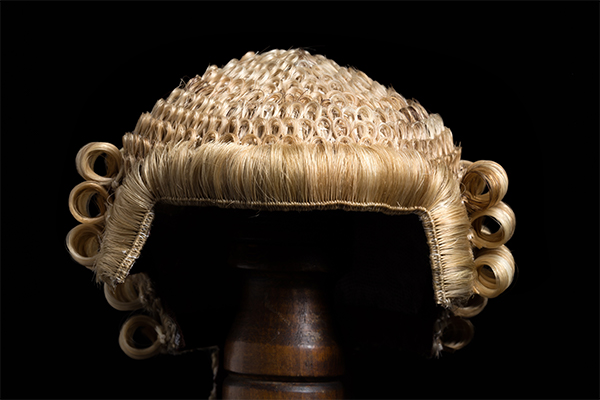
As the day wore on, the temperature in the courtroom rose. By the time I got to my feet the scene resembled a cross between The Day the Earth Caught Fire and the final moments of Death in Venice when Dirk Bogarde’s makeup begins to run as he tries to rise from his deckchair while having some terminal event as the object of his character’s desire walks into the sea. Lady Justice Streetly’s normally frosted makeup began to look exceptionally frayed. ‘If it helps Mr Byfield, you can remove your wig,’ she said. My lay client, beamed in via prison video link from a room that looked as though it had neither air nor conditioning, had his head on a wooden table.
The point I was arguing was relatively discrete and involved the issue of whether the sentencing judge had or had not performed the balancing exercise of aggravating and mitigating features correctly and, if not, whether he had failed to such a degree that it imperilled the result. I don’t know how many pieces of guidance he had or had not considered, some of which seemed to be directly contradictory, and my inner sympathies were rather with him in his attempt to wriggle through the excessive micro-management that constitutes modern sentencing.
In the past, it was considered that the decent thing to do was to let counsel arguing a weak point stutter on briefly in deathly silence until the moment came when the appellate court could say: ‘Thank you, you have said everything that could possibly have been said.’ Lady Justice Streetly, however, subjected me to the same sort of interrogation as Luther defending his 95 Theses. She even did likewise to my poor opponent.
Then the film in my mind shifted to Lawrence of Arabia, played brilliantly by Peter O’Toole, crossing the Devil’s Anvil in the Nefud Desert on his way to Aqaba, as Streetly LJ delivered a judgment that could fairly have been described as detailed. How was it that in earlier years judges like Horace Avory could manage it in about a page; his voice, described as sounding like cracked parchment, dealing simply with the point at issue. He didn’t have a section entitled ‘Discussion’.
Safely home to my sauna at last. At least the weather forecast described the heatwave as ‘peaking by Wednesday’ but I noticed the weekly summary indicated that the torture would return within a few days. I just wish that the forecasters could wipe off their faces that slight sadistic smile so beloved of our nation when delivering bad news.
William Byfield is the pseudonym of a senior member of the Bar. Gutteridge Chambers, and the events that happen there, are entirely fictitious.
I think that a certain person hasn’t realised that it is going to be far easier than he thinks to move the centre of the Kingdom much further north. I have been in Northumberland recently with a family whose oldest son, Tom, specialises in teaching economic history. I remember him telling me when he was a nine-year-old schoolboy that cities are not created for people, but by people. He thought then that we should decamp from all the towns and cities of the industrial revolution to coastal areas all linked by canals to transport heavy goods. His perspicacious history teacher awarded him a prize in a school competition and now I am rather inclined to think that he might have had a point.
It turned out that Tom had a new thought, although it was based on the same principle: that the movement of peoples is driven by need. ‘The north is going to be the place,’ he said. ‘Why are you really here, William? Driven by the heat!’ As before, all those years ago, I had a funny feeling that he again might be right.
By the time I returned to London, the new Prime Minister had been installed. I had thought that it was only the Lord Chancellor’s Office which revolved like one of those older hotel entrance doors, but apparently not.
There is a familiarity in the courts, however: either modernish buildings with intermittent air-conditioning but an overall pall of decay or wonderful old buildings with no cooling and bits falling off all over the place. One wonders why Historic England and the like don’t make more of a fuss. I was in the latter type of building as term ended in front of a deadly trio headed by Lady Justice Streetly to argue a rather hopeless point. I hoped, like a kind vet, that they would just hear me for the briefest possible time and then put my application to sleep.
As the day wore on, the temperature in the courtroom rose. By the time I got to my feet the scene resembled a cross between The Day the Earth Caught Fire and the final moments of Death in Venice when Dirk Bogarde’s makeup begins to run as he tries to rise from his deckchair while having some terminal event as the object of his character’s desire walks into the sea. Lady Justice Streetly’s normally frosted makeup began to look exceptionally frayed. ‘If it helps Mr Byfield, you can remove your wig,’ she said. My lay client, beamed in via prison video link from a room that looked as though it had neither air nor conditioning, had his head on a wooden table.
The point I was arguing was relatively discrete and involved the issue of whether the sentencing judge had or had not performed the balancing exercise of aggravating and mitigating features correctly and, if not, whether he had failed to such a degree that it imperilled the result. I don’t know how many pieces of guidance he had or had not considered, some of which seemed to be directly contradictory, and my inner sympathies were rather with him in his attempt to wriggle through the excessive micro-management that constitutes modern sentencing.
In the past, it was considered that the decent thing to do was to let counsel arguing a weak point stutter on briefly in deathly silence until the moment came when the appellate court could say: ‘Thank you, you have said everything that could possibly have been said.’ Lady Justice Streetly, however, subjected me to the same sort of interrogation as Luther defending his 95 Theses. She even did likewise to my poor opponent.
Then the film in my mind shifted to Lawrence of Arabia, played brilliantly by Peter O’Toole, crossing the Devil’s Anvil in the Nefud Desert on his way to Aqaba, as Streetly LJ delivered a judgment that could fairly have been described as detailed. How was it that in earlier years judges like Horace Avory could manage it in about a page; his voice, described as sounding like cracked parchment, dealing simply with the point at issue. He didn’t have a section entitled ‘Discussion’.
Safely home to my sauna at last. At least the weather forecast described the heatwave as ‘peaking by Wednesday’ but I noticed the weekly summary indicated that the torture would return within a few days. I just wish that the forecasters could wipe off their faces that slight sadistic smile so beloved of our nation when delivering bad news.
A strange summer unfolds. By William Byfield

The Chair of the Bar reports back
Susie Griffin on the admin that keeps barristers from billable work
Clement Cowley, Partner at The Penny Group, explains how global events can influence the performance of pensions and ISAs, and why taking a long-term approach to investing is often the most effective strategy
Mário Barroso, Head of R&D and Method Development at AlphaBiolabs, discusses what family law professionals need to know about hallucinogens, from the main hallucinogenic drugs encountered in family proceedings, to their effects and the testing options available
Harmony Christian Ministries is the latest charity to benefit from a £500 donation from AlphaBiolabs via the company’s Giving Back initiative
By David Green

At the start of her term, Chair of the Bar 2026 Kirsty Brimelow KC set out a series of priorities for the year ahead. One of those priorities was children in the justice system
As the world becomes more digital, Barbara Vinagre Mota examines international research into the mental health consequences of judges’ exposure to graphic and immersive evidence, highlighting the importance of support systems
In an era of patient-centred care and growing concern over misconduct in medical settings, why do women still lack the right to choose women consultants for examination and treatment? Charles Davey investigates
Reviewed by Daniel Barnett
James McNeill Whistler at Tate Britain until 27 September Rothko in Florence at Palazzo Strozzi until 23 August Reviewed by Stephen Cragg KC