*/
There are points in life that are hammered into the work road as signposts. Education, exams, degree and first job. The rest is a series of twists and turns and bumps, with the odd reverse. The road itself changes and the people on it change, including ourselves.
I don’t much like the concept of linear journeys. I see a vast plane where it’s good to roam. That roaming can be within yourself.
I was brought up in Lancashire, near Chorley. Both my parents started work at 15 years old. My dad worked on the factory floor as an apprentice in engineering. My mum worked as a sewist. They met in a hiking club in Wigan. I suppose that’s why mountains are in my blood. I let out a deep sigh when I’m on a summit, whether on skis or in hiking boots.
Education was valued in our home as the scrubbed steps into a profession. Career advice was stunted and lacked vision, with choices of medicine or law being the direction of travel. I read law at Birmingham University and made friends for life.
In my second year, I entered the Law Faculty Mooting Competition. The final was judged by Sir Stephen Brown LJ; former President of the Family Division and the winner was awarded by Lord Goff at a formal dinner. I remember an outsider shadow bouncing alongside me as I clutched the lectern. When I won, I was presented with a cup which could have been engraved ‘self-belief’. That was the moment that I thought I could be a good barrister.
I always have felt fortunate and have tried to give back. At university each year, a group of us fundraised and took deprived children from Inner City Birmingham on holiday. The children were selected by social workers. I remember their excitement at being taken to the sea for the first time. I think of them sometimes and wonder if they might have been able to reach the possibilities that we saw in them.
My local authority, Lancashire County Council, provided my grant through university and the Bar course. Gray’s Inn awarded me a scholarship and the securing of a pupillage and grant at 2 Crown Office Row (now Lyttleton Chambers) meant that I was on my way to becoming a barrister.
I was called to the Bar in 1991 and, against all advice, deferred my pupillage for a year and travelled the world, working in bars and hostels and telemarketing.
In 1993, on completion of pupillage, I was offered tenancy at a small common law set of chambers. I had 18 enjoyable months as a tenant before the chambers folded. I became a squatter in another set of chambers in the same building and then moved to another chambers for a fixed term. I was a successful junior barrister, practising in civil, international, family and criminal law, with a loyal solicitor following. I still travelled, climbing onto Africa’s roof, Kilimanjaro and scuba diving into the planet’s treasure.
I moved to tenancy in Francis Taylor Building. After around five years, the set decided that it wanted to change direction and stop criminal work. Not willing to give up on crime, a group of us moved together to 187 Fleet Street. In 2006, I spent two months in Jamaica working on the resentencing of people on death row. I recall the flickering neon lights and soundless television set playing in a corner as a prisoner proudly showed a matchstick model while the guard laughed.
Increasingly, I was working with barristers at Doughty Street Chambers. In 2009, Geoffrey Robertson KC, who was leading me at the time, suggested that I join Doughty Street. He introduced me to a chap there with influence called Keir Starmer KC, and I followed his invitation to join. I was sad to leave 187 but happy to keep the friendships.
In 2011, I was appointed silk. The messages of congratulations from judges, barristers and solicitors sit alongside the mooting cup in the pockets of my mind. Subsequently, I have been appointed a Recorder and also was successful in appointment to a s 9(4) Deputy High Court Judge position in the King’s Bench Division.
I always have worked for my profession, through the Bar Council, Criminal Bar Association (CBA), Bar Human Rights Committee and Gray’s Inn. In the 1990s I was on the Bar Council Public Affairs Committee, chaired by the much-missed Courtenay Griffiths KC, and was a Young Spokesperson for the Bar. For a decade I would appear on random daytime TV chat shows, debating the legal issues of the day.
Serving on the CBA Executive for seven years, in later years I was elected as Vice Chair and Chair of the Criminal Bar between 2021-23. I secured the opening of negotiations on legal aid increase to barristers with former Lord Chancellor, Brandon Lewis. On 10 October 2022, the CBA voted for the government’s offer of a 15% increase on backlog cases and commitment of an additional £7 million to other parts of the legal aid scheme during the spending review period. This was followed by an increase in prosecution fees and further money into the youth courts. The impact assessment in 2023 placed the increase at 17%. The investment remains inadequate. Criminal barristers made history through their action for the criminal justice system. It was successful with a smash and grab deal, but long-term investment desperately is required.
In 2023 I was elected Vice Chair of the Bar Council, and I am incoming Chair in January 2026. There is much to do. The latest Leveson proposals restricting jury trials will not reduce the backlog of cases, built up over years of financial slash and burn of the criminal justice system, but may further erode trust, which hangs by the thread of citizen participation in the criminal courts.
I haven’t followed my grandfather’s advice that ‘any fool can work for nothing’ and feel the tug of my privilege on my sleeve. I was Chair of the Bar Human Rights Committee for six years, with 15 years on the Executive. This involved applications to supranational courts, complaints to the United Nations treaty monitoring bodies, advocacy and diplomacy through meetings and letter writing and conflict resolution. Highlights were negotiating between the San José de Apartadó peace community of cacao farmers in Colombia and the Colombian government for a Presidential apology – which was achieved – the drafting and passing through the Human Rights Council of a Resolution on the Harmful Practices Related to Accusations of Witchcraft and Ritual Attacks, the successful proposal of civil legislation to tackle female genital mutilation (FGM), namely FGM Protection Orders, successful legal interventions leading to the release of unlawfully detained prisoners and reinstatement of judges from Bahrain to Honduras, trainings in child rights for UNICEF in Nigeria, tackling sexual violence in trainings in India and Tanzania and fact finding in refugee camps. It was pro bono teamwork. I remain honoured that those selfless barristers I worked alongside moved from colleagues to close friends.
My practice alongside the pro bono work ranges from terrorism, murder and protest cases in courts in England and Wales to trainings of judges in counter-terrorism and financial crime to complaints of international human rights violations at the UN to litigation before the Inter- American Commission and Court and European Court of Human Rights.
What have I learnt about the profession? Find what you are good at and also what you enjoy. However, not all work needs to fulfil a passion; there can be hard-nosed commercial decisions to pursue certain work in order to allow practice in more fulfilling pro bono cases.
There are many routes to becoming a barrister and transferrable skills from other professions. The publicly funded self-employed Bar can be financially unstable, and trials know few boundaries of close of day and weekend. Perhaps consider movement between the employed Bar and the self-employed Bar. It will help steady the finances and your professional home may be different to your plan. Above all, don’t be afraid to follow your dream.
Wellbeing is key to your functioning – you need to look after yourself and have quality time outside work. But wellbeing also includes treating others with decency and consideration. Kindness is freeing. Walk the talk and keep the door open.
Take the opportunities that the Bar offers and go to events and talks. You might find that the people you meet have similar thoughts and ideas as yourself. This is where the possibilities start to take shape.
Don’t be too hard on yourself. If something has gone wrong, learn from it – but usually it won’t be as bad as you think.
There’s no shortcut to preparation – whether for an exam, interview or case. Give yourself the chance that you deserve.
The profession of a barrister pulses with learning, challenges and rewards. We add our own cement to the rule of law. Pulling a person out of the ditch needs the strength of many. Keep the hand outstretched, recognise the skills of others, and go and shine!

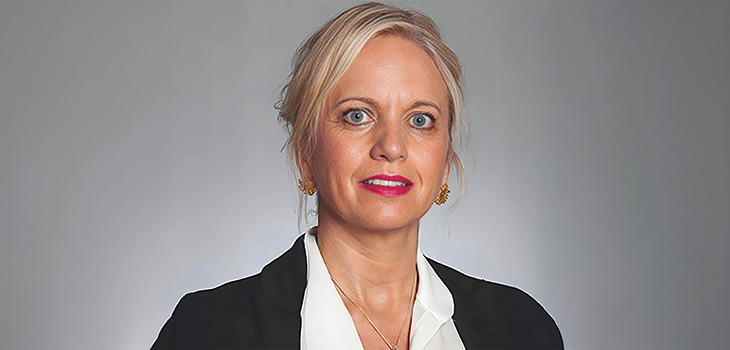
Kirsty Brimelow KC is Chair of the Bar for 2026. She has been a criminal, public law and international human rights barrister for some 30 years, practising from Doughty Street Chambers for over half that time. Kirsty was Chair of the Criminal Bar Association (2022-23) and Chair of the Bar Human Rights Committee (2012-18). She was appointed as a silk in 2011, Deputy High Court Judge in 2021, Recorder in 2022 and is a Bencher of Gray’s Inn.
There are points in life that are hammered into the work road as signposts. Education, exams, degree and first job. The rest is a series of twists and turns and bumps, with the odd reverse. The road itself changes and the people on it change, including ourselves.
I don’t much like the concept of linear journeys. I see a vast plane where it’s good to roam. That roaming can be within yourself.
I was brought up in Lancashire, near Chorley. Both my parents started work at 15 years old. My dad worked on the factory floor as an apprentice in engineering. My mum worked as a sewist. They met in a hiking club in Wigan. I suppose that’s why mountains are in my blood. I let out a deep sigh when I’m on a summit, whether on skis or in hiking boots.
Education was valued in our home as the scrubbed steps into a profession. Career advice was stunted and lacked vision, with choices of medicine or law being the direction of travel. I read law at Birmingham University and made friends for life.
In my second year, I entered the Law Faculty Mooting Competition. The final was judged by Sir Stephen Brown LJ; former President of the Family Division and the winner was awarded by Lord Goff at a formal dinner. I remember an outsider shadow bouncing alongside me as I clutched the lectern. When I won, I was presented with a cup which could have been engraved ‘self-belief’. That was the moment that I thought I could be a good barrister.
I always have felt fortunate and have tried to give back. At university each year, a group of us fundraised and took deprived children from Inner City Birmingham on holiday. The children were selected by social workers. I remember their excitement at being taken to the sea for the first time. I think of them sometimes and wonder if they might have been able to reach the possibilities that we saw in them.
My local authority, Lancashire County Council, provided my grant through university and the Bar course. Gray’s Inn awarded me a scholarship and the securing of a pupillage and grant at 2 Crown Office Row (now Lyttleton Chambers) meant that I was on my way to becoming a barrister.
I was called to the Bar in 1991 and, against all advice, deferred my pupillage for a year and travelled the world, working in bars and hostels and telemarketing.
In 1993, on completion of pupillage, I was offered tenancy at a small common law set of chambers. I had 18 enjoyable months as a tenant before the chambers folded. I became a squatter in another set of chambers in the same building and then moved to another chambers for a fixed term. I was a successful junior barrister, practising in civil, international, family and criminal law, with a loyal solicitor following. I still travelled, climbing onto Africa’s roof, Kilimanjaro and scuba diving into the planet’s treasure.
I moved to tenancy in Francis Taylor Building. After around five years, the set decided that it wanted to change direction and stop criminal work. Not willing to give up on crime, a group of us moved together to 187 Fleet Street. In 2006, I spent two months in Jamaica working on the resentencing of people on death row. I recall the flickering neon lights and soundless television set playing in a corner as a prisoner proudly showed a matchstick model while the guard laughed.
Increasingly, I was working with barristers at Doughty Street Chambers. In 2009, Geoffrey Robertson KC, who was leading me at the time, suggested that I join Doughty Street. He introduced me to a chap there with influence called Keir Starmer KC, and I followed his invitation to join. I was sad to leave 187 but happy to keep the friendships.
In 2011, I was appointed silk. The messages of congratulations from judges, barristers and solicitors sit alongside the mooting cup in the pockets of my mind. Subsequently, I have been appointed a Recorder and also was successful in appointment to a s 9(4) Deputy High Court Judge position in the King’s Bench Division.
I always have worked for my profession, through the Bar Council, Criminal Bar Association (CBA), Bar Human Rights Committee and Gray’s Inn. In the 1990s I was on the Bar Council Public Affairs Committee, chaired by the much-missed Courtenay Griffiths KC, and was a Young Spokesperson for the Bar. For a decade I would appear on random daytime TV chat shows, debating the legal issues of the day.
Serving on the CBA Executive for seven years, in later years I was elected as Vice Chair and Chair of the Criminal Bar between 2021-23. I secured the opening of negotiations on legal aid increase to barristers with former Lord Chancellor, Brandon Lewis. On 10 October 2022, the CBA voted for the government’s offer of a 15% increase on backlog cases and commitment of an additional £7 million to other parts of the legal aid scheme during the spending review period. This was followed by an increase in prosecution fees and further money into the youth courts. The impact assessment in 2023 placed the increase at 17%. The investment remains inadequate. Criminal barristers made history through their action for the criminal justice system. It was successful with a smash and grab deal, but long-term investment desperately is required.
In 2023 I was elected Vice Chair of the Bar Council, and I am incoming Chair in January 2026. There is much to do. The latest Leveson proposals restricting jury trials will not reduce the backlog of cases, built up over years of financial slash and burn of the criminal justice system, but may further erode trust, which hangs by the thread of citizen participation in the criminal courts.
I haven’t followed my grandfather’s advice that ‘any fool can work for nothing’ and feel the tug of my privilege on my sleeve. I was Chair of the Bar Human Rights Committee for six years, with 15 years on the Executive. This involved applications to supranational courts, complaints to the United Nations treaty monitoring bodies, advocacy and diplomacy through meetings and letter writing and conflict resolution. Highlights were negotiating between the San José de Apartadó peace community of cacao farmers in Colombia and the Colombian government for a Presidential apology – which was achieved – the drafting and passing through the Human Rights Council of a Resolution on the Harmful Practices Related to Accusations of Witchcraft and Ritual Attacks, the successful proposal of civil legislation to tackle female genital mutilation (FGM), namely FGM Protection Orders, successful legal interventions leading to the release of unlawfully detained prisoners and reinstatement of judges from Bahrain to Honduras, trainings in child rights for UNICEF in Nigeria, tackling sexual violence in trainings in India and Tanzania and fact finding in refugee camps. It was pro bono teamwork. I remain honoured that those selfless barristers I worked alongside moved from colleagues to close friends.
My practice alongside the pro bono work ranges from terrorism, murder and protest cases in courts in England and Wales to trainings of judges in counter-terrorism and financial crime to complaints of international human rights violations at the UN to litigation before the Inter- American Commission and Court and European Court of Human Rights.
What have I learnt about the profession? Find what you are good at and also what you enjoy. However, not all work needs to fulfil a passion; there can be hard-nosed commercial decisions to pursue certain work in order to allow practice in more fulfilling pro bono cases.
There are many routes to becoming a barrister and transferrable skills from other professions. The publicly funded self-employed Bar can be financially unstable, and trials know few boundaries of close of day and weekend. Perhaps consider movement between the employed Bar and the self-employed Bar. It will help steady the finances and your professional home may be different to your plan. Above all, don’t be afraid to follow your dream.
Wellbeing is key to your functioning – you need to look after yourself and have quality time outside work. But wellbeing also includes treating others with decency and consideration. Kindness is freeing. Walk the talk and keep the door open.
Take the opportunities that the Bar offers and go to events and talks. You might find that the people you meet have similar thoughts and ideas as yourself. This is where the possibilities start to take shape.
Don’t be too hard on yourself. If something has gone wrong, learn from it – but usually it won’t be as bad as you think.
There’s no shortcut to preparation – whether for an exam, interview or case. Give yourself the chance that you deserve.
The profession of a barrister pulses with learning, challenges and rewards. We add our own cement to the rule of law. Pulling a person out of the ditch needs the strength of many. Keep the hand outstretched, recognise the skills of others, and go and shine!

The Chair of the Bar reports back
Susie Griffin on the admin that keeps barristers from billable work
Clement Cowley, Partner at The Penny Group, explains how global events can influence the performance of pensions and ISAs, and why taking a long-term approach to investing is often the most effective strategy
Mário Barroso, Head of R&D and Method Development at AlphaBiolabs, discusses what family law professionals need to know about hallucinogens, from the main hallucinogenic drugs encountered in family proceedings, to their effects and the testing options available
Harmony Christian Ministries is the latest charity to benefit from a £500 donation from AlphaBiolabs via the company’s Giving Back initiative
By David Green

At the start of her term, Chair of the Bar 2026 Kirsty Brimelow KC set out a series of priorities for the year ahead. One of those priorities was children in the justice system
As the world becomes more digital, Barbara Vinagre Mota examines international research into the mental health consequences of judges’ exposure to graphic and immersive evidence, highlighting the importance of support systems
In an era of patient-centred care and growing concern over misconduct in medical settings, why do women still lack the right to choose women consultants for examination and treatment? Charles Davey investigates
Reviewed by Daniel Barnett
James McNeill Whistler at Tate Britain until 27 September Rothko in Florence at Palazzo Strozzi until 23 August Reviewed by Stephen Cragg KC