*/
Could this be the perfect drum beat for barristers? Nicholas Peacock makes his pitch
In my Glorious Rule everyone will have access to at least one playlist based on the motorik drum pattern. Motorik is the rhythm of excitement, of slightly anxious anticipation. On your way to or from court it is the rhythm which will prime your synapses for agile mental fencing with the judge, confirm your glorious victory or stoke the fires of delicious appellate revenge.
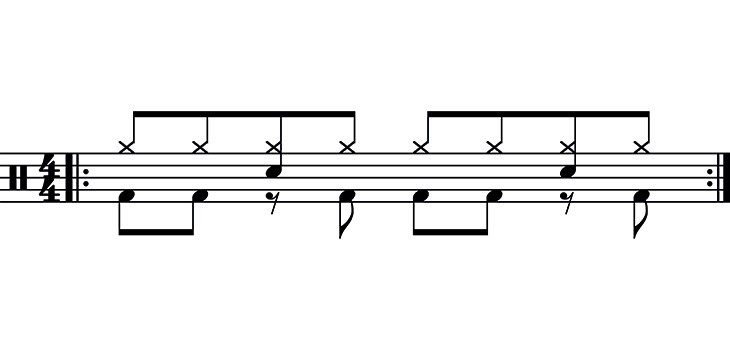
The pattern itself is simple – all of you can recreate it with almost any programmable drum machine. It is in 4/4 time, at a moderate or moderately fast tempo, a snare drum on the off beat, hi-hats playing eighth notes and an insistent bass drum between the snares, pushing the rhythm along. The pattern is repeated throughout the song and a crash cymbal is often hit at the beginning of a verse or chorus.
When the time comes, I am minded to delegate the curation of playlists (volunteers may apply here), though I imagine many will start with some krautrock, a wildly eclectic genre covering everyone from the electronics of Kraftwerk to the prog rock of Amon Düül. (For a fuller account of the genre than is remotely possible here, read Julian Cope’s exegesis Krautrocksampler.) Historians might want to explore The Velvet Underground, whose drummer Moe Tucker pounded a similar beat in What Goes On and others. But since Jaki Liebezeit of Can is said to have developed the original drum pattern, it would be churlish to omit something like Mother Sky. For myself, I could listen to Hallogallo by Neu! non-stop until the end of days and, because he idolised Can and in any event can do no wrong, I would insist on Touch Sensitive by Mark E. Smith’s The Fall in proper homage to both him and the rhythm itself.
Without motorik it is hard to imagine post-krautrock bands like Suicide, Spacemen 3 or whole swathes of New Zealand’s magnificent Flying Nun Records roster existing, let alone the krautrock-specific tribute projects like Beak> (by Portishead’s Geoff Barrow), Twelve (by Chris Olley of Six By Seven) and Kosmischer Läufer (apocryphally from the East German Martin Zeichnete, though persistent rumours consider this to be an alias of the very much still alive Drew McFadyen) – all these bands should really be listened to on repeat.
Jonathan Richman and his Modern Lovers knew precisely what beat to use to drive us along Massachusetts Route 128 in Roadrunner, while the unrivalled Stereolab were rarely heard without motorik to back them up, at least in their pre-lounge phase (try out French Disko, Super-Electric and Jenny Ondioline among many others). Even Radiohead got in on the act with Jigsaw Falling Into Place on In Rainbows – Radiohead never do anything other than by design.
Motorik, once heard, cannot be unheard. Its pulse brings us more or less up to date via Under The Pressure by The War On Drugs, through Blankenship by DIIV, to Spitfire by Public Service Broadcasting and most of Ripley Johnson’s Moon Duo output. The supposedly ‘post-rock’ giants Mogwai were unable to withstand its lure recently on Ritchie Sacramento, a song I am currently bewitched by.
Simultaneously capable of calming and energising, motorik is the Zen master of rhythmic patterns. You will thank me for listening to it before and after your working day – and if you find your fingers tapping the rhythm during submissions, think of it as an inner voice inspiring you to even greater feats of advocacy, or to stay calm in the face of judicial probing. To quote Klaus Dinger of Neu!, motorik is, after all, ‘a very human beat’.

Nicholas Peacock is a barrister at Hailsham Chambers, specialising in clinical negligence, professional disciplinary cases and inquests. He is a former Chair of the Bar Council Wellbeing at the Bar Working Group. He is as sure as he can be of anything that he prefers Frank Sinatra to Dean Martin, but only just.
In my Glorious Rule everyone will have access to at least one playlist based on the motorik drum pattern. Motorik is the rhythm of excitement, of slightly anxious anticipation. On your way to or from court it is the rhythm which will prime your synapses for agile mental fencing with the judge, confirm your glorious victory or stoke the fires of delicious appellate revenge.
The pattern itself is simple – all of you can recreate it with almost any programmable drum machine. It is in 4/4 time, at a moderate or moderately fast tempo, a snare drum on the off beat, hi-hats playing eighth notes and an insistent bass drum between the snares, pushing the rhythm along. The pattern is repeated throughout the song and a crash cymbal is often hit at the beginning of a verse or chorus.
When the time comes, I am minded to delegate the curation of playlists (volunteers may apply here), though I imagine many will start with some krautrock, a wildly eclectic genre covering everyone from the electronics of Kraftwerk to the prog rock of Amon Düül. (For a fuller account of the genre than is remotely possible here, read Julian Cope’s exegesis Krautrocksampler.) Historians might want to explore The Velvet Underground, whose drummer Moe Tucker pounded a similar beat in What Goes On and others. But since Jaki Liebezeit of Can is said to have developed the original drum pattern, it would be churlish to omit something like Mother Sky. For myself, I could listen to Hallogallo by Neu! non-stop until the end of days and, because he idolised Can and in any event can do no wrong, I would insist on Touch Sensitive by Mark E. Smith’s The Fall in proper homage to both him and the rhythm itself.
Without motorik it is hard to imagine post-krautrock bands like Suicide, Spacemen 3 or whole swathes of New Zealand’s magnificent Flying Nun Records roster existing, let alone the krautrock-specific tribute projects like Beak> (by Portishead’s Geoff Barrow), Twelve (by Chris Olley of Six By Seven) and Kosmischer Läufer (apocryphally from the East German Martin Zeichnete, though persistent rumours consider this to be an alias of the very much still alive Drew McFadyen) – all these bands should really be listened to on repeat.
Jonathan Richman and his Modern Lovers knew precisely what beat to use to drive us along Massachusetts Route 128 in Roadrunner, while the unrivalled Stereolab were rarely heard without motorik to back them up, at least in their pre-lounge phase (try out French Disko, Super-Electric and Jenny Ondioline among many others). Even Radiohead got in on the act with Jigsaw Falling Into Place on In Rainbows – Radiohead never do anything other than by design.
Motorik, once heard, cannot be unheard. Its pulse brings us more or less up to date via Under The Pressure by The War On Drugs, through Blankenship by DIIV, to Spitfire by Public Service Broadcasting and most of Ripley Johnson’s Moon Duo output. The supposedly ‘post-rock’ giants Mogwai were unable to withstand its lure recently on Ritchie Sacramento, a song I am currently bewitched by.
Simultaneously capable of calming and energising, motorik is the Zen master of rhythmic patterns. You will thank me for listening to it before and after your working day – and if you find your fingers tapping the rhythm during submissions, think of it as an inner voice inspiring you to even greater feats of advocacy, or to stay calm in the face of judicial probing. To quote Klaus Dinger of Neu!, motorik is, after all, ‘a very human beat’.
Could this be the perfect drum beat for barristers? Nicholas Peacock makes his pitch

The Chair of the Bar reports back
Susie Griffin on the admin that keeps barristers from billable work
Clement Cowley, Partner at The Penny Group, explains how global events can influence the performance of pensions and ISAs, and why taking a long-term approach to investing is often the most effective strategy
Mário Barroso, Head of R&D and Method Development at AlphaBiolabs, discusses what family law professionals need to know about hallucinogens, from the main hallucinogenic drugs encountered in family proceedings, to their effects and the testing options available
Harmony Christian Ministries is the latest charity to benefit from a £500 donation from AlphaBiolabs via the company’s Giving Back initiative
By David Green

At the start of her term, Chair of the Bar 2026 Kirsty Brimelow KC set out a series of priorities for the year ahead. One of those priorities was children in the justice system
As the world becomes more digital, Barbara Vinagre Mota examines international research into the mental health consequences of judges’ exposure to graphic and immersive evidence, highlighting the importance of support systems
In an era of patient-centred care and growing concern over misconduct in medical settings, why do women still lack the right to choose women consultants for examination and treatment? Charles Davey investigates
Reviewed by Daniel Barnett
James McNeill Whistler at Tate Britain until 27 September Rothko in Florence at Palazzo Strozzi until 23 August Reviewed by Stephen Cragg KC