*/
‘It was the worst time of my life. I think about it at least once a day, if not more. My body’s “fight-or-flight” mechanisms were off the charts. It took nine months before they returned to normal. Sleeping, eating, weight and concentration all suffered. The only way I could escape was to throw myself into my work and stop other things getting in. In my view, the Bar Standards Board chose to continue a malicious prosecution against me. They are not a dispassionate regulator. They should be held accountable.’
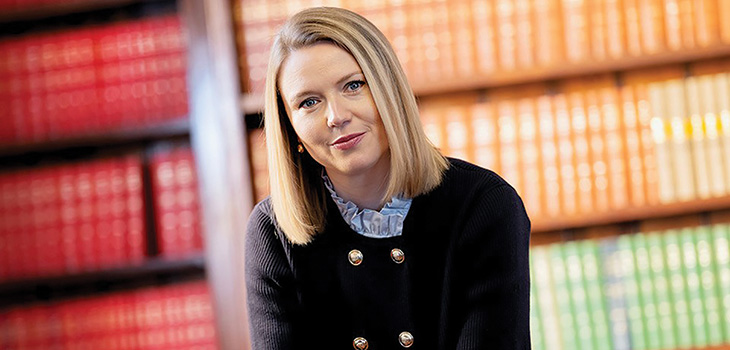
This is Dr Charlotte Proudman, family law practitioner, of Goldsmith Chambers since 2016. A year ago, a disciplinary tribunal of the Bar Tribunals and Adjudication Service ruled that there was no case for her to answer after she had published a 14-part thread on Twitter critical of a judgment in a family law case where her client’s allegations of coercive control were not found. One of the tweets said that the judgment had echoes of a ‘boys’ club’ attitude. The charge against her had included the use of seriously offensive language designed to demean the judge. ‘The tribunal’s ruling showed how fragile the boys’ club really is,’ she says. We meet on the day when the same tribunal had ruled against her application for £352k+ indemnity costs.
‘I have since taken proceedings against the BSB in the Employment Tribunal for discrimination against me as a woman. In my opinion they wouldn’t have proceeded against a man, and I’ve got strong comparators to prove that. There is a case management hearing in the New Year. All I have wanted is an apology, but they have refused to engage with me. I would like to work with my regulator; they are supposed to play a valuable role, but they have shown no insight into their meritless prosecution against me. Yet, they thought it was permissible for male barristers to call me a “c*nt”, “bitch”, “wanker” and mentally ill on social media. According to the BSB, it seems, misogyny is free speech but criticising misogyny is professional misconduct. The former Chair of the Bar, Nick Vineall KC and Baroness Harriet Harman KC have both expressed support of me, but still no apology from the BSB. I want our regulator to be better. I strongly believe in the law as a powerful instrument capable of changing people’s lives for the better. If they were to apologise, I would reconsider my position. I suggested mediation. They even refused that. The fees we, as barristers, pay for our practising certificates are being used to fund costly legal representation for our regulator to instruct leading counsel, rather than simply acknowledging and apologising for its own failings. When both Peter Hitchens and The Guardian are on my side, you know the Establishment is in trouble!’
What has Dr Proudman learnt from her experience? ‘That I’m a lot stronger and more resilient than I thought I was. That it’s important to protect my personal life and to carve out more time for myself. To learn what it’s like to walk in my clients’ shoes. That the justice system can be unfair, especially when the opposition has more power and resources than you. Even for me, with my platform, it’s been hard and has consumed everything.’ She had already had a period in the spotlight after a LinkedIn post in 2015. ‘I had moments of doubting myself. But I felt I was entitled to criticise patriarchal views in a judgment. More recently I was instrumental in campaigning to make the Garrick Club open its doors to women. I represented a rape victim who successfully applied for recusal of the same High Court judge I criticised for being part of the “boys’ club” in part because of his membership of the all-male club. It felt like tacit recognition that the judiciary can have pockets of the boys’ club.’ She won Woman of the Year 2025 – ‘completely unexpectedly’ – at the Women & Diversity in Law Awards alongside her counsel in the tribunal case, Monica Feria-Tinta. Lady Hale’s latest book, With the Law on Our Side, contains an endorsement from Dr Proudman. ‘It hasn’t harmed my career,’ she says.
That said, did she regret the Twitter thread? ‘Of course, just look at the hell I went through. I stand by the content, but if I had known the fall-out…’ A pause. ‘But why can’t we call out sexist behaviour when we see it?
‘When I was writing my latest book – He Said, She Said – my editor told me to look at the formative experiences in my life and how they shaped the work I do now, protecting women and children from abusive relationships, and trying to rescue them. I was born and brought up in Leek, Staffordshire. My father died when I was four – a car accident when he was intoxicated. He was an alcoholic and abusive towards my mother. He disinherited us in his will. She spent years contesting the will and ultimately succeeded in getting me some money. When I was growing up, law was ever-present.
‘Mother was an art teacher. She wanted the best for me. She believed passionately that all children could be successful.’ Dr Proudman attended the local comprehensive. ‘Art was my subject too. I spent days drawing and painting. I did A level photography. I photographed bottle kilns and other historical buildings around Stoke-on-Trent. I also took English language and literature. But my absolute passion was sociology, taught by a formidable and incredibly charismatic teacher, Mandy. She looked like Pamela Anderson yet could recite Karl Marx as if it were second nature. Mother and Mandy encouraged me to inquire and challenge. My grandfather, who worked on the railways, would spend his days reading Marx. Mandy gave me the vocabulary for the thoughts and observations I experienced. But the trouble with sociology was that, while brilliant for analysing the world, it offered limited solutions for change.
‘Mother encouraged me to go to university. She wanted me to study a subject that would give me a career. The obvious choice was law. I wrote CVs and posted them off in different directions. I got some holiday work in local firms. I was going to apply to Cambridge University. A teacher said: “Don’t go there, they are all posh snobs!” I went instead to Keele, my local university, to read law and sociology.’ Did she enjoy law studies? ‘Not a lot! But I loved equity and trusts – we had a dynamic, inspirational teacher – so much so that I took an extra option in it. I always looked forward to sociology. We were taught by a world-renowned anthropologist, Professor Pnina Werbner. She gave me 100% in one paper, the first time, she said, she had ever done so. She added, “You do look at the world in such a bleak way!”’
Why the Bar? ‘I thought I’d be a solicitor in Staffordshire. But one day, when doing work experience, I met a criminal barrister. A petite, incredibly friendly, young woman, she would take no nonsense from anyone. Over lunch we chatted. I began to think, “Maybe I could do this.” I was attracted to the courtroom advocacy, to thinking on my feet and to the personal independence of life at the Bar. In the summer before my final year at Keele I undertook as many mini-pupillages as I could in Birmingham and Manchester.
‘Bar school was a cultural shock. First time away from home. Living in London. Mixing with upper class people. It was the first time that anybody had pointed out my accent to me, and I was made to feel “less than” others and an outsider. “What school did you go to? Never heard of it. What did your father do?” I was told by my mentor that I had done very well to get this far but I wouldn’t ultimately succeed.
‘I had no choice but to succeed. I threw myself into all the pro bono work I could do, including for IKWRO [a charity which supports women and girls affected by ‘honour-based’ abuse]. I was given a scholarship to travel to Pakistan and research transnational forced marriage.’ Then, in the gap year between her call in 2010 and the start of her pupillage in 2011 at Coram Chambers, she went to Queens’ College, Cambridge for an MPhil in Criminology. ‘It was last-minute. I applied the day before the deadline. Would I enjoy it? I loved it, the course, the lecturers. I took a paralegal job in a Cambridge law firm to help with money. I made friends from all over the world and broadened my horizons.’ She had thought about the criminal Bar, but ‘looking back, I was very lucky to secure a pupillage in family law. I discovered I could truly relate to my clients, and I recognised injustices in ways that few of my colleagues did. I can see the law through a critical lens. I say “This can’t be right. We have to challenge it!” For example, what used to be a common scenario before we challenged it: the disclosure of a woman’s sexual history when she complained of rape in family courts.’
There was a later move to Mansfield Chambers, where she undertook a PhD at King’s College, Cambridge in female genital mutilation and the law. She took a sabbatical to complete it and joined Goldsmith Chambers in 2016. Her 2022 book, Female Genital Mutilation: When Culture and Law Clash, benefited from her PhD research. In 2022 she set up Right to Equality, a not-for-profit organisation with about half a dozen staff to advocate for legal changes to advance the rights of women and children in family courts. She still runs it with Dr Adrienne Barnett, an academic and former practising barrister.
We consider the different strands to her career. ‘I’m a barrister more than an academic. I still research at Cambridge, but unless you pursue academia full-time it’s a challenge to keep on top of the ever-evolving literature. It’s funny to hear my students describe me as old-fashioned when I used to think I was cutting edge!’
Advice to others? ‘Tenacity is key. It’s how you handle setbacks. Keep going. Be brave. Build networks of mentors and friendly colleagues. If you find a niche which interests you, stick with it because clients value you for it. If you are not enjoying what you are doing, try something different.’
What next for Dr Proudman? A surprise. ‘I have started my own family law firm, which is regulated by the Solicitors’ Regulation Authority as an alternative business structure. I want to bring trainee solicitors on board so that there are more of us working in the family courts on behalf of parent and child victims of abuse. We focus on providing trauma-informed representation. I will continue mentoring, which I love. I have several people in mind to eventually join my firm; some clients too that I’ll want to attract. I hope to grow organically. We will handle every layer of family work. I am passionate about my vocation. I have long thought about how I can increase my personal impact as a leader in my field. I feel I can do this best by creating and leading a strong team, Proudmans.’
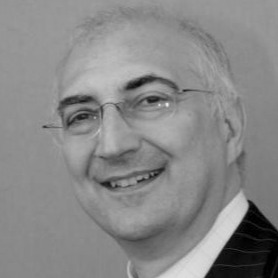
Anthony Inglese CB was head of legal in five Government Legal Departments over a 38-year career, most recently as General Counsel and Solicitor to HM Revenue & Customs. A Bencher of Gray’s Inn, he now trains and mentors lawyers.
‘It was the worst time of my life. I think about it at least once a day, if not more. My body’s “fight-or-flight” mechanisms were off the charts. It took nine months before they returned to normal. Sleeping, eating, weight and concentration all suffered. The only way I could escape was to throw myself into my work and stop other things getting in. In my view, the Bar Standards Board chose to continue a malicious prosecution against me. They are not a dispassionate regulator. They should be held accountable.’
This is Dr Charlotte Proudman, family law practitioner, of Goldsmith Chambers since 2016. A year ago, a disciplinary tribunal of the Bar Tribunals and Adjudication Service ruled that there was no case for her to answer after she had published a 14-part thread on Twitter critical of a judgment in a family law case where her client’s allegations of coercive control were not found. One of the tweets said that the judgment had echoes of a ‘boys’ club’ attitude. The charge against her had included the use of seriously offensive language designed to demean the judge. ‘The tribunal’s ruling showed how fragile the boys’ club really is,’ she says. We meet on the day when the same tribunal had ruled against her application for £352k+ indemnity costs.
‘I have since taken proceedings against the BSB in the Employment Tribunal for discrimination against me as a woman. In my opinion they wouldn’t have proceeded against a man, and I’ve got strong comparators to prove that. There is a case management hearing in the New Year. All I have wanted is an apology, but they have refused to engage with me. I would like to work with my regulator; they are supposed to play a valuable role, but they have shown no insight into their meritless prosecution against me. Yet, they thought it was permissible for male barristers to call me a “c*nt”, “bitch”, “wanker” and mentally ill on social media. According to the BSB, it seems, misogyny is free speech but criticising misogyny is professional misconduct. The former Chair of the Bar, Nick Vineall KC and Baroness Harriet Harman KC have both expressed support of me, but still no apology from the BSB. I want our regulator to be better. I strongly believe in the law as a powerful instrument capable of changing people’s lives for the better. If they were to apologise, I would reconsider my position. I suggested mediation. They even refused that. The fees we, as barristers, pay for our practising certificates are being used to fund costly legal representation for our regulator to instruct leading counsel, rather than simply acknowledging and apologising for its own failings. When both Peter Hitchens and The Guardian are on my side, you know the Establishment is in trouble!’
What has Dr Proudman learnt from her experience? ‘That I’m a lot stronger and more resilient than I thought I was. That it’s important to protect my personal life and to carve out more time for myself. To learn what it’s like to walk in my clients’ shoes. That the justice system can be unfair, especially when the opposition has more power and resources than you. Even for me, with my platform, it’s been hard and has consumed everything.’ She had already had a period in the spotlight after a LinkedIn post in 2015. ‘I had moments of doubting myself. But I felt I was entitled to criticise patriarchal views in a judgment. More recently I was instrumental in campaigning to make the Garrick Club open its doors to women. I represented a rape victim who successfully applied for recusal of the same High Court judge I criticised for being part of the “boys’ club” in part because of his membership of the all-male club. It felt like tacit recognition that the judiciary can have pockets of the boys’ club.’ She won Woman of the Year 2025 – ‘completely unexpectedly’ – at the Women & Diversity in Law Awards alongside her counsel in the tribunal case, Monica Feria-Tinta. Lady Hale’s latest book, With the Law on Our Side, contains an endorsement from Dr Proudman. ‘It hasn’t harmed my career,’ she says.
That said, did she regret the Twitter thread? ‘Of course, just look at the hell I went through. I stand by the content, but if I had known the fall-out…’ A pause. ‘But why can’t we call out sexist behaviour when we see it?
‘When I was writing my latest book – He Said, She Said – my editor told me to look at the formative experiences in my life and how they shaped the work I do now, protecting women and children from abusive relationships, and trying to rescue them. I was born and brought up in Leek, Staffordshire. My father died when I was four – a car accident when he was intoxicated. He was an alcoholic and abusive towards my mother. He disinherited us in his will. She spent years contesting the will and ultimately succeeded in getting me some money. When I was growing up, law was ever-present.
‘Mother was an art teacher. She wanted the best for me. She believed passionately that all children could be successful.’ Dr Proudman attended the local comprehensive. ‘Art was my subject too. I spent days drawing and painting. I did A level photography. I photographed bottle kilns and other historical buildings around Stoke-on-Trent. I also took English language and literature. But my absolute passion was sociology, taught by a formidable and incredibly charismatic teacher, Mandy. She looked like Pamela Anderson yet could recite Karl Marx as if it were second nature. Mother and Mandy encouraged me to inquire and challenge. My grandfather, who worked on the railways, would spend his days reading Marx. Mandy gave me the vocabulary for the thoughts and observations I experienced. But the trouble with sociology was that, while brilliant for analysing the world, it offered limited solutions for change.
‘Mother encouraged me to go to university. She wanted me to study a subject that would give me a career. The obvious choice was law. I wrote CVs and posted them off in different directions. I got some holiday work in local firms. I was going to apply to Cambridge University. A teacher said: “Don’t go there, they are all posh snobs!” I went instead to Keele, my local university, to read law and sociology.’ Did she enjoy law studies? ‘Not a lot! But I loved equity and trusts – we had a dynamic, inspirational teacher – so much so that I took an extra option in it. I always looked forward to sociology. We were taught by a world-renowned anthropologist, Professor Pnina Werbner. She gave me 100% in one paper, the first time, she said, she had ever done so. She added, “You do look at the world in such a bleak way!”’
Why the Bar? ‘I thought I’d be a solicitor in Staffordshire. But one day, when doing work experience, I met a criminal barrister. A petite, incredibly friendly, young woman, she would take no nonsense from anyone. Over lunch we chatted. I began to think, “Maybe I could do this.” I was attracted to the courtroom advocacy, to thinking on my feet and to the personal independence of life at the Bar. In the summer before my final year at Keele I undertook as many mini-pupillages as I could in Birmingham and Manchester.
‘Bar school was a cultural shock. First time away from home. Living in London. Mixing with upper class people. It was the first time that anybody had pointed out my accent to me, and I was made to feel “less than” others and an outsider. “What school did you go to? Never heard of it. What did your father do?” I was told by my mentor that I had done very well to get this far but I wouldn’t ultimately succeed.
‘I had no choice but to succeed. I threw myself into all the pro bono work I could do, including for IKWRO [a charity which supports women and girls affected by ‘honour-based’ abuse]. I was given a scholarship to travel to Pakistan and research transnational forced marriage.’ Then, in the gap year between her call in 2010 and the start of her pupillage in 2011 at Coram Chambers, she went to Queens’ College, Cambridge for an MPhil in Criminology. ‘It was last-minute. I applied the day before the deadline. Would I enjoy it? I loved it, the course, the lecturers. I took a paralegal job in a Cambridge law firm to help with money. I made friends from all over the world and broadened my horizons.’ She had thought about the criminal Bar, but ‘looking back, I was very lucky to secure a pupillage in family law. I discovered I could truly relate to my clients, and I recognised injustices in ways that few of my colleagues did. I can see the law through a critical lens. I say “This can’t be right. We have to challenge it!” For example, what used to be a common scenario before we challenged it: the disclosure of a woman’s sexual history when she complained of rape in family courts.’
There was a later move to Mansfield Chambers, where she undertook a PhD at King’s College, Cambridge in female genital mutilation and the law. She took a sabbatical to complete it and joined Goldsmith Chambers in 2016. Her 2022 book, Female Genital Mutilation: When Culture and Law Clash, benefited from her PhD research. In 2022 she set up Right to Equality, a not-for-profit organisation with about half a dozen staff to advocate for legal changes to advance the rights of women and children in family courts. She still runs it with Dr Adrienne Barnett, an academic and former practising barrister.
We consider the different strands to her career. ‘I’m a barrister more than an academic. I still research at Cambridge, but unless you pursue academia full-time it’s a challenge to keep on top of the ever-evolving literature. It’s funny to hear my students describe me as old-fashioned when I used to think I was cutting edge!’
Advice to others? ‘Tenacity is key. It’s how you handle setbacks. Keep going. Be brave. Build networks of mentors and friendly colleagues. If you find a niche which interests you, stick with it because clients value you for it. If you are not enjoying what you are doing, try something different.’
What next for Dr Proudman? A surprise. ‘I have started my own family law firm, which is regulated by the Solicitors’ Regulation Authority as an alternative business structure. I want to bring trainee solicitors on board so that there are more of us working in the family courts on behalf of parent and child victims of abuse. We focus on providing trauma-informed representation. I will continue mentoring, which I love. I have several people in mind to eventually join my firm; some clients too that I’ll want to attract. I hope to grow organically. We will handle every layer of family work. I am passionate about my vocation. I have long thought about how I can increase my personal impact as a leader in my field. I feel I can do this best by creating and leading a strong team, Proudmans.’

The Chair of the Bar reports back
Susie Griffin on the admin that keeps barristers from billable work
Clement Cowley, Partner at The Penny Group, explains how global events can influence the performance of pensions and ISAs, and why taking a long-term approach to investing is often the most effective strategy
Mário Barroso, Head of R&D and Method Development at AlphaBiolabs, discusses what family law professionals need to know about hallucinogens, from the main hallucinogenic drugs encountered in family proceedings, to their effects and the testing options available
Harmony Christian Ministries is the latest charity to benefit from a £500 donation from AlphaBiolabs via the company’s Giving Back initiative
By David Green

At the start of her term, Chair of the Bar 2026 Kirsty Brimelow KC set out a series of priorities for the year ahead. One of those priorities was children in the justice system
As the world becomes more digital, Barbara Vinagre Mota examines international research into the mental health consequences of judges’ exposure to graphic and immersive evidence, highlighting the importance of support systems
In an era of patient-centred care and growing concern over misconduct in medical settings, why do women still lack the right to choose women consultants for examination and treatment? Charles Davey investigates
Reviewed by Daniel Barnett
James McNeill Whistler at Tate Britain until 27 September Rothko in Florence at Palazzo Strozzi until 23 August Reviewed by Stephen Cragg KC