*/
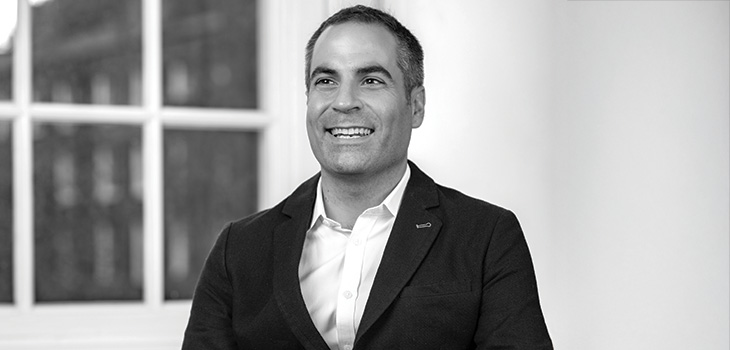
What I’ve learnt so far. By Julian Santos KC
I couldn’t get a pupillage anywhere. It was 2008 and the recession had just hit. So I joined the litigation department at the largest firm back home in Gibraltar. In fact, the initial rejection gave me resilience and a desire to improve. I had a varied practice, at first with an emphasis on criminal litigation, but slowly building my civil litigation experience, and that varied grounding has served me well. Through daily appearances in the Magistrates’ Court and subsequently hearings in the Gibraltar Supreme Court I soon found my voice and style. I quickly developed as a person too, being thrust into hard-fought disputes with real-life consequences, almost invariably involving people who were much older than me.
Good communication is vital in all interactions. It builds trust, with leaders, juniors, clerks, solicitors and clients, and with the court. An added dimension to my Gibraltar practice was having to advise many clients in Spanish. Given the significant cross-border population, many of my clients only spoke Spanish. Although my generation in Gibraltar had a bilingual upbringing, we weren’t taught legal jargon like trial (juicio), sentence (condena) or adjournment (aplazamiento), which I had to assimilate on the job.
Moving to London taught me the great benefits of specialising. After five years in Gibraltar and another round of applications, I finally secured an offer of pupillage and did not hesitate to accept. Working in a specialist set like 5RB, you benefit from precious information, such as what arguments are (or are not) finding favour in the Media and Communications List, or new procedural requirements that judges are adopting. I’m always amazed at how friendly and collegiate Chambers manages to be despite members being against each other so frequently. Learning my trade together with fellow juniors Gervase De Wilde and Greg Callus, in an atmosphere where we could knock on each other’s doors and bounce ideas around (always after a quick conflict-check!) was priceless. We have all taken pride in each other’s achievements over the years, and even managed to exchange kind words after being on opposite sides. There has also never been a shortage of mentors, with their doors open for that essential quick sense-check.
Your career will surprise you, so don’t try to map it too tightly. The key is to ride your luck and make sure you take the opportunities that come your way. I have benefited from so many in my career, but by far the most important was when David Sherborne walked into my pupil supervisor’s room and asked me to carry out a research task for him on children’s privacy rights. The next thing I knew, I was appearing with him in the Court of Appeal, acting for Paul Weller’s children against the Daily Mail ([2015] EWCA Civ 1176). Fast forward over a decade and we have teamed up on countless occasions, in numerous high-profile matters. It shows that sometimes it’s the small things, the short tasks and the brief interactions, that can have a huge impact.
Working with David is always high-octane. Like all good leader-junior partnerships, he keeps me on my toes, and I keep him on his. Not only do I owe much of my career to him, but I have learned immensely from him and we have become great friends over the years. Much of our work together has been in the phone-hacking litigation, acting for victims of unlawful information-gathering against newspaper groups. They involved many years of interim applications while acting for over a hundred claimants at any given time, and lengthy trials (most notably Duke of Sussex and ors v MGN Ltd [2023] EWHC 3217 (Ch)), requiring a huge amount of coordination and strategic planning among the claimant group. Trust and teamwork become crucial, not just between counsel, but also with your solicitors.
Advising sportspeople on reputational and private life matters has become a real niche. One case leads to another and soon you can become one of the go-to counsel for a specific sport. Boxing is a good example of this, and is an industry where there is no shortage of litigation. I quickly learned that athletes often require a particular approach when advising. Telling a footballer or boxer that they have a 55% chance of success is not the same as saying it to a corporate client. Many athletes are hard-wired to ignore risk and drive every advantage home, however small. It is probably advisable to steer clear of percentages altogether.
Preparation, preparation, preparation. I often say to people outside our profession that every day in court requires at least three days’ preparation. In fact, I think that is probably a significant underestimate. I was counsel to an inquiry in Gibraltar (the Inquiry into the Retirement of the Former Commissioner of Police – referred to widely as the ‘McGrail Inquiry’), where I had the fortune of working with a complete warrior of a junior in Hope Williams. She was relentless and unflappable, and her meticulous preparation allowed me the space to focus on key strategic decisions and the manifold thorny issues that came our way. There is no better feeling than standing up on the first day of a hearing with the confidence that you know the case (and the bundles) as well as anyone else in the room. I always say that that’s ‘when the fun begins’. But the opposite is also true: there is no worse feeling than when you are scrambling around for a document.
The COVID pandemic was another turning point. It forced everyone to work electronically, and I waved goodbye to lugging bundles (and even stowaways) back and forth from Chambers to our East London flat. Months passed and I barely used my room in Chambers. Our first daughter Luna had just arrived, and I realised that if I could run my career from our spare room in Leyton, I could probably do it just as effectively from Gibraltar, where we could also call upon crucial grandparental support. Within 18 months we had moved back and started our new life here.
Gibraltar is a modern jurisdiction with great work. Needless to say, my practice extends beyond my specialisms of defamation and privacy. There is a steady flow of hard-edged civil litigation, driven in no small part by Gibraltar’s strong finance, insurance and gaming sectors. The fused profession and the pace and proximity of a smaller jurisdiction mean you often take responsibility early and see cases through. And because much of the economy is outward-facing, many matters have an international flavour, and expectations are often set by London standards of advice and advocacy.
Nowadays my emphasis is on not taking too much work on. Clients come to me for calm and considered advice and decision-making. I can’t offer them that if I am working on 20 cases at once. It’s far better for everyone involved if I’m free to respond to requests with alacrity when needed and also have availability to take the time needed to think things over if that is called for. Equally importantly, this makes me feel like I’m on top of my work and keeps my mind feeling healthy. It also allows me to be present at home and help my incredibly supportive wife, Karen, with the complex litigation of raising our three daughters. Except for hearings (when long hours are inevitable) I am very conscious of never asking a junior to work outside office hours unless it’s absolutely necessary, which should be rare. The key to healthy working practices is the same as effective advocacy: good communication, appropriate preparation and a bit of luck!
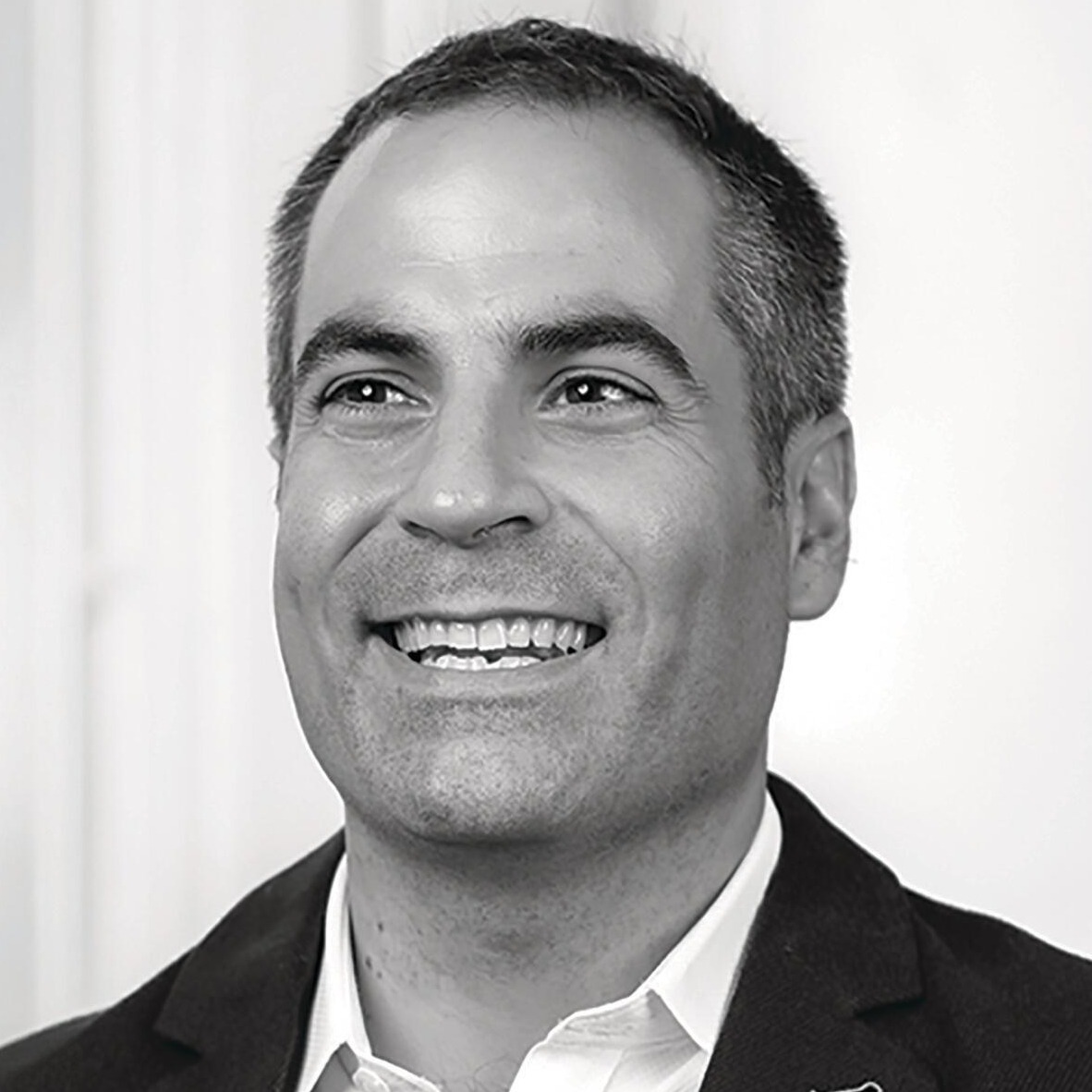
Julian Santos KC is a barrister at 5RB, practising in London and Gibraltar, where he was recently appointed the youngest ever King’s Counsel. He specialises in privacy and reputation, with a broader litigation practice in Gibraltar.
I couldn’t get a pupillage anywhere. It was 2008 and the recession had just hit. So I joined the litigation department at the largest firm back home in Gibraltar. In fact, the initial rejection gave me resilience and a desire to improve. I had a varied practice, at first with an emphasis on criminal litigation, but slowly building my civil litigation experience, and that varied grounding has served me well. Through daily appearances in the Magistrates’ Court and subsequently hearings in the Gibraltar Supreme Court I soon found my voice and style. I quickly developed as a person too, being thrust into hard-fought disputes with real-life consequences, almost invariably involving people who were much older than me.
Good communication is vital in all interactions. It builds trust, with leaders, juniors, clerks, solicitors and clients, and with the court. An added dimension to my Gibraltar practice was having to advise many clients in Spanish. Given the significant cross-border population, many of my clients only spoke Spanish. Although my generation in Gibraltar had a bilingual upbringing, we weren’t taught legal jargon like trial (juicio), sentence (condena) or adjournment (aplazamiento), which I had to assimilate on the job.
Moving to London taught me the great benefits of specialising. After five years in Gibraltar and another round of applications, I finally secured an offer of pupillage and did not hesitate to accept. Working in a specialist set like 5RB, you benefit from precious information, such as what arguments are (or are not) finding favour in the Media and Communications List, or new procedural requirements that judges are adopting. I’m always amazed at how friendly and collegiate Chambers manages to be despite members being against each other so frequently. Learning my trade together with fellow juniors Gervase De Wilde and Greg Callus, in an atmosphere where we could knock on each other’s doors and bounce ideas around (always after a quick conflict-check!) was priceless. We have all taken pride in each other’s achievements over the years, and even managed to exchange kind words after being on opposite sides. There has also never been a shortage of mentors, with their doors open for that essential quick sense-check.
Your career will surprise you, so don’t try to map it too tightly. The key is to ride your luck and make sure you take the opportunities that come your way. I have benefited from so many in my career, but by far the most important was when David Sherborne walked into my pupil supervisor’s room and asked me to carry out a research task for him on children’s privacy rights. The next thing I knew, I was appearing with him in the Court of Appeal, acting for Paul Weller’s children against the Daily Mail ([2015] EWCA Civ 1176). Fast forward over a decade and we have teamed up on countless occasions, in numerous high-profile matters. It shows that sometimes it’s the small things, the short tasks and the brief interactions, that can have a huge impact.
Working with David is always high-octane. Like all good leader-junior partnerships, he keeps me on my toes, and I keep him on his. Not only do I owe much of my career to him, but I have learned immensely from him and we have become great friends over the years. Much of our work together has been in the phone-hacking litigation, acting for victims of unlawful information-gathering against newspaper groups. They involved many years of interim applications while acting for over a hundred claimants at any given time, and lengthy trials (most notably Duke of Sussex and ors v MGN Ltd [2023] EWHC 3217 (Ch)), requiring a huge amount of coordination and strategic planning among the claimant group. Trust and teamwork become crucial, not just between counsel, but also with your solicitors.
Advising sportspeople on reputational and private life matters has become a real niche. One case leads to another and soon you can become one of the go-to counsel for a specific sport. Boxing is a good example of this, and is an industry where there is no shortage of litigation. I quickly learned that athletes often require a particular approach when advising. Telling a footballer or boxer that they have a 55% chance of success is not the same as saying it to a corporate client. Many athletes are hard-wired to ignore risk and drive every advantage home, however small. It is probably advisable to steer clear of percentages altogether.
Preparation, preparation, preparation. I often say to people outside our profession that every day in court requires at least three days’ preparation. In fact, I think that is probably a significant underestimate. I was counsel to an inquiry in Gibraltar (the Inquiry into the Retirement of the Former Commissioner of Police – referred to widely as the ‘McGrail Inquiry’), where I had the fortune of working with a complete warrior of a junior in Hope Williams. She was relentless and unflappable, and her meticulous preparation allowed me the space to focus on key strategic decisions and the manifold thorny issues that came our way. There is no better feeling than standing up on the first day of a hearing with the confidence that you know the case (and the bundles) as well as anyone else in the room. I always say that that’s ‘when the fun begins’. But the opposite is also true: there is no worse feeling than when you are scrambling around for a document.
The COVID pandemic was another turning point. It forced everyone to work electronically, and I waved goodbye to lugging bundles (and even stowaways) back and forth from Chambers to our East London flat. Months passed and I barely used my room in Chambers. Our first daughter Luna had just arrived, and I realised that if I could run my career from our spare room in Leyton, I could probably do it just as effectively from Gibraltar, where we could also call upon crucial grandparental support. Within 18 months we had moved back and started our new life here.
Gibraltar is a modern jurisdiction with great work. Needless to say, my practice extends beyond my specialisms of defamation and privacy. There is a steady flow of hard-edged civil litigation, driven in no small part by Gibraltar’s strong finance, insurance and gaming sectors. The fused profession and the pace and proximity of a smaller jurisdiction mean you often take responsibility early and see cases through. And because much of the economy is outward-facing, many matters have an international flavour, and expectations are often set by London standards of advice and advocacy.
Nowadays my emphasis is on not taking too much work on. Clients come to me for calm and considered advice and decision-making. I can’t offer them that if I am working on 20 cases at once. It’s far better for everyone involved if I’m free to respond to requests with alacrity when needed and also have availability to take the time needed to think things over if that is called for. Equally importantly, this makes me feel like I’m on top of my work and keeps my mind feeling healthy. It also allows me to be present at home and help my incredibly supportive wife, Karen, with the complex litigation of raising our three daughters. Except for hearings (when long hours are inevitable) I am very conscious of never asking a junior to work outside office hours unless it’s absolutely necessary, which should be rare. The key to healthy working practices is the same as effective advocacy: good communication, appropriate preparation and a bit of luck!
What I’ve learnt so far. By Julian Santos KC


The Chair of the Bar reports back
Susie Griffin on the admin that keeps barristers from billable work
Clement Cowley, Partner at The Penny Group, explains how global events can influence the performance of pensions and ISAs, and why taking a long-term approach to investing is often the most effective strategy
Mário Barroso, Head of R&D and Method Development at AlphaBiolabs, discusses what family law professionals need to know about hallucinogens, from the main hallucinogenic drugs encountered in family proceedings, to their effects and the testing options available
Harmony Christian Ministries is the latest charity to benefit from a £500 donation from AlphaBiolabs via the company’s Giving Back initiative
By David Green
At the start of her term, Chair of the Bar 2026 Kirsty Brimelow KC set out a series of priorities for the year ahead. One of those priorities was children in the justice system
As the world becomes more digital, Barbara Vinagre Mota examines international research into the mental health consequences of judges’ exposure to graphic and immersive evidence, highlighting the importance of support systems
In an era of patient-centred care and growing concern over misconduct in medical settings, why do women still lack the right to choose women consultants for examination and treatment? Charles Davey investigates
Reviewed by Daniel Barnett
James McNeill Whistler at Tate Britain until 27 September Rothko in Florence at Palazzo Strozzi until 23 August Reviewed by Stephen Cragg KC