*/

Not every case changes you. This one did, says Amiot Vollenweider, who explains how he accommodated, pro bono, one of the longest-running divorces in English legal history into his practice – and what he gained
There are cases that arrive in your practice neatly, with predictable timelines and manageable bundles. And then there are cases like Gohil: sprawling, relentless, and so deeply embedded in the procedural undergrowth of the Family Court that even the most battle-hardened practitioner might hesitate before stepping in. With over 9,000 pages of evidence and a history stretching back decades, it is one of the longest-running divorces in English legal history.
I did not go looking for it. In fact, the way I came to be involved was far more mundane – and far less glamorous – than any narrative about strategic career moves or heroic intervention. Mrs Gohil approached my clerk directly, asking for me by name for reasons known only to her. Around the same time, Morgan Sirikanda’s clerk contacted mine. Neither of us could do all of the case. Morgan could not cover a full week of the four-week hearing (including judicial reading time), and I could not cover a full week either. Between us, we managed to ensure continuity for the client. It was a practical solution to a practical problem. Nothing more complicated than that.
I am conscious that one of my opponents knew I had, at least in part, considered the case as an opportunity to stretch myself professionally. That is true. But it was never the sole driver. Anyone who has ever taken on a pro bono case of this scale knows that ambition alone is not enough to sustain you through the late nights, the administrative chaos and the emotional weight. Something else has to anchor you.
For me, that anchor was simple: the client needed representation, and the imbalance of power was stark. The husband’s conduct – persistent nondisclosure, dishonesty, and a willingness to manipulate the process – was not subtle. I have always had a low tolerance for bullies, in any form. It is not a noble trait; it is simply part of who I am. They have never fared well crossing me. And in Gohil, the dynamic was unmistakable.
Since commissioning into the RAF Regiment Reserves as a flying officer, I have tried to hold myself to the RAF’s core values: respect, integrity, service and excellence. They are not marketing slogans. They are not something I recite for effect. They are, in practice, a useful compass when the work becomes difficult or the path unclear.
In Gohil, those values aligned neatly with what the case required. Respect for a client who had been navigating the system for far too long. Integrity in the face of dishonesty. Service where it was needed, not where it was convenient. And excellence – not in the sense of perfection, but in the sense of doing the job properly, even when no one is paying you to do so.
I am wary of sounding pious. The Bar has no shortage of people willing to declare their virtue at length. But values only matter when they are tested. Gohil was a test.
There is no elegant way to integrate a case like Gohil into an already full practice. It is not a matter of ‘time management’ or ‘efficiency gains’. It is a matter of accepting that something else will have to give – sleep, evenings, weekends, or the illusion of control.
The pain points were predictable:
And yet, in the middle of the chaos, something interesting happened. I found that the discipline required sharpened my practice. I became more strategic, more decisive, and more efficient. When you have no time to waste, you stop wasting it.
Cynical readers will rightly ask: what did I get out of it? No barrister takes on a four-week pro bono final hearing out of pure self-sacrifice. And I am not going to pretend otherwise. Such cases do much for careers. But they do far more than that:
Taking on the final hearing in Gohil was not convenient. It was not easy. It was not glamorous. But it was worthwhile. It stretched me, challenged me, and reminded me of the values I try to live by – both in the RAF and at the Bar.
I do not claim to have carried the case alone. Many people contributed. But I am proud of the part I played, and I am grateful for what the experience taught me.
Looking back, I am simply glad I stepped in. The experience was hard, necessary and, in its own way, clarifying. Not every case changes you. This one did.
The value of pro bono work
Pro bono work is often discussed in overly sentimental terms. The reality is more grounded:
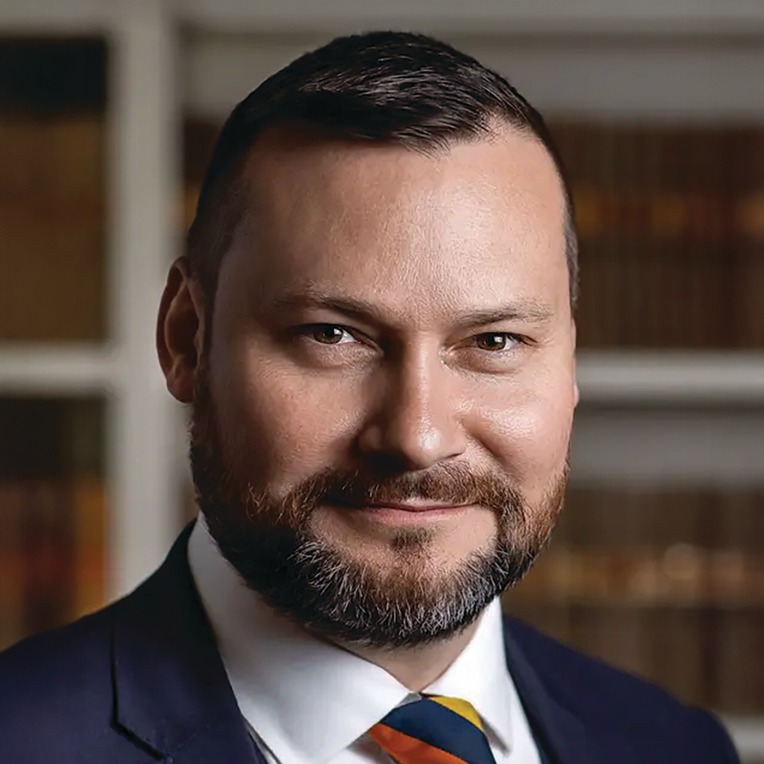
Amiot Vollenweider is a barrister at Thomas More Chambers and RAF Regiment Reserve officer whose calm authority and forensic precision underpin trusted leadership in high-stakes family, financial and criminal litigation.
There are cases that arrive in your practice neatly, with predictable timelines and manageable bundles. And then there are cases like Gohil: sprawling, relentless, and so deeply embedded in the procedural undergrowth of the Family Court that even the most battle-hardened practitioner might hesitate before stepping in. With over 9,000 pages of evidence and a history stretching back decades, it is one of the longest-running divorces in English legal history.
I did not go looking for it. In fact, the way I came to be involved was far more mundane – and far less glamorous – than any narrative about strategic career moves or heroic intervention. Mrs Gohil approached my clerk directly, asking for me by name for reasons known only to her. Around the same time, Morgan Sirikanda’s clerk contacted mine. Neither of us could do all of the case. Morgan could not cover a full week of the four-week hearing (including judicial reading time), and I could not cover a full week either. Between us, we managed to ensure continuity for the client. It was a practical solution to a practical problem. Nothing more complicated than that.
I am conscious that one of my opponents knew I had, at least in part, considered the case as an opportunity to stretch myself professionally. That is true. But it was never the sole driver. Anyone who has ever taken on a pro bono case of this scale knows that ambition alone is not enough to sustain you through the late nights, the administrative chaos and the emotional weight. Something else has to anchor you.
For me, that anchor was simple: the client needed representation, and the imbalance of power was stark. The husband’s conduct – persistent nondisclosure, dishonesty, and a willingness to manipulate the process – was not subtle. I have always had a low tolerance for bullies, in any form. It is not a noble trait; it is simply part of who I am. They have never fared well crossing me. And in Gohil, the dynamic was unmistakable.
Since commissioning into the RAF Regiment Reserves as a flying officer, I have tried to hold myself to the RAF’s core values: respect, integrity, service and excellence. They are not marketing slogans. They are not something I recite for effect. They are, in practice, a useful compass when the work becomes difficult or the path unclear.
In Gohil, those values aligned neatly with what the case required. Respect for a client who had been navigating the system for far too long. Integrity in the face of dishonesty. Service where it was needed, not where it was convenient. And excellence – not in the sense of perfection, but in the sense of doing the job properly, even when no one is paying you to do so.
I am wary of sounding pious. The Bar has no shortage of people willing to declare their virtue at length. But values only matter when they are tested. Gohil was a test.
There is no elegant way to integrate a case like Gohil into an already full practice. It is not a matter of ‘time management’ or ‘efficiency gains’. It is a matter of accepting that something else will have to give – sleep, evenings, weekends, or the illusion of control.
The pain points were predictable:
And yet, in the middle of the chaos, something interesting happened. I found that the discipline required sharpened my practice. I became more strategic, more decisive, and more efficient. When you have no time to waste, you stop wasting it.
Cynical readers will rightly ask: what did I get out of it? No barrister takes on a four-week pro bono final hearing out of pure self-sacrifice. And I am not going to pretend otherwise. Such cases do much for careers. But they do far more than that:
Taking on the final hearing in Gohil was not convenient. It was not easy. It was not glamorous. But it was worthwhile. It stretched me, challenged me, and reminded me of the values I try to live by – both in the RAF and at the Bar.
I do not claim to have carried the case alone. Many people contributed. But I am proud of the part I played, and I am grateful for what the experience taught me.
Looking back, I am simply glad I stepped in. The experience was hard, necessary and, in its own way, clarifying. Not every case changes you. This one did.
The value of pro bono work
Pro bono work is often discussed in overly sentimental terms. The reality is more grounded:
Not every case changes you. This one did, says Amiot Vollenweider, who explains how he accommodated, pro bono, one of the longest-running divorces in English legal history into his practice – and what he gained

The Chair of the Bar reports back
Susie Griffin on the admin that keeps barristers from billable work
Clement Cowley, Partner at The Penny Group, explains how global events can influence the performance of pensions and ISAs, and why taking a long-term approach to investing is often the most effective strategy
Mário Barroso, Head of R&D and Method Development at AlphaBiolabs, discusses what family law professionals need to know about hallucinogens, from the main hallucinogenic drugs encountered in family proceedings, to their effects and the testing options available
Harmony Christian Ministries is the latest charity to benefit from a £500 donation from AlphaBiolabs via the company’s Giving Back initiative
By David Green

At the start of her term, Chair of the Bar 2026 Kirsty Brimelow KC set out a series of priorities for the year ahead. One of those priorities was children in the justice system
As the world becomes more digital, Barbara Vinagre Mota examines international research into the mental health consequences of judges’ exposure to graphic and immersive evidence, highlighting the importance of support systems
In an era of patient-centred care and growing concern over misconduct in medical settings, why do women still lack the right to choose women consultants for examination and treatment? Charles Davey investigates
Reviewed by Daniel Barnett
James McNeill Whistler at Tate Britain until 27 September Rothko in Florence at Palazzo Strozzi until 23 August Reviewed by Stephen Cragg KC