*/
Harry Stratton, Lucy Masoud, Graeme Hall, Justin Bates KC, Colin Perrin, the International Advisory and Dispute Resolution Unit and Dan Bunting share the stories behind their awards and encourage others to get involved in pro bono work. Introduction by Advocate
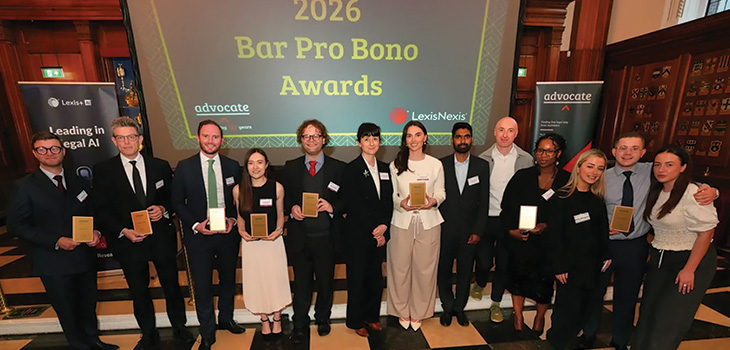
The 2026 Bar Pro Bono Awards took place at Inner Temple on 19 May. This year, Advocate received over 70 nominations across the different categories, highlighting the extraordinary pro bono work happening across the Bar – from pupils to KCs through to chambers and cross-Bar initiatives.
We were honoured to be joined by the Lady Chief Justice, Baroness Carr of Walton on the Hill, who gave a powerful opening address. Quoting To Kill a Mockingbird by Harper Lee, she reflected on the importance of ensuring that those in need, no matter their means, can access justice:
‘ Our courts have our faults, as does any human institution, but in this country our courts are the great levellers, and in our courts all men are created equal .’
Opening the ceremony, Advocate’s Chair of Trustees Sharif A Shivji KC, commented how humbling it had been to read each nomination:
‘As I turned the pages of our brochure, I found myself thinking, each time:, this person is going to win. Every story and contribution is remarkable in its own right...
[But ] what we celebrate tonight goes far beyond those shortlisted. Across the Bar, each year, there are thousands of pieces of pro bono work: often unseen, often unreported, but life-changing for the people helped. And none of that work happens alone. It is enabled by clerks and chambers’ professionals, and by all those who make it possible behind the scenes .’
Our many congratulations to this year’s winners for their outstanding work and thank you to all this year’s nominees for their commitment to ensuring access to justice.
A special thank you to LexisNexis for being our headline sponsor, making this event possible for another year, and to Instant on IT for sponsoring our drinks reception. Finally, a special thank you to Inner Temple for generously hosting us.
Read more about the Awards, including all the shortlisted nominees, at www.weareadvocate.org.uk/resources-for-the-bar/nominate.
The Bar Pro Bono Awards are organised by Advocate – the national pro bono charity of the Bar: www.weareadvocate.org.uk
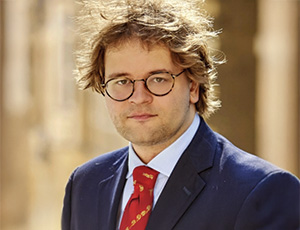
Harry Stratton, of One Essex Court, was called to the Bar in 2021 and specialises in international commercial disputes as well as fraud, bribery, and libel claims.
Doing pro bono work through Advocate is a fantastic opportunity to do some good for people who really need it, and to have great fun doing it. It’s the chance to work on some of the most interesting cases out there and operate way above your level of call (including going solo in the Court of Appeal and Supreme Court). If you’re ever feeling burnt out – or in need of a reminder that for all its faults, this is still the best job in the world – pro bono is the way to remember why you went to law school and what it’s all for.
Because you pick your own pro bono cases, you can choose what you’re most interested in. Most of my cases are about defending free speech rights of the powerless against the powerful. My favourite one so far has been representing a Tanzanian refugee and human rights activist being sued by the former Tanzanian Foreign Minister for defamation. The refugee was facing bankruptcy and imprisonment after a court order was made against him that he couldn’t comply with; I got the order set aside and settled the dispute for no payment of damages or costs. Likewise, I represented an organisation for refugees from an authoritarian regime in resisting a Strategic Lawsuit Against Public Participation (SLAPP) brought by an alleged intelligence agent of the regime. I also regularly represent MeToo complainants, including against sports stars and Hollywood celebrities.
But pro bono also lets you range more widely. In September, I’ll be representing 31 trade union members alleging they were unlawfully sacked by Rockstar (the makers of Grand Theft Auto) for trade union activity. In November, I’ll be representing a young woman who alleges she was kicked out of Oxford University in a decision tainted by racial discrimination. Previously, I appeared against a religious leader and successfully argued that calling someone the ‘Antichrist’ is not defamatory, but vulgar abuse (in the same way that calling someone a ‘shithead’ doesn’t mean their head is literally made of shit). There are plenty of great pro bono cases out there at all levels of the court system: through Advocate I’ve gone to the Court of Appeal three times.
The experience of doing pro bono cases is intensely rewarding. Robert Bork said he wanted to be on the Supreme Court [of the United States] for the ‘intellectual feast’, and learning a whole new area of law to help someone who needs it is about as intellectually satisfying as it gets. Your clients could not be more grateful. Judges at all levels are intensely thankful that you’re there and treat even very ambitious submissions with gratitude and respect (even if you don’t always deserve it!). Typically, you are representing people with very little to lose, who can take more risks and drive much harder bargains. If you do this job even partly for the love of the game, you’ll love pro bono.
If you’re thinking about doing pro bono (or doing more), I’d say – do it! Advocate makes it really easy to find cases that interest you, and you can sign up to draft one particular document or do one particular hearing, without committing yourself to biting off more than you can chew. But remember to keep track of your time, so you can ask for a nice juicy pro bono costs award at the end.
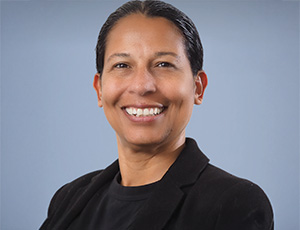
Lucy Masoud, of 33 Bedford Row, was called to the Bar in 2017 and specialises in children law, both public and private law, and cases concerning domestic abuse.
Winning Junior Pro Bono Barrister of the Year is a real honour. I came to the Bar later than most. Before I was a barrister, I spent 12 years as a firefighter with the London Fire Brigade, where as well as firefighting I also undertook a lot of voluntary work with my union. That instinct to get involved, to use whatever position you are in to help people who need it, has followed me into practice.
The bulk of my pro bono work is through the Faisal Luke Pro Bono Project (FLPP), which I founded in 2023. The premise is straightforward: we provide free, independent legal advice to women who are victims of domestic violence and stalking. It is a female-only service, run by an all-female team of specialist family law barristers and solicitors. We hold clinics twice a month on Thursday evenings, offering 45-minute advice sessions covering non-molestation orders, child contact, occupation orders, care cases and other family law matters. Our clients are referred to us directly by Aurora New Dawn, a feminist-led charity dedicated to ending violence against women and children. Their advocates identify when a woman needs legal help, which means the client gets to us quickly, at what is often the worst point in her life.
I set the project up in memory of my brother Faisal, who died suddenly and unexpectedly in 2022. I have spent years campaigning for women’s sex-based rights and to end violence against women, so the FLPP was a way to do more of that work while also doing something meaningful in his name. I am not sure I could have set up a project in his memory that did not involve helping women as it would have felt like a missed opportunity.
Since we launched, we have helped over 400 women. That is the number I come back to when anyone asks whether it has been worth it. Behind each of those 400 is someone who needed clear legal advice and had no way of affording it and we were able to help. None of it would happen without our volunteers, who are genuinely excellent, and without Aurora New Dawn, who do remarkable work at their end.
One thing I was clear about from the start is that volunteering for the FLPP should never feel like a burden. I offer plenty of flexibility and I keep a close eye on workload. Nobody should be signing up to volunteer and end up drowning themselves in too much work. That is not good for the volunteers, and it is not good for the clients. We have managed to build something sustainable, which I think is why it works so well.
If you are thinking about pro bono work, my honest advice is to just get on with it. You will see directly who you are helping and that is genuinely rewarding in a way that is hard to replicate elsewhere in practice. The only caveat is to be sensible about what you take on. Do not overcommit and then have burn out as that helps nobody. Find something that fits around your life and is manageable and enjoyable.
Winning the award is a real honour, and I think it matters for the wider project as it puts the FLPP on the map and hopefully encourages more people to get involved, whether as volunteers or donors. On a personal level, having my brother’s name attached to something that has helped so many women is exactly what I hoped for when I set this up.
He would have approved, I’m sure.
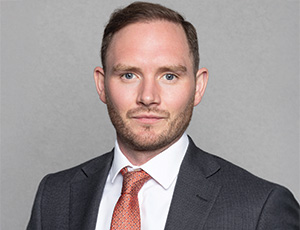
Graeme Hall, of Doughty Street Chambers, was called to the Bar in 2011 and specialises in extradition, crime, international human rights and public law.
People involved in death penalty litigation often cite as their motivation the risk of someone being executed for a crime they did not commit. For me, the motivation is based on the belief that no one who values their life should have it taken away – whether by another person or the state. Certainly, I have always felt an instinctive revulsion at the state taking human life as a form of punishment.
I was fortunate upon finishing Bar school to intern with the Centre for Capital Punishment Studies, then led by the incredibly committed Professor Peter Hodgkinson, who sadly died this year. I established a project on death row in Uganda seeking to address some of the consequences of the Constitutional Court’s decision to abolish the mandatory death sentence. I later wrote about this experience for Counsel magazine. Regular visits to death row – meeting prisoners who had often been detained for decades in overcrowded and poor conditions, uncertain when (if ever) their sentences might be carried out – brought into sharp relief the privilege of my own circumstances.
My good fortune continued when I commenced pupillage at Doughty Street Chambers under the supervision of the late John Jones QC. John’s exceptional commitment to justice was matched only by his humility and sense of mischief. Through him, I began working on pro bono cases with the Death Penalty Project (DPP) led by the indomitable Saul Lehrfreund and Parvais Jabbar. My first case was Benjamin & Ganga where the Privy Council allowed a death penalty appeal based on fresh psychiatric evidence that raised serious concerns about the appellants’ confessions and fitness to plead.
Parvais and Saul, together with the DPP team – particularly the dedicated Killian Moran and Bethany Turpin – have kindly continued to instruct me. The 2022 Privy Council decision of Lescene Edwards stands out. The Board not only quashed Mr Edwards’ conviction for the murder of his wife but also urged the state to compensate him for the time he spent in custody for a death he could not have committed. This remarkable result was achieved entirely based on fresh expert evidence from Angela Shaw (gunshot residue), Mark Mastaglio (ballistics) and Gillian Leak (blood spatter) working pro bono alongside the DPP team, the indefatigable Kirsty Brimelow KC and myself. It is a powerful testament to what can be achieved when skilled professionals give their time selflessly in the service of justice.
While this work is deeply rewarding, it is also very time-consuming. In May, the Privy Council gave judgment in Uriah Woods, allowing the death penalty appeal on the basis of fresh psychiatric evidence from Dr Richard Latham and Dr Stephen Attard, both acting pro bono. Working alongside the DPP team and Edward Fitzgerald KC – a mentor and a trailblazer in the fight for justice – this case took more than five years from instruction to resolution. It involved hundreds of hours of unpaid work.
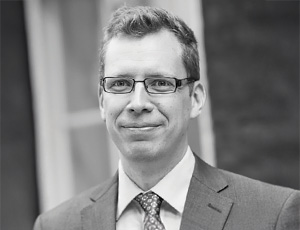
Justin Bates KC, of Landmark Chambers, was called to the Bar in 2003 and took silk in 2024. His practice covers all aspects of housing, property and local government law.
I was first introduced to the importance of pro bono work by one of my pupil masters, the late Bryan McGuire QC. I can’t now remember all the details of the case, but what does live in my memory was how kind and patient he was in dealing with a client whose life was clearly falling apart and how his work ensured that a fair outcome was achieved and gave her a base from which to rebuild. What I remember more clearly is the post-hearing coffee and biscuits (particularly the biscuits) back in Chambers where he explained why he saw pro bono work as a both a moral obligation and an opportunity for self-development.
There is no conflict between those two features. Every piece of pro bono work you take on represents a huge benefit to an (often vulnerable) individual at one of the worst times in their lives. Even if your work is limited in scope – explaining what a letter means or directing them to a helpful website – you make a hugely positive impact.
Pro bono work also improves you as a barrister. You get better at giving difficult advice to your paying clients precisely because you’ve had to do the same for very vulnerable people. You get an opportunity to move into new areas of law. It gives you the chance to lead others. If silk is something you aspire to, pro bono work can be critical to demonstrating how you meet the various competency criteria.
I do realise that I am lucky. My practice pays sufficiently well to give me the opportunity to create space in my diary to accommodate pro bono work. My Chambers is very supportive of pro bono work and we have a plentiful supply of new juniors who want to help on cases. Even if that isn’t true for you and even if you might only have a few hours for pro bono work over a year, Advocate can find a use for whatever time you might be willing to give. The mentoring and collaboration schemes allow you to operate one step removed from the case, giving the benefit of your experience to more junior members of the Bar.
If you are at all hesitant, just contact the Advocate team. They’ll be more than happy to talk you through the process. Whatever your capacity to help, they can find the best way to use your skills to help others navigate what we all know is a complex and difficult legal landscape.

Pro Bono and Social Responsibility Initiative of the Year
International Advisory and Dispute Resolution Unit (IADRU)
The International Advisory and Dispute Resolution Unit (IADRU) is a pro bono unit within 3 Verulam Buildings and brings together members with a shared commitment to promoting access to justice, strengthening legal frameworks, and supporting the rule of law globally.
IADRU assists governments, state-owned entities, international institutions, corporates, and individuals, particularly in low- and middle-income countries. Our broad offering includes pro bono legal services such as advice, drafting, advocacy, mediation and assistance with identifying arbitrators. A core part of our work also involves capacity building and knowledge transfer, through free legal training and supporting the development of dispute resolution institutions and frameworks. This focus is complementary to Goal 16 of the UN Sustainable Development Goals: Peace, Justice and Strong Institutions.
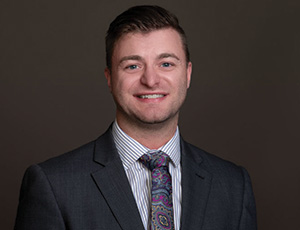
Colin Perrin is a senior business and property clerk at 23ES Chambers.
As a clerk, the words ‘pro bono’ used to strike fear into my heart. After all, my barristers rely on me to help them generate income and Chambers will inevitably judge me according to my team’s revenue. Over the past couple of years of working with Advocate, however, I have seen first-hand how rewarding pro bono work can be – not only for individual barristers, but for Chambers too. It helps grow our profile and is appreciated and respected by other lawyers and judges. While by no means saying my barristers can go to court pro bono every day, I do see it as an important part of our overall business.
My greater involvement began when Advocate introduced case workers based in Manchester, where I work. This led to a few of my barristers feeling more of a connection with Advocate’s work and volunteering more often to take on cases. In turn, Advocate then approached Chambers to see if we would be interested in supporting the launch of the Chancery Litigant in Person Scheme (CLIPS) in Manchester (M-CLIPS).
CLIPS involves volunteer barristers attending court on days that applications are listed, to be available to assist litigants in person if required. It is a sort of duty barrister scheme, and the volunteers speak to the litigants to understand their case, offer what advice they’re able to on the day, and then represent them before the court.
In order to get the scheme up and running in Manchester, I worked with colleagues from other sets of chambers in the city and various clerks, barristers, judges and court staff formed a committee with Advocate representatives to look at how it could work in practice and the challenges.
I understood that CLIPS had been a success in London, and was popular with the barristers and clerks there, but was cautious of the differences here in Manchester. There is not the same volume of business in the Chancery applications lists, so thought needed to be given to where volunteers should be deployed. But more significantly, whereas junior commercial barristers in London are often being led on large cases rather than doing their own oral advocacy, so welcome the opportunity CLIPS offers to practise their court skills, most junior counsel in Manchester are in court almost every day. The last thing they (or I) need sometimes is pro bono to be filling their diary.
The idea that I came up with to meet the second of those problems was to ask every member of our team to volunteer for M-CLIPS. This means that the clerking team in Chambers has maximum flexibility to deploy a volunteer when it is our turn to staff the scheme, without losing other work wherever possible. It has also meant that Chambers more than pulls its weight in terms of the number of days it is able to cover the scheme, matching sets with larger teams.
Therefore, while I am personally very honoured to have won this award, I am most pleased with the recognition it demonstrates for the Business & Property team at 23ES, who have wholeheartedly supported M-CLIPS since its inception and played a big part in its success. Our support won’t end here. On 24 June we hosted a celebration of M-CLIPS with Advocate, which is also an opportunity for prospective new volunteers to come and hear more about how they can help.
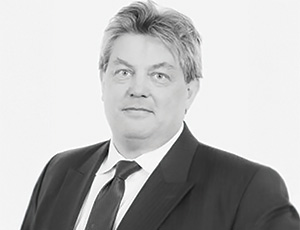
Dan Bunting, of 2 Dr Johnson’s Building, was called to the Bar in 2001 and practises in all areas of criminal law and appeals.
I first began working with Advocate (then the Bar Pro Bono Unit) far more years ago than I can remember. My involvement started with criminal cases, of which there were not that many given the availability of legal aid, and then extended to immigration, public and employment work as well.
I have always considered pro bono work to be an important and integral part of the job of a lawyer. Shortly after finishing pupillage, I started volunteering at a Legal Advice Centre (Toynbee Hall) for one evening a week which I did for a decade but eventually family and work life made that too hard. By that point I had started working with Advocate which seemed natural progression.
After a few years I began to act as a reviewer, which meant I would conduct a sift of cases that come in and decide whether to approve them for Advocate or not. Since then, whilst I have mainly acted as a reviewer, I have tried to carry on with the pro bono work itself.
It’s not always easy to balance pro bono with other work, but I think that it is important to treat it as I would do with any other part of my practice. Although it is unpaid, it should be approached in the same way as I would approach any paying client. I look for weeks which will be lighter workwise, or more predictable, and put myself on the rota for then and only take on cases where I know I can commit the time.
It really helps that all the staff at Advocate have been so helpful (and organised!) – the level of support that they provide is amazing and makes it so much easier.
There are some cases that stick in the memory more than others. Judicial Reviews where Advocate have teamed up with a firm of solicitors also acting pro bono to take a client’s case (successfully) forward where there was no way that they would have even tried on their own for example.
But while it is satisfying to get a result in a case like that that last for months, it is equally satisfying to help someone with a ‘minor’ issue take their case forward and put them on an equal footing. Even if it was only an hour or so of advice, the impact can be massive. We are often the last port of call for people who have tried to get help, but (for one reason or another) has never been able to obtain it.
I would encourage anyone thinking of volunteering (whether with Advocate, or another legal organisation, or something else) to do it. It is always good to get a balance in your life, and within your work life, and this is a great way of helping that. Advocate’s work is becoming ever more important. Legal aid is much less available, and cases which, when I was starting out, would be covered by legal aid are now no longer in scope (or it’s just impossible to find a representative). I’ve never regretted signing up to Advocate.
It was a great surprise to be nominated, which was an incredible honour in itself, and an even greater surprise to win. I have got so much out of my time with Advocate and am really grateful for the opportunity to give something back.
Pro Bono Week is taking place from 2 to 6 November to celebrate the voluntary contribution made by legal professionals across the UK in providing free legal help to those who need it most. Find out more about the week and the events taking place on the UK Pro Bono Week website.
Can costs overcome barriers to justice?
The Access to Justice Foundation urges barristers to maximise the impact of their pro bono work by applying for pro bono costs orders. Find out more in Counsel online.
Guides for movers and returners, employed barristers, pupils and aspiring silks
See also Counsel’s Silk Supplement 2026 where Matthew Morrison KC and Marika Lemos KC reflect on their pro bono experiences and the role they played in their successful applications for silk.
The 2026 Bar Pro Bono Awards took place at Inner Temple on 19 May. This year, Advocate received over 70 nominations across the different categories, highlighting the extraordinary pro bono work happening across the Bar – from pupils to KCs through to chambers and cross-Bar initiatives.
We were honoured to be joined by the Lady Chief Justice, Baroness Carr of Walton on the Hill, who gave a powerful opening address. Quoting To Kill a Mockingbird by Harper Lee, she reflected on the importance of ensuring that those in need, no matter their means, can access justice:
‘ Our courts have our faults, as does any human institution, but in this country our courts are the great levellers, and in our courts all men are created equal .’
Opening the ceremony, Advocate’s Chair of Trustees Sharif A Shivji KC, commented how humbling it had been to read each nomination:
‘As I turned the pages of our brochure, I found myself thinking, each time:, this person is going to win. Every story and contribution is remarkable in its own right...
[But ] what we celebrate tonight goes far beyond those shortlisted. Across the Bar, each year, there are thousands of pieces of pro bono work: often unseen, often unreported, but life-changing for the people helped. And none of that work happens alone. It is enabled by clerks and chambers’ professionals, and by all those who make it possible behind the scenes .’
Our many congratulations to this year’s winners for their outstanding work and thank you to all this year’s nominees for their commitment to ensuring access to justice.
A special thank you to LexisNexis for being our headline sponsor, making this event possible for another year, and to Instant on IT for sponsoring our drinks reception. Finally, a special thank you to Inner Temple for generously hosting us.
Read more about the Awards, including all the shortlisted nominees, at www.weareadvocate.org.uk/resources-for-the-bar/nominate.
The Bar Pro Bono Awards are organised by Advocate – the national pro bono charity of the Bar: www.weareadvocate.org.uk
Harry Stratton, of One Essex Court, was called to the Bar in 2021 and specialises in international commercial disputes as well as fraud, bribery, and libel claims.
Doing pro bono work through Advocate is a fantastic opportunity to do some good for people who really need it, and to have great fun doing it. It’s the chance to work on some of the most interesting cases out there and operate way above your level of call (including going solo in the Court of Appeal and Supreme Court). If you’re ever feeling burnt out – or in need of a reminder that for all its faults, this is still the best job in the world – pro bono is the way to remember why you went to law school and what it’s all for.
Because you pick your own pro bono cases, you can choose what you’re most interested in. Most of my cases are about defending free speech rights of the powerless against the powerful. My favourite one so far has been representing a Tanzanian refugee and human rights activist being sued by the former Tanzanian Foreign Minister for defamation. The refugee was facing bankruptcy and imprisonment after a court order was made against him that he couldn’t comply with; I got the order set aside and settled the dispute for no payment of damages or costs. Likewise, I represented an organisation for refugees from an authoritarian regime in resisting a Strategic Lawsuit Against Public Participation (SLAPP) brought by an alleged intelligence agent of the regime. I also regularly represent MeToo complainants, including against sports stars and Hollywood celebrities.
But pro bono also lets you range more widely. In September, I’ll be representing 31 trade union members alleging they were unlawfully sacked by Rockstar (the makers of Grand Theft Auto) for trade union activity. In November, I’ll be representing a young woman who alleges she was kicked out of Oxford University in a decision tainted by racial discrimination. Previously, I appeared against a religious leader and successfully argued that calling someone the ‘Antichrist’ is not defamatory, but vulgar abuse (in the same way that calling someone a ‘shithead’ doesn’t mean their head is literally made of shit). There are plenty of great pro bono cases out there at all levels of the court system: through Advocate I’ve gone to the Court of Appeal three times.
The experience of doing pro bono cases is intensely rewarding. Robert Bork said he wanted to be on the Supreme Court [of the United States] for the ‘intellectual feast’, and learning a whole new area of law to help someone who needs it is about as intellectually satisfying as it gets. Your clients could not be more grateful. Judges at all levels are intensely thankful that you’re there and treat even very ambitious submissions with gratitude and respect (even if you don’t always deserve it!). Typically, you are representing people with very little to lose, who can take more risks and drive much harder bargains. If you do this job even partly for the love of the game, you’ll love pro bono.
If you’re thinking about doing pro bono (or doing more), I’d say – do it! Advocate makes it really easy to find cases that interest you, and you can sign up to draft one particular document or do one particular hearing, without committing yourself to biting off more than you can chew. But remember to keep track of your time, so you can ask for a nice juicy pro bono costs award at the end.
Lucy Masoud, of 33 Bedford Row, was called to the Bar in 2017 and specialises in children law, both public and private law, and cases concerning domestic abuse.
Winning Junior Pro Bono Barrister of the Year is a real honour. I came to the Bar later than most. Before I was a barrister, I spent 12 years as a firefighter with the London Fire Brigade, where as well as firefighting I also undertook a lot of voluntary work with my union. That instinct to get involved, to use whatever position you are in to help people who need it, has followed me into practice.
The bulk of my pro bono work is through the Faisal Luke Pro Bono Project (FLPP), which I founded in 2023. The premise is straightforward: we provide free, independent legal advice to women who are victims of domestic violence and stalking. It is a female-only service, run by an all-female team of specialist family law barristers and solicitors. We hold clinics twice a month on Thursday evenings, offering 45-minute advice sessions covering non-molestation orders, child contact, occupation orders, care cases and other family law matters. Our clients are referred to us directly by Aurora New Dawn, a feminist-led charity dedicated to ending violence against women and children. Their advocates identify when a woman needs legal help, which means the client gets to us quickly, at what is often the worst point in her life.
I set the project up in memory of my brother Faisal, who died suddenly and unexpectedly in 2022. I have spent years campaigning for women’s sex-based rights and to end violence against women, so the FLPP was a way to do more of that work while also doing something meaningful in his name. I am not sure I could have set up a project in his memory that did not involve helping women as it would have felt like a missed opportunity.
Since we launched, we have helped over 400 women. That is the number I come back to when anyone asks whether it has been worth it. Behind each of those 400 is someone who needed clear legal advice and had no way of affording it and we were able to help. None of it would happen without our volunteers, who are genuinely excellent, and without Aurora New Dawn, who do remarkable work at their end.
One thing I was clear about from the start is that volunteering for the FLPP should never feel like a burden. I offer plenty of flexibility and I keep a close eye on workload. Nobody should be signing up to volunteer and end up drowning themselves in too much work. That is not good for the volunteers, and it is not good for the clients. We have managed to build something sustainable, which I think is why it works so well.
If you are thinking about pro bono work, my honest advice is to just get on with it. You will see directly who you are helping and that is genuinely rewarding in a way that is hard to replicate elsewhere in practice. The only caveat is to be sensible about what you take on. Do not overcommit and then have burn out as that helps nobody. Find something that fits around your life and is manageable and enjoyable.
Winning the award is a real honour, and I think it matters for the wider project as it puts the FLPP on the map and hopefully encourages more people to get involved, whether as volunteers or donors. On a personal level, having my brother’s name attached to something that has helped so many women is exactly what I hoped for when I set this up.
He would have approved, I’m sure.
Graeme Hall, of Doughty Street Chambers, was called to the Bar in 2011 and specialises in extradition, crime, international human rights and public law.
People involved in death penalty litigation often cite as their motivation the risk of someone being executed for a crime they did not commit. For me, the motivation is based on the belief that no one who values their life should have it taken away – whether by another person or the state. Certainly, I have always felt an instinctive revulsion at the state taking human life as a form of punishment.
I was fortunate upon finishing Bar school to intern with the Centre for Capital Punishment Studies, then led by the incredibly committed Professor Peter Hodgkinson, who sadly died this year. I established a project on death row in Uganda seeking to address some of the consequences of the Constitutional Court’s decision to abolish the mandatory death sentence. I later wrote about this experience for Counsel magazine. Regular visits to death row – meeting prisoners who had often been detained for decades in overcrowded and poor conditions, uncertain when (if ever) their sentences might be carried out – brought into sharp relief the privilege of my own circumstances.
My good fortune continued when I commenced pupillage at Doughty Street Chambers under the supervision of the late John Jones QC. John’s exceptional commitment to justice was matched only by his humility and sense of mischief. Through him, I began working on pro bono cases with the Death Penalty Project (DPP) led by the indomitable Saul Lehrfreund and Parvais Jabbar. My first case was Benjamin & Ganga where the Privy Council allowed a death penalty appeal based on fresh psychiatric evidence that raised serious concerns about the appellants’ confessions and fitness to plead.
Parvais and Saul, together with the DPP team – particularly the dedicated Killian Moran and Bethany Turpin – have kindly continued to instruct me. The 2022 Privy Council decision of Lescene Edwards stands out. The Board not only quashed Mr Edwards’ conviction for the murder of his wife but also urged the state to compensate him for the time he spent in custody for a death he could not have committed. This remarkable result was achieved entirely based on fresh expert evidence from Angela Shaw (gunshot residue), Mark Mastaglio (ballistics) and Gillian Leak (blood spatter) working pro bono alongside the DPP team, the indefatigable Kirsty Brimelow KC and myself. It is a powerful testament to what can be achieved when skilled professionals give their time selflessly in the service of justice.
While this work is deeply rewarding, it is also very time-consuming. In May, the Privy Council gave judgment in Uriah Woods, allowing the death penalty appeal on the basis of fresh psychiatric evidence from Dr Richard Latham and Dr Stephen Attard, both acting pro bono. Working alongside the DPP team and Edward Fitzgerald KC – a mentor and a trailblazer in the fight for justice – this case took more than five years from instruction to resolution. It involved hundreds of hours of unpaid work.
Justin Bates KC, of Landmark Chambers, was called to the Bar in 2003 and took silk in 2024. His practice covers all aspects of housing, property and local government law.
I was first introduced to the importance of pro bono work by one of my pupil masters, the late Bryan McGuire QC. I can’t now remember all the details of the case, but what does live in my memory was how kind and patient he was in dealing with a client whose life was clearly falling apart and how his work ensured that a fair outcome was achieved and gave her a base from which to rebuild. What I remember more clearly is the post-hearing coffee and biscuits (particularly the biscuits) back in Chambers where he explained why he saw pro bono work as a both a moral obligation and an opportunity for self-development.
There is no conflict between those two features. Every piece of pro bono work you take on represents a huge benefit to an (often vulnerable) individual at one of the worst times in their lives. Even if your work is limited in scope – explaining what a letter means or directing them to a helpful website – you make a hugely positive impact.
Pro bono work also improves you as a barrister. You get better at giving difficult advice to your paying clients precisely because you’ve had to do the same for very vulnerable people. You get an opportunity to move into new areas of law. It gives you the chance to lead others. If silk is something you aspire to, pro bono work can be critical to demonstrating how you meet the various competency criteria.
I do realise that I am lucky. My practice pays sufficiently well to give me the opportunity to create space in my diary to accommodate pro bono work. My Chambers is very supportive of pro bono work and we have a plentiful supply of new juniors who want to help on cases. Even if that isn’t true for you and even if you might only have a few hours for pro bono work over a year, Advocate can find a use for whatever time you might be willing to give. The mentoring and collaboration schemes allow you to operate one step removed from the case, giving the benefit of your experience to more junior members of the Bar.
If you are at all hesitant, just contact the Advocate team. They’ll be more than happy to talk you through the process. Whatever your capacity to help, they can find the best way to use your skills to help others navigate what we all know is a complex and difficult legal landscape.
Pro Bono and Social Responsibility Initiative of the Year
International Advisory and Dispute Resolution Unit (IADRU)
The International Advisory and Dispute Resolution Unit (IADRU) is a pro bono unit within 3 Verulam Buildings and brings together members with a shared commitment to promoting access to justice, strengthening legal frameworks, and supporting the rule of law globally.
IADRU assists governments, state-owned entities, international institutions, corporates, and individuals, particularly in low- and middle-income countries. Our broad offering includes pro bono legal services such as advice, drafting, advocacy, mediation and assistance with identifying arbitrators. A core part of our work also involves capacity building and knowledge transfer, through free legal training and supporting the development of dispute resolution institutions and frameworks. This focus is complementary to Goal 16 of the UN Sustainable Development Goals: Peace, Justice and Strong Institutions.
Colin Perrin is a senior business and property clerk at 23ES Chambers.
As a clerk, the words ‘pro bono’ used to strike fear into my heart. After all, my barristers rely on me to help them generate income and Chambers will inevitably judge me according to my team’s revenue. Over the past couple of years of working with Advocate, however, I have seen first-hand how rewarding pro bono work can be – not only for individual barristers, but for Chambers too. It helps grow our profile and is appreciated and respected by other lawyers and judges. While by no means saying my barristers can go to court pro bono every day, I do see it as an important part of our overall business.
My greater involvement began when Advocate introduced case workers based in Manchester, where I work. This led to a few of my barristers feeling more of a connection with Advocate’s work and volunteering more often to take on cases. In turn, Advocate then approached Chambers to see if we would be interested in supporting the launch of the Chancery Litigant in Person Scheme (CLIPS) in Manchester (M-CLIPS).
CLIPS involves volunteer barristers attending court on days that applications are listed, to be available to assist litigants in person if required. It is a sort of duty barrister scheme, and the volunteers speak to the litigants to understand their case, offer what advice they’re able to on the day, and then represent them before the court.
In order to get the scheme up and running in Manchester, I worked with colleagues from other sets of chambers in the city and various clerks, barristers, judges and court staff formed a committee with Advocate representatives to look at how it could work in practice and the challenges.
I understood that CLIPS had been a success in London, and was popular with the barristers and clerks there, but was cautious of the differences here in Manchester. There is not the same volume of business in the Chancery applications lists, so thought needed to be given to where volunteers should be deployed. But more significantly, whereas junior commercial barristers in London are often being led on large cases rather than doing their own oral advocacy, so welcome the opportunity CLIPS offers to practise their court skills, most junior counsel in Manchester are in court almost every day. The last thing they (or I) need sometimes is pro bono to be filling their diary.
The idea that I came up with to meet the second of those problems was to ask every member of our team to volunteer for M-CLIPS. This means that the clerking team in Chambers has maximum flexibility to deploy a volunteer when it is our turn to staff the scheme, without losing other work wherever possible. It has also meant that Chambers more than pulls its weight in terms of the number of days it is able to cover the scheme, matching sets with larger teams.
Therefore, while I am personally very honoured to have won this award, I am most pleased with the recognition it demonstrates for the Business & Property team at 23ES, who have wholeheartedly supported M-CLIPS since its inception and played a big part in its success. Our support won’t end here. On 24 June we hosted a celebration of M-CLIPS with Advocate, which is also an opportunity for prospective new volunteers to come and hear more about how they can help.
Dan Bunting, of 2 Dr Johnson’s Building, was called to the Bar in 2001 and practises in all areas of criminal law and appeals.
I first began working with Advocate (then the Bar Pro Bono Unit) far more years ago than I can remember. My involvement started with criminal cases, of which there were not that many given the availability of legal aid, and then extended to immigration, public and employment work as well.
I have always considered pro bono work to be an important and integral part of the job of a lawyer. Shortly after finishing pupillage, I started volunteering at a Legal Advice Centre (Toynbee Hall) for one evening a week which I did for a decade but eventually family and work life made that too hard. By that point I had started working with Advocate which seemed natural progression.
After a few years I began to act as a reviewer, which meant I would conduct a sift of cases that come in and decide whether to approve them for Advocate or not. Since then, whilst I have mainly acted as a reviewer, I have tried to carry on with the pro bono work itself.
It’s not always easy to balance pro bono with other work, but I think that it is important to treat it as I would do with any other part of my practice. Although it is unpaid, it should be approached in the same way as I would approach any paying client. I look for weeks which will be lighter workwise, or more predictable, and put myself on the rota for then and only take on cases where I know I can commit the time.
It really helps that all the staff at Advocate have been so helpful (and organised!) – the level of support that they provide is amazing and makes it so much easier.
There are some cases that stick in the memory more than others. Judicial Reviews where Advocate have teamed up with a firm of solicitors also acting pro bono to take a client’s case (successfully) forward where there was no way that they would have even tried on their own for example.
But while it is satisfying to get a result in a case like that that last for months, it is equally satisfying to help someone with a ‘minor’ issue take their case forward and put them on an equal footing. Even if it was only an hour or so of advice, the impact can be massive. We are often the last port of call for people who have tried to get help, but (for one reason or another) has never been able to obtain it.
I would encourage anyone thinking of volunteering (whether with Advocate, or another legal organisation, or something else) to do it. It is always good to get a balance in your life, and within your work life, and this is a great way of helping that. Advocate’s work is becoming ever more important. Legal aid is much less available, and cases which, when I was starting out, would be covered by legal aid are now no longer in scope (or it’s just impossible to find a representative). I’ve never regretted signing up to Advocate.
It was a great surprise to be nominated, which was an incredible honour in itself, and an even greater surprise to win. I have got so much out of my time with Advocate and am really grateful for the opportunity to give something back.
Pro Bono Week is taking place from 2 to 6 November to celebrate the voluntary contribution made by legal professionals across the UK in providing free legal help to those who need it most. Find out more about the week and the events taking place on the UK Pro Bono Week website.
Can costs overcome barriers to justice?
The Access to Justice Foundation urges barristers to maximise the impact of their pro bono work by applying for pro bono costs orders. Find out more in Counsel online.
Guides for movers and returners, employed barristers, pupils and aspiring silks
See also Counsel’s Silk Supplement 2026 where Matthew Morrison KC and Marika Lemos KC reflect on their pro bono experiences and the role they played in their successful applications for silk.
Harry Stratton, Lucy Masoud, Graeme Hall, Justin Bates KC, Colin Perrin, the International Advisory and Dispute Resolution Unit and Dan Bunting share the stories behind their awards and encourage others to get involved in pro bono work. Introduction by Advocate

The Chair of the Bar reports back
Susie Griffin on the admin that keeps barristers from billable work
Clement Cowley, Partner at The Penny Group, explains how global events can influence the performance of pensions and ISAs, and why taking a long-term approach to investing is often the most effective strategy
Mário Barroso, Head of R&D and Method Development at AlphaBiolabs, discusses what family law professionals need to know about hallucinogens, from the main hallucinogenic drugs encountered in family proceedings, to their effects and the testing options available
Harmony Christian Ministries is the latest charity to benefit from a £500 donation from AlphaBiolabs via the company’s Giving Back initiative
By David Green

At the start of her term, Chair of the Bar 2026 Kirsty Brimelow KC set out a series of priorities for the year ahead. One of those priorities was children in the justice system
As the world becomes more digital, Barbara Vinagre Mota examines international research into the mental health consequences of judges’ exposure to graphic and immersive evidence, highlighting the importance of support systems
In an era of patient-centred care and growing concern over misconduct in medical settings, why do women still lack the right to choose women consultants for examination and treatment? Charles Davey investigates
Reviewed by Daniel Barnett
James McNeill Whistler at Tate Britain until 27 September Rothko in Florence at Palazzo Strozzi until 23 August Reviewed by Stephen Cragg KC