*/
Tim Dutton CBE KC reviews another spellbinding performance by the Bar Choral Society
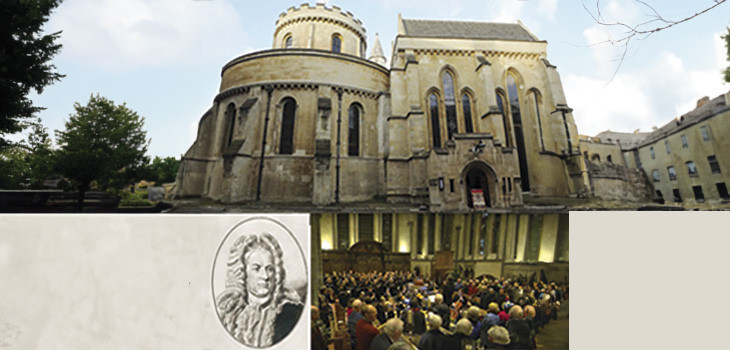
The Bar Choral Society (BCS) is about to celebrate its 10th birthday. Despite COVID it has thrived and performed at some of London’s most illustrious venues, including The Royal Festival Hall, St John’s Smith Square, not to mention its base at Temple Church. On 11 December 2023, 450 concertgoers heard the Choral Society’s complete performance of Handel’s Messiah.
In 1741 Handel was contemplating a move to Germany, commissions being few and far between (a phenomenon not entirely unfamiliar to those of us at the Bar). But then came his save-all-brief: a commission for a set of works to be performed the following year in Dublin. In three weeks in the summer of 1742 armed with a libretto by Charles Jennens, Handel composed the Messiah. He tinkered with the score occasionally over the next seven or eight years, but what is now sung around the world during the pre-Christmas period tends to be the music which Handel himself conducted at the first performance in Dublin, where the venue was so packed that men were told to leave their swords at home, and women not to put hoops into their dresses. During Handel’s lifetime, the piece was performed with no more than about 15-20 musicians and a similar-sized chorus, with soloists being expected to merge into the chorus as and when required. Had Handel survived to witness the BCS performance, he would have delighted in its authentic reference to his original.
The problem created by a composition of such huge popularity and worldwide success is that audiences may have heard the Messiah on dozens of occasions. Stuart Ritchie KC, the indefatigable chairman of the BCS, told me that there were quite a few Messiah junkies in the audience in Temple Church. The inspirational music director of the BCS, Greg Morris, had the responsibility for putting together a chorus of high quality (70 voices), with a small orchestra comprised of the Temple Players (c15) and four soloists.
One only needed to have heard the first two tenor arias delivered with drama and clarity by Nicholas Mulroy to know that one was in for a treat even before the first chorus from Isaiah, (The glory of the Lord shall be revealed) where the choir filled the church with a sound predicted by Mulroy’s lyrical tenor to be ‘exalted’ which is exactly what it was. For all that Nicholas is a lyrical tenor, he packed a powerful punch with passion injected into every phrase.
When the baritone Gareth Brynmor John opened his first solo (‘Thus sayeth the Lord, the Lord of Hosts’) he made his singing of the challenging running legato quavers appear as if it was the simplest thing in the world to do. Gareth’s voice, apparently, effortlessly filled the church as did Jessica Gillingwater’s with her first two solos. Each of the soloists brought out the contrasts imbued into the score by Handel. They were a perfect combination.
From my vantage point (a camera above the audience and receiving a live stream) I could see how the audience was responding as the soloists began to develop the narrative of Part One with two more bass and alto solos performed, seemingly, effortlessly and with the audience transfixed by the individual performances. Then, all heads and eyes turned to the choir for ‘For unto us a child is born’: they did not disappoint. They carried the piece off confidently and in perfect harmony, each section gloriously supporting the other and completing the piece triumphantly.
After a lyrically delivered ‘Shepherds abiding in the field’ the chorus came back in full might with ‘Glory to God in the highest’ bringing an end to Part One which left the audience for a moment stunned into silence. Part Two started with the choir singing ‘Behold the lamb of God, that taketh away the sin of the world’ conveying a sense of foreboding through Greg Morris’s skilful marshalling of tone, mezzo forte delivery, and absolute clarity of diction. In Part Two Handel combines almost every human emotion, with contrasting musical form, using variations of key, rhythm, and dynamics. The contrast between Jessica’s ‘He was despised’ (Isaiah 53:3 – 6) and the chorus’ ‘Lift up your heads, oh ye gates and be lift up, the everlasting doors; and the King of Glory shall come in’ could not have been achieved with greater mastery by an amateur choir. Gareth Brynmor John made us confront in almost visceral terms a relevant and, today poignant, question: ‘Why do the nations so furiously rage together?’
There are various myths around why concertgoers rise to hear the Hallelujah chorus at the end of Part Two. Is it because King George II rose because he wished to associate himself with the divine right of kings (‘The Lord God Omnipotent reineth’), or was it because the King was awakened from a slumber by the fortissimo sound of the full chorus singing ‘Hallelujah’, and jumped to his feet? Our audience rose to its feet at the beautiful string introduction to the chorus and as the chorus reached its triumphant end, burst into loud applause. So long was the applause that the interval lasted an extra five minutes.
Part Three opened with a Greg Morris inspired innovation. The soprano air ‘I know that my redeemer liveth’ was sung by Gussie Hebbert with a soft, enchanting, and hopeful tone, where she was accompanied only by the lead violinist from Temple Players. Greg Morris was sitting quietly watching from the choir pews. This was one of the most enchanting moments of the whole evening. Real intimacy was achieved, as a one of the judges in the audience observed, ‘in a way I have never experienced before, and which was deeply moving’.
Greg Morris does not fall to the temptation of conducting the Messiah at too fast a pace. One of the most beautiful choral passages was ‘Since By Man Came Death’. The choir must start this piece with one very brief (single crotchet) chord from the Chamber organ, and then sing the first phrase of the piece unaccompanied, in slow and ominous form, pianissimo, before taking a pause and then launching forte into the contrasting and celebratory phrase for ‘even so in Christ shall all be made alive’. Greg Morris achieved almost perfect musical contrasts in this single chorus. The audience was left spellbound.
As Part Three progressed towards celebration of the afterlife, so the music becomes more joyous. The trumpet sounded above the heads of the audience whilst Gareth Brynmor John’s mellifluous running quavers united to make us all feel that the dead were indeed being ‘raised incorruptible’. Gussie Herbert set the scene for a finale with ‘If God is before us, who could be against us?’ adopting a musically rhetorical tone that made the words deeply meaningful.
The final chorus of Part Three ‘Worthy is the lamb that was slain’ comes at the end of the work. It is in many ways the hardest choral piece of the lot. It requires a fortissimo entry in perfect tune by the whole choir with a series of parts starting with the male voices ‘redeemed by his blood, to receive power, and riches and wisdom and strength’ setting off a solo run before the full choir thunders back in with ‘blessing’ – pause – ‘honour, glory and power’. The sopranos and altos set the pace for the next phrase before the whole choir again joins together ‘and unto the lamb forever and ever’. Handel permits his chorus a brief pause to draw breath before he sets them the task of singing one of the most difficult Amen choruses ever composed. Each section of the chorus must sing in quavers or semi-quavers in cannon. A very high standard of musicianship is required to sing this chorus. That standard was undoubtedly met with the audience giving a long standing ovation.
I have sung in or attended many performances of Messiah. Although I have a natural bias towards the Bar Choral Society, this was undoubtedly one of the best performances I have heard. Had Handel been able to repeat his visits to Temple Church he would have been delighted.
The Bar Choral Society (BCS) is about to celebrate its 10th birthday. Despite COVID it has thrived and performed at some of London’s most illustrious venues, including The Royal Festival Hall, St John’s Smith Square, not to mention its base at Temple Church. On 11 December 2023, 450 concertgoers heard the Choral Society’s complete performance of Handel’s Messiah.
In 1741 Handel was contemplating a move to Germany, commissions being few and far between (a phenomenon not entirely unfamiliar to those of us at the Bar). But then came his save-all-brief: a commission for a set of works to be performed the following year in Dublin. In three weeks in the summer of 1742 armed with a libretto by Charles Jennens, Handel composed the Messiah. He tinkered with the score occasionally over the next seven or eight years, but what is now sung around the world during the pre-Christmas period tends to be the music which Handel himself conducted at the first performance in Dublin, where the venue was so packed that men were told to leave their swords at home, and women not to put hoops into their dresses. During Handel’s lifetime, the piece was performed with no more than about 15-20 musicians and a similar-sized chorus, with soloists being expected to merge into the chorus as and when required. Had Handel survived to witness the BCS performance, he would have delighted in its authentic reference to his original.
The problem created by a composition of such huge popularity and worldwide success is that audiences may have heard the Messiah on dozens of occasions. Stuart Ritchie KC, the indefatigable chairman of the BCS, told me that there were quite a few Messiah junkies in the audience in Temple Church. The inspirational music director of the BCS, Greg Morris, had the responsibility for putting together a chorus of high quality (70 voices), with a small orchestra comprised of the Temple Players (c15) and four soloists.
One only needed to have heard the first two tenor arias delivered with drama and clarity by Nicholas Mulroy to know that one was in for a treat even before the first chorus from Isaiah, (The glory of the Lord shall be revealed) where the choir filled the church with a sound predicted by Mulroy’s lyrical tenor to be ‘exalted’ which is exactly what it was. For all that Nicholas is a lyrical tenor, he packed a powerful punch with passion injected into every phrase.
When the baritone Gareth Brynmor John opened his first solo (‘Thus sayeth the Lord, the Lord of Hosts’) he made his singing of the challenging running legato quavers appear as if it was the simplest thing in the world to do. Gareth’s voice, apparently, effortlessly filled the church as did Jessica Gillingwater’s with her first two solos. Each of the soloists brought out the contrasts imbued into the score by Handel. They were a perfect combination.
From my vantage point (a camera above the audience and receiving a live stream) I could see how the audience was responding as the soloists began to develop the narrative of Part One with two more bass and alto solos performed, seemingly, effortlessly and with the audience transfixed by the individual performances. Then, all heads and eyes turned to the choir for ‘For unto us a child is born’: they did not disappoint. They carried the piece off confidently and in perfect harmony, each section gloriously supporting the other and completing the piece triumphantly.
After a lyrically delivered ‘Shepherds abiding in the field’ the chorus came back in full might with ‘Glory to God in the highest’ bringing an end to Part One which left the audience for a moment stunned into silence. Part Two started with the choir singing ‘Behold the lamb of God, that taketh away the sin of the world’ conveying a sense of foreboding through Greg Morris’s skilful marshalling of tone, mezzo forte delivery, and absolute clarity of diction. In Part Two Handel combines almost every human emotion, with contrasting musical form, using variations of key, rhythm, and dynamics. The contrast between Jessica’s ‘He was despised’ (Isaiah 53:3 – 6) and the chorus’ ‘Lift up your heads, oh ye gates and be lift up, the everlasting doors; and the King of Glory shall come in’ could not have been achieved with greater mastery by an amateur choir. Gareth Brynmor John made us confront in almost visceral terms a relevant and, today poignant, question: ‘Why do the nations so furiously rage together?’
There are various myths around why concertgoers rise to hear the Hallelujah chorus at the end of Part Two. Is it because King George II rose because he wished to associate himself with the divine right of kings (‘The Lord God Omnipotent reineth’), or was it because the King was awakened from a slumber by the fortissimo sound of the full chorus singing ‘Hallelujah’, and jumped to his feet? Our audience rose to its feet at the beautiful string introduction to the chorus and as the chorus reached its triumphant end, burst into loud applause. So long was the applause that the interval lasted an extra five minutes.
Part Three opened with a Greg Morris inspired innovation. The soprano air ‘I know that my redeemer liveth’ was sung by Gussie Hebbert with a soft, enchanting, and hopeful tone, where she was accompanied only by the lead violinist from Temple Players. Greg Morris was sitting quietly watching from the choir pews. This was one of the most enchanting moments of the whole evening. Real intimacy was achieved, as a one of the judges in the audience observed, ‘in a way I have never experienced before, and which was deeply moving’.
Greg Morris does not fall to the temptation of conducting the Messiah at too fast a pace. One of the most beautiful choral passages was ‘Since By Man Came Death’. The choir must start this piece with one very brief (single crotchet) chord from the Chamber organ, and then sing the first phrase of the piece unaccompanied, in slow and ominous form, pianissimo, before taking a pause and then launching forte into the contrasting and celebratory phrase for ‘even so in Christ shall all be made alive’. Greg Morris achieved almost perfect musical contrasts in this single chorus. The audience was left spellbound.
As Part Three progressed towards celebration of the afterlife, so the music becomes more joyous. The trumpet sounded above the heads of the audience whilst Gareth Brynmor John’s mellifluous running quavers united to make us all feel that the dead were indeed being ‘raised incorruptible’. Gussie Herbert set the scene for a finale with ‘If God is before us, who could be against us?’ adopting a musically rhetorical tone that made the words deeply meaningful.
The final chorus of Part Three ‘Worthy is the lamb that was slain’ comes at the end of the work. It is in many ways the hardest choral piece of the lot. It requires a fortissimo entry in perfect tune by the whole choir with a series of parts starting with the male voices ‘redeemed by his blood, to receive power, and riches and wisdom and strength’ setting off a solo run before the full choir thunders back in with ‘blessing’ – pause – ‘honour, glory and power’. The sopranos and altos set the pace for the next phrase before the whole choir again joins together ‘and unto the lamb forever and ever’. Handel permits his chorus a brief pause to draw breath before he sets them the task of singing one of the most difficult Amen choruses ever composed. Each section of the chorus must sing in quavers or semi-quavers in cannon. A very high standard of musicianship is required to sing this chorus. That standard was undoubtedly met with the audience giving a long standing ovation.
I have sung in or attended many performances of Messiah. Although I have a natural bias towards the Bar Choral Society, this was undoubtedly one of the best performances I have heard. Had Handel been able to repeat his visits to Temple Church he would have been delighted.
Tim Dutton CBE KC reviews another spellbinding performance by the Bar Choral Society


The Chair of the Bar reports back
Susie Griffin on the admin that keeps barristers from billable work
Clement Cowley, Partner at The Penny Group, explains how global events can influence the performance of pensions and ISAs, and why taking a long-term approach to investing is often the most effective strategy
Mário Barroso, Head of R&D and Method Development at AlphaBiolabs, discusses what family law professionals need to know about hallucinogens, from the main hallucinogenic drugs encountered in family proceedings, to their effects and the testing options available
Harmony Christian Ministries is the latest charity to benefit from a £500 donation from AlphaBiolabs via the company’s Giving Back initiative
By David Green
At the start of her term, Chair of the Bar 2026 Kirsty Brimelow KC set out a series of priorities for the year ahead. One of those priorities was children in the justice system
As the world becomes more digital, Barbara Vinagre Mota examines international research into the mental health consequences of judges’ exposure to graphic and immersive evidence, highlighting the importance of support systems
In an era of patient-centred care and growing concern over misconduct in medical settings, why do women still lack the right to choose women consultants for examination and treatment? Charles Davey investigates
Reviewed by Daniel Barnett
James McNeill Whistler at Tate Britain until 27 September Rothko in Florence at Palazzo Strozzi until 23 August Reviewed by Stephen Cragg KC