*/

Born from a grievance, their research project grew into a book and is now challenging the status quo. Emma Price and Emma-Louise Fenelon reveal the key findings – and the critical next steps
Baby at the Bar started with a grievance: the dearth of information available about the realities of being a self-employed barrister with parenting responsibilities. It became a research project when we decided to seek out a diverse range of experiences and insights from all corners of the self-employed Bar, allowing us to write the book we looked for when we needed it but could not find.
Daunting is probably the best word to describe the product of our research, an Excel spreadsheet setting out the responses of the circa 250 barristers who completed our research survey. When printed out in A3, it ran to hundreds of pages. We were thrilled that the responses came from all levels of seniority, across all major geographical areas and areas of practice at the Bar, and from men (around 25%) as well as women.
Above all, we were grateful for the depth of the responses. Poring over the giant spreadsheet, highlighter in hand, brought with it a huge sense of responsibility. People generously and candidly shared their stories, hurdles, strategies and advice. It took time but we read every response. We had what we needed, a range of perspectives and solutions from barristers with wide-ranging professional and personal circumstances to help our readers with the journey ahead of them, or that they are already on.
The book was published on 26 February this year. Our hunch that there was a need for the book proved to be well-founded. The pre-orders sold out the first print run and so the book was showing as out of stock on publication day. Nearly 150 people attended the launch event for the book in Gray’s Inn Hall, including contributors to the book, heads of chambers and senior clerks/practice managers, High Court, Court of Appeal and Supreme Court judges, barristers at all stages and a not-yet one-year-old. We sold out a second print run in the weeks which followed.
People in a position to bring about positive change started to reach out to us, senior clerks and a senior leadership judge included, to tell us about their plans for improvement in their spheres of influence, seeking our input. Then the Lady Chief Justice recommended our book in an address she gave. The project did not end with publication of the book. And it is no longer just our project.
Several high-level conclusions can be drawn from the research data, including the following:
For those with a court-based practice, court-related challenges inevitably affected them to a greater degree than those with a more paper-based practice. From the challenges of being in court when pregnant or breastfeeding, with little in the way of adjustments or facilities to enable pumping at court, to the childcare problems caused by courts sitting late with no consultation, those at the criminal Bar in particular found they regularly came up against obstacles that were out of their control and difficult to manage.
For those at the commercial Bar, even if they were in court less than those in other practice areas, many cited an unforgiving working hours culture and an expectation of weekend working, not to mention dealing with clients in different times zones.
Yet, despite the difference in experiences across practice areas, a common thread runs throughout – just how hard navigating life as a barrister after becoming a primary carer really is. This stood out across the piece. The broken nights, the shrinkage of time, the childcare and medical emergencies, the pressure to perform at work, to be the person with whom the buck stops, to show strength always. The weight of responsibility is tremendous. Even in the most supportive of sets of chambers. Even without coming up against actively unhelpful practices.
Some sets are setting the gold standard while others are falling far short of even the basic minimum which should be expected when it comes to supporting those with parenting responsibilities.
Of those who discussed their experiences with clerks, about 20% were overwhelmingly positive, attributing their retention at the self-employed Bar after having children to their support. Almost exactly the same proportion, around 20%, reported shocking experiences of dealing with their clerks, including not being put forward for work, having cases taken away from them, being told that a period of maternity leave would require them to start from scratch on their return and, in one person’s case, active attempts to sabotage a woman’s return to work following maternity leave.
From the very first conversation, when a barrister announces that they are to become a parent, to discussing how the period of leave and return is to be managed, and the years and evolving challenges which follow, clerks and practice managers have a crucial role to play. It was clear from our research that those who felt well-supported were in sets of chambers in which the clerking/practice management teams were well-equipped to play their part in supporting barristers to stay in the profession and to thrive.
Heads of chambers set the culture. Whether barristers take parental leave, and for how long, is influenced by the messaging around this in chambers and what people have seen others do – not just the generosity of the parental leave provision (although this is important in its own right). Many of the men who responded to our survey, for example, were clear that they would have taken a longer period of leave if they had felt that this was an option for them. How open people are when they are struggling with the competing demands of a small child and the rough and tumble of practice will depend on the degree to which chambers value colleague supportiveness. Culture matters.
On court-related matters, some respondents reported the imposition of deadlines requiring extensive overnight or weekend working, suggesting a potential lack of awareness of the difficulties these demands may create for individuals with childcare responsibilities. However, not all reported experiences can be viewed so charitably. In particular, there were numerous accounts of judges being entirely unsympathetic towards reasonable objections to short-notice proposals to sit late, even where such arrangements created childcare difficulties. Similar concerns were raised in relation to requests for extensions or adjournments prompted by medical emergencies. Meaningful progress is therefore likely to require engagement from those responsible for judicial training programmes, in addition to improvements in policies and practices within chambers.

© Getty Images
Baby at the Bar is aimed at anyone wanting to know more about the challenges of being a self-employed barrister with parenting responsibilities, and how they might be overcome.
The terminology adopted refers to parents and parenthood, rather than mothers and motherhood, while recognising that certain challenges discussed – such as attending court while pregnant or breastfeeding – are specific to women.
That was intentional. This is not a woman’s issue. The sooner parenting is discussed in gender-neutral terms, the sooner the removal of barriers faced by those with parenting responsibilities at the Bar will become a collective priority.
The reality, however, is that the issues raised in the book still disproportionately affect women. According to Diversity at the Bar 2025, a summary of the latest available data published by the Bar Standards Board (BSB) in March 2026, ‘a far greater proportion of female barristers are primary carers for children’ – 41% of female barristers v 24% of male barristers.
The BSB report shows that of the barristers remaining at the Bar at age 55 or over, the proportion of women had dropped to 28%. Evidence published elsewhere links this higher female attrition rate to the difficulty of balancing work with family commitments (see Trends in retention and demographics at the Bar: 1990-2020, BSB: 2021 and Back to the Bar, Western Circuit Women’s Forum: 2018.)
It is also notable that all of the barristers who told us they had or were planning to leave the self-employed Bar, or the profession entirely, because of structural/cultural obstacles faced when practising with parental responsibilities were women. No men reported this.
Women remain underrepresented at senior levels of the profession and the senior judiciary, making up only 21% of KCs, 25% of Deputy High Court judges, 30% of High Court judges, 23% of Court of Appeal judges and 17% of Supreme Court judges. This is unlikely to improve if women are not retained and do not progress to the selection pool for recruitment. On 21 January 2026, the Judicial Diversity and Inclusion Strategy 2026-30 was launched. We can do no better than to adopt the Lady Chief Justice’s own explanation, set out in her Foreword, of why a judiciary that is representative of the society it serves matters:
‘A judiciary that reflects society is part of how we maintain public confidence in the justice system. It ensures that we draw on the widest possible pool of talent and benefit from a broad range of perspectives and experiences.’
For all these reasons, the issues raised in Baby at the Bar have implications which extend beyond the self-employed Bar. This is society’s problem too. A problem which the profession can and must take action to address.
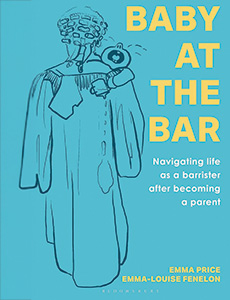
Baby at the Bar: Navigating life as a barrister after becoming a parent (Bloomsbury Professional: 2026), by Emma Price and Emma-Louise Fenelon, provides comprehensive guidance for self-employed barristers embarking, or already, on the parenting journey. Addressing the immediate considerations, such as taking and returning from maternity/parental leave, as well as the evolving challenges which follow, it also highlights how the profession could help.
Parenting in practice – read more in Counsel online
2024 Parenting at the Bar special issue
2025 Parenting at the Bar special issue
Diversity at the Bar 2025, BSB
Judicial Diversity and Inclusion Strategy 2026-30
Trends in retention and demographics at the Bar: 1990-2020, BSB
Back to the Bar, Western Circuit Women’s Forum, 2018

Emma Price is a barrister at 5 Essex Chambers, specialising in inquests and inquiries, judicial review, human rights, data and information law and personal injury. Emma is on the Attorney General’s A Panel of Counsel.

Emma-Louise Fenelon is a member of 1, Crown Office Row and specialises in clinical negligence, inquests, inquiries and human rights law. She co-presents the podcast Law Pod UK.
Baby at the Bar started with a grievance: the dearth of information available about the realities of being a self-employed barrister with parenting responsibilities. It became a research project when we decided to seek out a diverse range of experiences and insights from all corners of the self-employed Bar, allowing us to write the book we looked for when we needed it but could not find.
Daunting is probably the best word to describe the product of our research, an Excel spreadsheet setting out the responses of the circa 250 barristers who completed our research survey. When printed out in A3, it ran to hundreds of pages. We were thrilled that the responses came from all levels of seniority, across all major geographical areas and areas of practice at the Bar, and from men (around 25%) as well as women.
Above all, we were grateful for the depth of the responses. Poring over the giant spreadsheet, highlighter in hand, brought with it a huge sense of responsibility. People generously and candidly shared their stories, hurdles, strategies and advice. It took time but we read every response. We had what we needed, a range of perspectives and solutions from barristers with wide-ranging professional and personal circumstances to help our readers with the journey ahead of them, or that they are already on.
The book was published on 26 February this year. Our hunch that there was a need for the book proved to be well-founded. The pre-orders sold out the first print run and so the book was showing as out of stock on publication day. Nearly 150 people attended the launch event for the book in Gray’s Inn Hall, including contributors to the book, heads of chambers and senior clerks/practice managers, High Court, Court of Appeal and Supreme Court judges, barristers at all stages and a not-yet one-year-old. We sold out a second print run in the weeks which followed.
People in a position to bring about positive change started to reach out to us, senior clerks and a senior leadership judge included, to tell us about their plans for improvement in their spheres of influence, seeking our input. Then the Lady Chief Justice recommended our book in an address she gave. The project did not end with publication of the book. And it is no longer just our project.
Several high-level conclusions can be drawn from the research data, including the following:
For those with a court-based practice, court-related challenges inevitably affected them to a greater degree than those with a more paper-based practice. From the challenges of being in court when pregnant or breastfeeding, with little in the way of adjustments or facilities to enable pumping at court, to the childcare problems caused by courts sitting late with no consultation, those at the criminal Bar in particular found they regularly came up against obstacles that were out of their control and difficult to manage.
For those at the commercial Bar, even if they were in court less than those in other practice areas, many cited an unforgiving working hours culture and an expectation of weekend working, not to mention dealing with clients in different times zones.
Yet, despite the difference in experiences across practice areas, a common thread runs throughout – just how hard navigating life as a barrister after becoming a primary carer really is. This stood out across the piece. The broken nights, the shrinkage of time, the childcare and medical emergencies, the pressure to perform at work, to be the person with whom the buck stops, to show strength always. The weight of responsibility is tremendous. Even in the most supportive of sets of chambers. Even without coming up against actively unhelpful practices.
Some sets are setting the gold standard while others are falling far short of even the basic minimum which should be expected when it comes to supporting those with parenting responsibilities.
Of those who discussed their experiences with clerks, about 20% were overwhelmingly positive, attributing their retention at the self-employed Bar after having children to their support. Almost exactly the same proportion, around 20%, reported shocking experiences of dealing with their clerks, including not being put forward for work, having cases taken away from them, being told that a period of maternity leave would require them to start from scratch on their return and, in one person’s case, active attempts to sabotage a woman’s return to work following maternity leave.
From the very first conversation, when a barrister announces that they are to become a parent, to discussing how the period of leave and return is to be managed, and the years and evolving challenges which follow, clerks and practice managers have a crucial role to play. It was clear from our research that those who felt well-supported were in sets of chambers in which the clerking/practice management teams were well-equipped to play their part in supporting barristers to stay in the profession and to thrive.
Heads of chambers set the culture. Whether barristers take parental leave, and for how long, is influenced by the messaging around this in chambers and what people have seen others do – not just the generosity of the parental leave provision (although this is important in its own right). Many of the men who responded to our survey, for example, were clear that they would have taken a longer period of leave if they had felt that this was an option for them. How open people are when they are struggling with the competing demands of a small child and the rough and tumble of practice will depend on the degree to which chambers value colleague supportiveness. Culture matters.
On court-related matters, some respondents reported the imposition of deadlines requiring extensive overnight or weekend working, suggesting a potential lack of awareness of the difficulties these demands may create for individuals with childcare responsibilities. However, not all reported experiences can be viewed so charitably. In particular, there were numerous accounts of judges being entirely unsympathetic towards reasonable objections to short-notice proposals to sit late, even where such arrangements created childcare difficulties. Similar concerns were raised in relation to requests for extensions or adjournments prompted by medical emergencies. Meaningful progress is therefore likely to require engagement from those responsible for judicial training programmes, in addition to improvements in policies and practices within chambers.
© Getty Images
Baby at the Bar is aimed at anyone wanting to know more about the challenges of being a self-employed barrister with parenting responsibilities, and how they might be overcome.
The terminology adopted refers to parents and parenthood, rather than mothers and motherhood, while recognising that certain challenges discussed – such as attending court while pregnant or breastfeeding – are specific to women.
That was intentional. This is not a woman’s issue. The sooner parenting is discussed in gender-neutral terms, the sooner the removal of barriers faced by those with parenting responsibilities at the Bar will become a collective priority.
The reality, however, is that the issues raised in the book still disproportionately affect women. According to Diversity at the Bar 2025, a summary of the latest available data published by the Bar Standards Board (BSB) in March 2026, ‘a far greater proportion of female barristers are primary carers for children’ – 41% of female barristers v 24% of male barristers.
The BSB report shows that of the barristers remaining at the Bar at age 55 or over, the proportion of women had dropped to 28%. Evidence published elsewhere links this higher female attrition rate to the difficulty of balancing work with family commitments (see Trends in retention and demographics at the Bar: 1990-2020, BSB: 2021 and Back to the Bar, Western Circuit Women’s Forum: 2018.)
It is also notable that all of the barristers who told us they had or were planning to leave the self-employed Bar, or the profession entirely, because of structural/cultural obstacles faced when practising with parental responsibilities were women. No men reported this.
Women remain underrepresented at senior levels of the profession and the senior judiciary, making up only 21% of KCs, 25% of Deputy High Court judges, 30% of High Court judges, 23% of Court of Appeal judges and 17% of Supreme Court judges. This is unlikely to improve if women are not retained and do not progress to the selection pool for recruitment. On 21 January 2026, the Judicial Diversity and Inclusion Strategy 2026-30 was launched. We can do no better than to adopt the Lady Chief Justice’s own explanation, set out in her Foreword, of why a judiciary that is representative of the society it serves matters:
‘A judiciary that reflects society is part of how we maintain public confidence in the justice system. It ensures that we draw on the widest possible pool of talent and benefit from a broad range of perspectives and experiences.’
For all these reasons, the issues raised in Baby at the Bar have implications which extend beyond the self-employed Bar. This is society’s problem too. A problem which the profession can and must take action to address.
Baby at the Bar: Navigating life as a barrister after becoming a parent (Bloomsbury Professional: 2026), by Emma Price and Emma-Louise Fenelon, provides comprehensive guidance for self-employed barristers embarking, or already, on the parenting journey. Addressing the immediate considerations, such as taking and returning from maternity/parental leave, as well as the evolving challenges which follow, it also highlights how the profession could help.
Parenting in practice – read more in Counsel online
2024 Parenting at the Bar special issue
2025 Parenting at the Bar special issue
Diversity at the Bar 2025, BSB
Judicial Diversity and Inclusion Strategy 2026-30
Trends in retention and demographics at the Bar: 1990-2020, BSB
Back to the Bar, Western Circuit Women’s Forum, 2018
Born from a grievance, their research project grew into a book and is now challenging the status quo. Emma Price and Emma-Louise Fenelon reveal the key findings – and the critical next steps


The Chair of the Bar reports back
Susie Griffin on the admin that keeps barristers from billable work
Clement Cowley, Partner at The Penny Group, explains how global events can influence the performance of pensions and ISAs, and why taking a long-term approach to investing is often the most effective strategy
Mário Barroso, Head of R&D and Method Development at AlphaBiolabs, discusses what family law professionals need to know about hallucinogens, from the main hallucinogenic drugs encountered in family proceedings, to their effects and the testing options available
Harmony Christian Ministries is the latest charity to benefit from a £500 donation from AlphaBiolabs via the company’s Giving Back initiative
By David Green
At the start of her term, Chair of the Bar 2026 Kirsty Brimelow KC set out a series of priorities for the year ahead. One of those priorities was children in the justice system
As the world becomes more digital, Barbara Vinagre Mota examines international research into the mental health consequences of judges’ exposure to graphic and immersive evidence, highlighting the importance of support systems
In an era of patient-centred care and growing concern over misconduct in medical settings, why do women still lack the right to choose women consultants for examination and treatment? Charles Davey investigates
Reviewed by Daniel Barnett
James McNeill Whistler at Tate Britain until 27 September Rothko in Florence at Palazzo Strozzi until 23 August Reviewed by Stephen Cragg KC