*/
October, taking its name from ‘octo’ when it was the eighth month in the Roman calendar, is the first full month of Autumn. It is a month of transition.
Change is in the air. The government announced that it is to establish specialist courtrooms for rape and serious sexual offences in every Crown Court. This change was driven by the Bar Council at the Public Bill Committee and in an amendment to the Courts and Tribunals Bill put forward by the brave and principled MP Charlotte Nichols. A reminder of the difference that we have made is reflected by looking back (see Charlotte Nichols and Kirsty Brimelow, Telegraph, 14 April 2026: tinyurl.com/4y4yp8kb (£)).
As I write, there are signs that the government is changing course from reducing jury trials and replacing them with a single judge or with a judge and two magistrates. The Courts and Tribunals Bill returns to the Commons on 13 October. If we have succeeded, we also will focus on persuading the government to step away from removing the right to elect. Rights of Women has written a further letter to the Lord Chancellor (ROW’s joint letter with JUSTICE: tinyurl.com/yd7jh7n8). Fundamentally, more Black people and women (women themselves often victims of violence and abuse) elect for trial at the Crown Court than other groups. Trust can be an underrated commodity in a politician’s hands. Barristers understand its value in the delicate justice ecosystem.
The latest figures show that the Crown Courts are managing delays much better than the Magistrates’ Courts where receipts far outstrip disposal and backlog accelerates far faster. In many Crown Courts, such as Manchester and Ipswich, the backlog is reducing.
Investment remains slow and inefficiencies, over decades, have been left to deepen corrosively. The financial return in public justice is high. Total revenue from legal activities in the UK increased to £52.3 billion in 2024, an increase of 11% from 2023. That success rests in part on confidence in our legal institutions which are on display as we look through the shop window of our publicly funded courts. The international standing of our jurisdiction and investment in legal aid and courts belong in the same conversation.
Capacity also depends on barristers being available to conduct cases in the years ahead. Match-funded criminal pupillages is a scheme backed by government to £1.5 million a year. It aims to create up to 100 additional pupillages annually. Working with the Ministry of Justice, the Criminal Bar Association and the Inns of Court, this Bar Council proposal is over the line this year. Chambers can apply for matched funding until 16 October.
October is Black History Month: a time to celebrate the extraordinary contribution of Black barristers and judges to our profession. It also is a time to examine the barriers that still affect entry and progression. For me, this is about looking forward – ensuring that everyone, whatever their background, can see the Bar as a profession in which they belong, can thrive and can lead.
We have launched our Good practice in billing guide which helps practitioners understand the value of their work and make informed decisions about their practices. This is part of the commitment I made at the start of the year to address earnings gaps and improve billing practices. Meetings continue with solicitor firms.
Another important question is whether excellent advocates across every part of the Bar can see a fair path to silk. Our King’s Counsel Working Group’s report recommends clearer, more pracTice-specific guidance, including for employed barristers and those whose advocacy takes place in tribunals, panels and other forums.
It is political party conference season, and I spoke at fringe events at the Liberal Democrat Conference and Labour Conference, with Harpreet Sandhu KC speaking at the Conservative Party Conference as I attended the International Bar Association Conference. Themes included the European Convention on Human Rights, legal aid across all jurisdictions and access to justice.
On the international front, at the Opening of the Legal Year we welcome Bar leaders from across the world as we join in friendship and collegiality, united in our commitment to strengthening the rule of law.
I attended the European Circuit in Malaga and spoke alongside European Bars on the importance of freedom of expression at this time of the rise of far-right groups. I also joined a panel, chaired by the UK Judge of the European Court of Human Rights, Hugh Mercer KC, on advocacy before international courts and tribunals.
India continues to be a work in progress on removing impediments to fly in, fly out international arbitration. I enjoyed another first of supporting the Commercial Bar Association’s eighth roundtable in New Delhi where I gave closing remarks.
I also joined the Bar Human Rights Committee to celebrate its 35 years and reflected on my own 15 years with the committee.
Autumn leaves are framing renewal and change. And where better to discuss than at the Bar Conference on 14 November (see p 35 of this issue). I look forward to seeing you there.

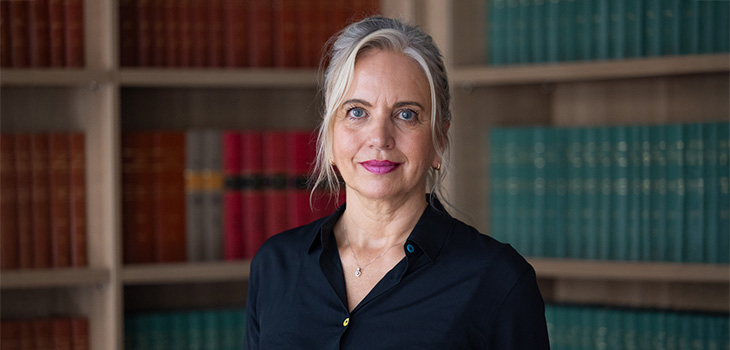
Kirsty Brimelow KC is Chair of the Bar for 2026. She has been a criminal, public law and international human rights barrister for some 30 years, practising from Doughty Street Chambers for over half that time. Kirsty was Chair of the Criminal Bar Association (2022-23) and Chair of the Bar Human Rights Committee (2012-18). She was appointed as a silk in 2011, Deputy High Court Judge in 2021, Recorder in 2022 and is a Bencher of Gray’s Inn.
October, taking its name from ‘octo’ when it was the eighth month in the Roman calendar, is the first full month of Autumn. It is a month of transition.
Change is in the air. The government announced that it is to establish specialist courtrooms for rape and serious sexual offences in every Crown Court. This change was driven by the Bar Council at the Public Bill Committee and in an amendment to the Courts and Tribunals Bill put forward by the brave and principled MP Charlotte Nichols. A reminder of the difference that we have made is reflected by looking back (see Charlotte Nichols and Kirsty Brimelow, Telegraph, 14 April 2026: tinyurl.com/4y4yp8kb (£)).
As I write, there are signs that the government is changing course from reducing jury trials and replacing them with a single judge or with a judge and two magistrates. The Courts and Tribunals Bill returns to the Commons on 13 October. If we have succeeded, we also will focus on persuading the government to step away from removing the right to elect. Rights of Women has written a further letter to the Lord Chancellor (ROW’s joint letter with JUSTICE: tinyurl.com/yd7jh7n8). Fundamentally, more Black people and women (women themselves often victims of violence and abuse) elect for trial at the Crown Court than other groups. Trust can be an underrated commodity in a politician’s hands. Barristers understand its value in the delicate justice ecosystem.
The latest figures show that the Crown Courts are managing delays much better than the Magistrates’ Courts where receipts far outstrip disposal and backlog accelerates far faster. In many Crown Courts, such as Manchester and Ipswich, the backlog is reducing.
Investment remains slow and inefficiencies, over decades, have been left to deepen corrosively. The financial return in public justice is high. Total revenue from legal activities in the UK increased to £52.3 billion in 2024, an increase of 11% from 2023. That success rests in part on confidence in our legal institutions which are on display as we look through the shop window of our publicly funded courts. The international standing of our jurisdiction and investment in legal aid and courts belong in the same conversation.
Capacity also depends on barristers being available to conduct cases in the years ahead. Match-funded criminal pupillages is a scheme backed by government to £1.5 million a year. It aims to create up to 100 additional pupillages annually. Working with the Ministry of Justice, the Criminal Bar Association and the Inns of Court, this Bar Council proposal is over the line this year. Chambers can apply for matched funding until 16 October.
October is Black History Month: a time to celebrate the extraordinary contribution of Black barristers and judges to our profession. It also is a time to examine the barriers that still affect entry and progression. For me, this is about looking forward – ensuring that everyone, whatever their background, can see the Bar as a profession in which they belong, can thrive and can lead.
We have launched our Good practice in billing guide which helps practitioners understand the value of their work and make informed decisions about their practices. This is part of the commitment I made at the start of the year to address earnings gaps and improve billing practices. Meetings continue with solicitor firms.
Another important question is whether excellent advocates across every part of the Bar can see a fair path to silk. Our King’s Counsel Working Group’s report recommends clearer, more pracTice-specific guidance, including for employed barristers and those whose advocacy takes place in tribunals, panels and other forums.
It is political party conference season, and I spoke at fringe events at the Liberal Democrat Conference and Labour Conference, with Harpreet Sandhu KC speaking at the Conservative Party Conference as I attended the International Bar Association Conference. Themes included the European Convention on Human Rights, legal aid across all jurisdictions and access to justice.
On the international front, at the Opening of the Legal Year we welcome Bar leaders from across the world as we join in friendship and collegiality, united in our commitment to strengthening the rule of law.
I attended the European Circuit in Malaga and spoke alongside European Bars on the importance of freedom of expression at this time of the rise of far-right groups. I also joined a panel, chaired by the UK Judge of the European Court of Human Rights, Hugh Mercer KC, on advocacy before international courts and tribunals.
India continues to be a work in progress on removing impediments to fly in, fly out international arbitration. I enjoyed another first of supporting the Commercial Bar Association’s eighth roundtable in New Delhi where I gave closing remarks.
I also joined the Bar Human Rights Committee to celebrate its 35 years and reflected on my own 15 years with the committee.
Autumn leaves are framing renewal and change. And where better to discuss than at the Bar Conference on 14 November (see p 35 of this issue). I look forward to seeing you there.

The Chair of the Bar reports back
By BSK Financial Planning
Susie Griffin on the admin that keeps barristers from billable work
Clement Cowley, Partner at The Penny Group, explains how global events can influence the performance of pensions and ISAs, and why taking a long-term approach to investing is often the most effective strategy
Mário Barroso, Head of R&D and Method Development at AlphaBiolabs, discusses what family law professionals need to know about hallucinogens, from the main hallucinogenic drugs encountered in family proceedings, to their effects and the testing options available
Harmony Christian Ministries is the latest charity to benefit from a £500 donation from AlphaBiolabs via the company’s Giving Back initiative

Kick off your career at the Bar Council’s Pupillage Fair this October – it’s one of the most valuable opportunities for aspiring barristers, says Amelia Clegg
The golden age of advocacy? David Langwallner pays homage to the filmic if contentious barrister Sir Edward Carson and some of his contemporaries
Henry Fingerhut outlines what the Bar Standards Board AI guidance means for early career barristers
The Ministry of Justice will match-fund up to 100 criminal pupillages, with grants available to criminal chambers across England and Wales. Similar to the COIC scheme, the grants will match-fund pupillages additional to those otherwise offered without government funding
Not yet, says Jacob Turner. Regulation, unlike the technology itself, is a domain the legal profession can still control