*/
Should call be deferred until a pupil is entitled to practise? Stephen Hockman KC and Toby Riley-Smith KC reprise the debate
A thoughtful discussion paper has been circulated by the Council of the Inns of Court (COIC) which asks each Inn to revisit the debate over the timing of call to the Bar. The question is whether call should be deferred until a pupil is entitled to practise.
The concern seems to be that those who have been called to the Bar, but who do not have a practising certificate, may hold themselves out as entitled to practise. This concern, which surfaces from time to time, has always lacked credibility. As a matter of logic, there is no particular reason why a person wrongly holding themselves out as a practitioner should necessarily be someone who has been called to the Bar – rather than someone who has not. Although this issue has been the subject of debate for many years, there remains a lack of empirical evidence. As the COIC discussion paper itself concludes: ‘Further research may be required as to the actual extent of public confusion over the existence of registered and unregistered (formerly qualified and never qualified) barristers.’
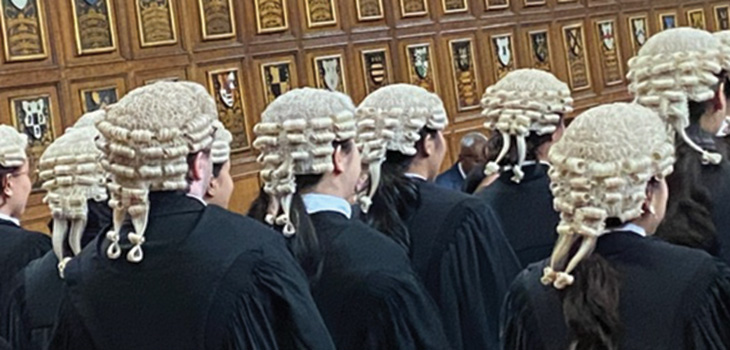
There therefore appears to be no clear benefit from such a change. The disadvantages, however, are many and serious. First, deferral of call will discourage aspirant lawyers from choosing the Bar. Legal training is expensive. The fees for the Bar training course (BTC) alone are between £16,500 and £20,000. Maintenance costs are significant. One of the consolations for those who invest in such training (whether students or their parents) is the knowledge that, even if they are not one of the lucky few who complete pupillage, the process can nonetheless confer a recognised and marketable professional qualification. The cachet of call to the Bar, with all it entails, is much greater than being able to say that they have completed the BTC. Call alone confers considerable prestige. Its value is visible every Call Day on the beaming faces of callees and their supporters.
If we move to a system in which no one is eligible to be called unless and until they have completed (at least the first half of) pupillage, then many bright graduates may decide that the risks are too great, and the rewards too insubstantial, to take that route. Many – and particularly those of modest means – will choose instead to follow the safer path to becoming a solicitor. The number of those seeking to join an Inn of Court is bound to drop sharply and significantly. The available pool of talent will inevitably be reduced – which would be detrimental to the Bar and the wider public interest.
Secondly, the consequence of such deferral will place the decision as to who can be called to the Bar almost exclusively in the hands of sets of chambers/employers, who alone decide to whom to offer pupillages, and who cannot be criticised for making decisions in their own, rather than in the public, interest. As noted by the COIC Discussion Paper, those with protected characteristics, and those from lower socio-economic backgrounds, are less likely to get pupillage. The deferral of call will affect such groups negatively since they will lose the right to call themselves barristers. This would reduce the attractiveness of undertaking the BTC for members of such groups. The net result will be a branch of the profession which becomes gradually less diverse, and certainly will be perceived as less diverse and more socially exclusive.
It would also be a profession very unlikely to expand at anything like the rate at which it has expanded during our professional lifetimes. Indeed, the profession would soon contract in numbers.
Yet the future of the Bar as a separate branch of the legal profession, and the future of self-regulation under the Bar Standards Board, is inextricably linked to the size and numerical strength of the profession. We cannot hope to exercise continuing influence, both within the legal profession itself and more widely, unless we maintain, indeed increase, our numbers as we have done steadily over the last 50 years. A decision in favour of deferral is therefore likely to put our branch of the profession on a downward path, at the very least from a reputational point of view, just at the moment when it is already vulnerable to competition in the commercial sphere from the major law firms, and also by reason of funding constraints and policy developments in the publicly funded sphere.
As regards our tradition of calling overseas students to the Bar, this has not only achieved the desirable objective of strengthening our links with a good number of overseas jurisdictions. Perhaps more importantly, it has encouraged the preservation of the tradition of specialist advocacy in those jurisdictions and thereby strengthened the rule of law in those countries. It is inevitable that if no one can be called to the Bar unless and until they have obtained/completed a pupillage in this jurisdiction, the number of individuals joining the Inns from abroad will be drastically reduced; indeed, quite intentionally, that source of membership will be virtually extinguished overnight. Such a development will diminish the historic role of the Inns overseas, and threaten the precious comity of the common law jurisdictions. Further, a drop in the number of overseas students on the BTCs may lead to an increase in the fees for domestic students with an additional impact on diversity.
But that does not mean that nothing need change. It may well be that in the light of the COIC discussion paper, and this debate, the Inns will wish to consider reviewing and possibly strengthening their contractual mandate in relation to student members and pupils, as well as in relation to the cohort of practitioners who have not obtained, or who cease temporarily to enjoy, the benefit of a practising certificate. In other words, we are convinced that any flaws in the current system are well within the capacity of COIC itself to address.

‘The timing of call’, Nick Vineall KC and Fallon Alexis, Counsel, December 2023
‘The timing of call – a response’, Stephen Hockman KC, Counsel, January 2024
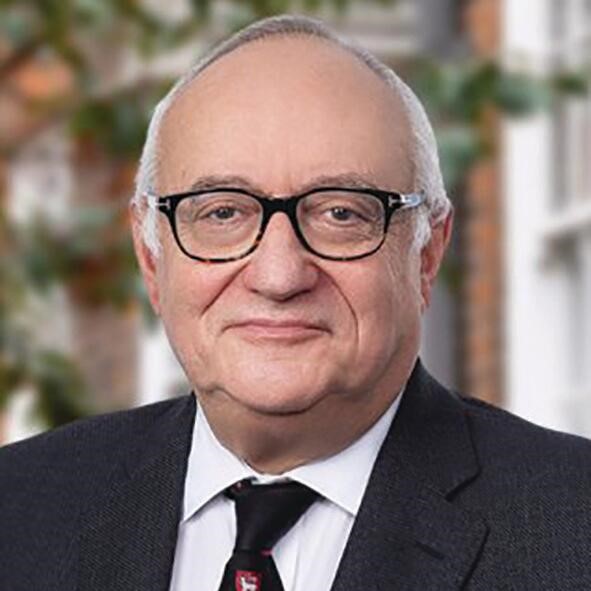
Stephen Hockman KC is joint Head of Chambers at 6 Pump Court. He has specialised in all forms of regulatory law for approximately the last 30 years. He was Chair of the Bar for 2006 and a former Deputy High Court Judge. He is a Master of the Bench at Middle Temple.

Toby Riley-Smith KC is a barrister at Henderson Chambers specialising in consumer law, product liability, group actions, health & safety and environmental law. He also sits as a Recorder.
A thoughtful discussion paper has been circulated by the Council of the Inns of Court (COIC) which asks each Inn to revisit the debate over the timing of call to the Bar. The question is whether call should be deferred until a pupil is entitled to practise.
The concern seems to be that those who have been called to the Bar, but who do not have a practising certificate, may hold themselves out as entitled to practise. This concern, which surfaces from time to time, has always lacked credibility. As a matter of logic, there is no particular reason why a person wrongly holding themselves out as a practitioner should necessarily be someone who has been called to the Bar – rather than someone who has not. Although this issue has been the subject of debate for many years, there remains a lack of empirical evidence. As the COIC discussion paper itself concludes: ‘Further research may be required as to the actual extent of public confusion over the existence of registered and unregistered (formerly qualified and never qualified) barristers.’
There therefore appears to be no clear benefit from such a change. The disadvantages, however, are many and serious. First, deferral of call will discourage aspirant lawyers from choosing the Bar. Legal training is expensive. The fees for the Bar training course (BTC) alone are between £16,500 and £20,000. Maintenance costs are significant. One of the consolations for those who invest in such training (whether students or their parents) is the knowledge that, even if they are not one of the lucky few who complete pupillage, the process can nonetheless confer a recognised and marketable professional qualification. The cachet of call to the Bar, with all it entails, is much greater than being able to say that they have completed the BTC. Call alone confers considerable prestige. Its value is visible every Call Day on the beaming faces of callees and their supporters.
If we move to a system in which no one is eligible to be called unless and until they have completed (at least the first half of) pupillage, then many bright graduates may decide that the risks are too great, and the rewards too insubstantial, to take that route. Many – and particularly those of modest means – will choose instead to follow the safer path to becoming a solicitor. The number of those seeking to join an Inn of Court is bound to drop sharply and significantly. The available pool of talent will inevitably be reduced – which would be detrimental to the Bar and the wider public interest.
Secondly, the consequence of such deferral will place the decision as to who can be called to the Bar almost exclusively in the hands of sets of chambers/employers, who alone decide to whom to offer pupillages, and who cannot be criticised for making decisions in their own, rather than in the public, interest. As noted by the COIC Discussion Paper, those with protected characteristics, and those from lower socio-economic backgrounds, are less likely to get pupillage. The deferral of call will affect such groups negatively since they will lose the right to call themselves barristers. This would reduce the attractiveness of undertaking the BTC for members of such groups. The net result will be a branch of the profession which becomes gradually less diverse, and certainly will be perceived as less diverse and more socially exclusive.
It would also be a profession very unlikely to expand at anything like the rate at which it has expanded during our professional lifetimes. Indeed, the profession would soon contract in numbers.
Yet the future of the Bar as a separate branch of the legal profession, and the future of self-regulation under the Bar Standards Board, is inextricably linked to the size and numerical strength of the profession. We cannot hope to exercise continuing influence, both within the legal profession itself and more widely, unless we maintain, indeed increase, our numbers as we have done steadily over the last 50 years. A decision in favour of deferral is therefore likely to put our branch of the profession on a downward path, at the very least from a reputational point of view, just at the moment when it is already vulnerable to competition in the commercial sphere from the major law firms, and also by reason of funding constraints and policy developments in the publicly funded sphere.
As regards our tradition of calling overseas students to the Bar, this has not only achieved the desirable objective of strengthening our links with a good number of overseas jurisdictions. Perhaps more importantly, it has encouraged the preservation of the tradition of specialist advocacy in those jurisdictions and thereby strengthened the rule of law in those countries. It is inevitable that if no one can be called to the Bar unless and until they have obtained/completed a pupillage in this jurisdiction, the number of individuals joining the Inns from abroad will be drastically reduced; indeed, quite intentionally, that source of membership will be virtually extinguished overnight. Such a development will diminish the historic role of the Inns overseas, and threaten the precious comity of the common law jurisdictions. Further, a drop in the number of overseas students on the BTCs may lead to an increase in the fees for domestic students with an additional impact on diversity.
But that does not mean that nothing need change. It may well be that in the light of the COIC discussion paper, and this debate, the Inns will wish to consider reviewing and possibly strengthening their contractual mandate in relation to student members and pupils, as well as in relation to the cohort of practitioners who have not obtained, or who cease temporarily to enjoy, the benefit of a practising certificate. In other words, we are convinced that any flaws in the current system are well within the capacity of COIC itself to address.
‘The timing of call’, Nick Vineall KC and Fallon Alexis, Counsel, December 2023
‘The timing of call – a response’, Stephen Hockman KC, Counsel, January 2024
Should call be deferred until a pupil is entitled to practise? Stephen Hockman KC and Toby Riley-Smith KC reprise the debate

The Chair of the Bar reports back
By BSK Financial Planning
Susie Griffin on the admin that keeps barristers from billable work
Clement Cowley, Partner at The Penny Group, explains how global events can influence the performance of pensions and ISAs, and why taking a long-term approach to investing is often the most effective strategy
Mário Barroso, Head of R&D and Method Development at AlphaBiolabs, discusses what family law professionals need to know about hallucinogens, from the main hallucinogenic drugs encountered in family proceedings, to their effects and the testing options available
Harmony Christian Ministries is the latest charity to benefit from a £500 donation from AlphaBiolabs via the company’s Giving Back initiative

Kick off your career at the Bar Council’s Pupillage Fair this October – it’s one of the most valuable opportunities for aspiring barristers, says Amelia Clegg
The golden age of advocacy? David Langwallner pays homage to the filmic if contentious barrister Sir Edward Carson and some of his contemporaries
Henry Fingerhut outlines what the Bar Standards Board AI guidance means for early career barristers
The Ministry of Justice will match-fund up to 100 criminal pupillages, with grants available to criminal chambers across England and Wales. Similar to the COIC scheme, the grants will match-fund pupillages additional to those otherwise offered without government funding
Not yet, says Jacob Turner. Regulation, unlike the technology itself, is a domain the legal profession can still control