*/
The winning essay is ‘Invisible Violence: Restoring the Sight of the Online Safety Act 2023’ by Wasim Iqbal
Brief summary
The Online Safety Act 2023 aims to make the UK ‘the safest place to be online’, yet allows platforms to rely heavily on AI moderation systems to meet their statutory duties. This risks leaving serious harm unrecognised and regulatory enforcement weakened or delayed.
How and why did you pick this topic?
I was struck by the growing reliance on automated systems to assess online harm, without clear visibility over how those decisions are reached.
When the law depends on processes it cannot properly scrutinise, accountability begins to erode. I wanted to examine how this gap arises within the Online Safety Act 2023, and whether greater transparency could be introduced without undermining the Act’s objectives.
The proposal ultimately focused on a simple question with far-reaching consequences: how can the law regulate harm it cannot see?
The full essay is reproduced below.
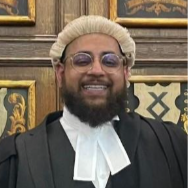
Wasim Iqbal is the winner of the Bar Council's Law Reform Essay Competition 2025.
Brief summary
The Online Safety Act 2023 aims to make the UK ‘the safest place to be online’, yet allows platforms to rely heavily on AI moderation systems to meet their statutory duties. This risks leaving serious harm unrecognised and regulatory enforcement weakened or delayed.
How and why did you pick this topic?
I was struck by the growing reliance on automated systems to assess online harm, without clear visibility over how those decisions are reached.
When the law depends on processes it cannot properly scrutinise, accountability begins to erode. I wanted to examine how this gap arises within the Online Safety Act 2023, and whether greater transparency could be introduced without undermining the Act’s objectives.
The proposal ultimately focused on a simple question with far-reaching consequences: how can the law regulate harm it cannot see?
The full essay is reproduced below.
The winning essay is ‘Invisible Violence: Restoring the Sight of the Online Safety Act 2023’ by Wasim Iqbal

The Chair of the Bar reports back
By Kem Kemal, CEO, Henry Dannell
By BSK Financial Planning
Mário Barroso, Head of R&D and Method Development at AlphaBiolabs
Susie Griffin on the admin that keeps barristers from billable work
Clement Cowley, Partner at The Penny Group, explains how global events can influence the performance of pensions and ISAs, and why taking a long-term approach to investing is often the most effective strategy

Kick off your career at the Bar Council’s Pupillage Fair this October – it’s one of the most valuable opportunities for aspiring barristers, says Amelia Clegg
Join us on Saturday 21 November 2026 at Leeds Beckett University and see for yourself why the North continues to be an exceptional place to build a career at the Bar
The golden age of advocacy? David Langwallner pays homage to the filmic if contentious barrister Sir Edward Carson and some of his contemporaries
Henry Fingerhut outlines what the Bar Standards Board AI guidance means for early career barristers
Not yet, says Jacob Turner. Regulation, unlike the technology itself, is a domain the legal profession can still control