*/
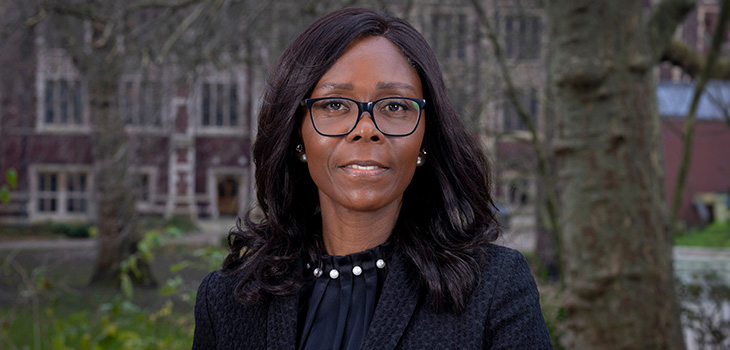
I’ve had the privilege to serve and lead our esteemed profession this year. I remain deeply grateful to every member of Bar Council who voted for me. Yours was a choice for change and showed courage and purpose that has carried us forward in 2025. This year is defined by headlines, by review and by the quiet, steady work of reflection and reform.
The Sentencing Review by David Gauke and Sir Brian Leveson’s Criminal Courts Review demand that we re-examine outcomes, fairness, trust and confidence in our justice system. Baroness Harman’s review of the Bar challenged us to confront uncomfortable truths and reinforced our commitment to build a culture where every member can thrive without fear. We welcome the review’s recommendations as they offer a once-in-a-generation opportunity to reshape our profession for the better. As we close this year, we do so with resolve: to translate reviews into reform, to act with bold principled leadership and to ensure justice is accessible, fair and respected by all.
Profound challenges tested us as a profession. The cyber attack on the Legal Aid Agency continues to impact on barristers and access to justice. Colleagues delivering publicly funded work in civil and family law have gone unpaid for work completed since April and this has tipped many practitioners into crisis. For those who rely on timely payments to sustain their practice and to protect vulnerable clients, the consequences have been acute.
The knock-on effects can be measured in backlogs, courtroom wait times, and people enduring longer battles for fundamental rights. It can also be seen in reduced capacity, delayed resolutions, and a chilling effect on the willingness to undertake publicly funded work.
Equally painful was the attack on the 10,000 Black Interns scheme (10KBI) at the Bar: a bold, lawful and targeted effort to diversify our profession. We faced extreme hostility and the initiative was wrongly framed as ‘anti-White racism’. I reject this mischaracterisation. Like all merit-based diversity programmes, it seeks to widen opportunity, strengthen our profession by expanding the talent pool and reflect the public we serve. The stinging criticism was met with a wholesale rejection by the Bar and accompanied by a refuelled commitment not to be deterred from pursuing inclusive excellence.
This year has been marked by a series of meaningful highlights that reflect our shared commitment to excellence, fairness, and transformation within the profession.
We have elevated the situation facing the family courts by engaging with the government’s aspiration to halve Violence Against Women and Girls (VAWG) in a decade. Family courts, along with the criminal courts, sit front and centre in the delivery of the government’s mission because domestic abuse, some of which only passes through the family court, is a public emergency and not a private matter. Backlogs in the criminal system mean that, when VAWG issues touch both family and criminal spheres, the family courts increasingly deal with allegations of harm first, driven by child timetables.
We have brought attention to the crumbling family court estate and the urgent need for basic facilities such as drinking water, separate entrances and appropriate spaces for alleged perpetrators and complainants. Equally crucial is providing legal aid to those affected by domestic abuse.
This year we have also focused on professional wellbeing and successfully run reflective practice groups for barristers in Bristol and London, fostering ongoing professional development and peer-led learning. We have embedded trauma-informed approaches into the education of barristers, reinforcing our duty to support wellbeing and resilience.
We have celebrated historic moments that speak to progress and representation: David Lammy MP is the first Black Lord Chancellor and Margaret Obi is the first Black solicitor appointed to the High Court bench. Both are milestones that broaden the horizons of what is possible within our institutions. On equality, we have persuaded the Bar Standards Board to withdraw its proposals on the rules and defended the core principles that sustain an inclusive and just legal community.
The work and presence abroad continues to grow, and I am delighted that London has been shortlisted to host the Commonwealth Lawyers Conference in 2029. This is a testament to our jurisdiction’s international standing and highlights the strength of our professional networks.
Taken together, these initiatives collectively embody our commitment to integrity, opportunity, and the humane administration of justice, and they set a compelling course for the years ahead.
Thanks to everyone who has been involved this year including the Circuits, specialist Bar associations and our committees. I pass on the baton to Kirsty Brimelow KC and wish her all the best. Thank you for choosing me in 2023 and standing with me in 2025. It’s been my privilege and my honour.

Barbara Mills KC is the 2025 Chair of the Bar. She is a specialist family practitioner at 4PB and former Co-Chair of the Bar Council’s Race Working Group.
I’ve had the privilege to serve and lead our esteemed profession this year. I remain deeply grateful to every member of Bar Council who voted for me. Yours was a choice for change and showed courage and purpose that has carried us forward in 2025. This year is defined by headlines, by review and by the quiet, steady work of reflection and reform.
The Sentencing Review by David Gauke and Sir Brian Leveson’s Criminal Courts Review demand that we re-examine outcomes, fairness, trust and confidence in our justice system. Baroness Harman’s review of the Bar challenged us to confront uncomfortable truths and reinforced our commitment to build a culture where every member can thrive without fear. We welcome the review’s recommendations as they offer a once-in-a-generation opportunity to reshape our profession for the better. As we close this year, we do so with resolve: to translate reviews into reform, to act with bold principled leadership and to ensure justice is accessible, fair and respected by all.
Profound challenges tested us as a profession. The cyber attack on the Legal Aid Agency continues to impact on barristers and access to justice. Colleagues delivering publicly funded work in civil and family law have gone unpaid for work completed since April and this has tipped many practitioners into crisis. For those who rely on timely payments to sustain their practice and to protect vulnerable clients, the consequences have been acute.
The knock-on effects can be measured in backlogs, courtroom wait times, and people enduring longer battles for fundamental rights. It can also be seen in reduced capacity, delayed resolutions, and a chilling effect on the willingness to undertake publicly funded work.
Equally painful was the attack on the 10,000 Black Interns scheme (10KBI) at the Bar: a bold, lawful and targeted effort to diversify our profession. We faced extreme hostility and the initiative was wrongly framed as ‘anti-White racism’. I reject this mischaracterisation. Like all merit-based diversity programmes, it seeks to widen opportunity, strengthen our profession by expanding the talent pool and reflect the public we serve. The stinging criticism was met with a wholesale rejection by the Bar and accompanied by a refuelled commitment not to be deterred from pursuing inclusive excellence.
This year has been marked by a series of meaningful highlights that reflect our shared commitment to excellence, fairness, and transformation within the profession.
We have elevated the situation facing the family courts by engaging with the government’s aspiration to halve Violence Against Women and Girls (VAWG) in a decade. Family courts, along with the criminal courts, sit front and centre in the delivery of the government’s mission because domestic abuse, some of which only passes through the family court, is a public emergency and not a private matter. Backlogs in the criminal system mean that, when VAWG issues touch both family and criminal spheres, the family courts increasingly deal with allegations of harm first, driven by child timetables.
We have brought attention to the crumbling family court estate and the urgent need for basic facilities such as drinking water, separate entrances and appropriate spaces for alleged perpetrators and complainants. Equally crucial is providing legal aid to those affected by domestic abuse.
This year we have also focused on professional wellbeing and successfully run reflective practice groups for barristers in Bristol and London, fostering ongoing professional development and peer-led learning. We have embedded trauma-informed approaches into the education of barristers, reinforcing our duty to support wellbeing and resilience.
We have celebrated historic moments that speak to progress and representation: David Lammy MP is the first Black Lord Chancellor and Margaret Obi is the first Black solicitor appointed to the High Court bench. Both are milestones that broaden the horizons of what is possible within our institutions. On equality, we have persuaded the Bar Standards Board to withdraw its proposals on the rules and defended the core principles that sustain an inclusive and just legal community.
The work and presence abroad continues to grow, and I am delighted that London has been shortlisted to host the Commonwealth Lawyers Conference in 2029. This is a testament to our jurisdiction’s international standing and highlights the strength of our professional networks.
Taken together, these initiatives collectively embody our commitment to integrity, opportunity, and the humane administration of justice, and they set a compelling course for the years ahead.
Thanks to everyone who has been involved this year including the Circuits, specialist Bar associations and our committees. I pass on the baton to Kirsty Brimelow KC and wish her all the best. Thank you for choosing me in 2023 and standing with me in 2025. It’s been my privilege and my honour.


The Chair of the Bar reports back
Susie Griffin on the admin that keeps barristers from billable work
Clement Cowley, Partner at The Penny Group, explains how global events can influence the performance of pensions and ISAs, and why taking a long-term approach to investing is often the most effective strategy
Mário Barroso, Head of R&D and Method Development at AlphaBiolabs, discusses what family law professionals need to know about hallucinogens, from the main hallucinogenic drugs encountered in family proceedings, to their effects and the testing options available
Harmony Christian Ministries is the latest charity to benefit from a £500 donation from AlphaBiolabs via the company’s Giving Back initiative
By David Green
At the start of her term, Chair of the Bar 2026 Kirsty Brimelow KC set out a series of priorities for the year ahead. One of those priorities was children in the justice system
As the world becomes more digital, Barbara Vinagre Mota examines international research into the mental health consequences of judges’ exposure to graphic and immersive evidence, highlighting the importance of support systems
In an era of patient-centred care and growing concern over misconduct in medical settings, why do women still lack the right to choose women consultants for examination and treatment? Charles Davey investigates
Reviewed by Daniel Barnett
James McNeill Whistler at Tate Britain until 27 September Rothko in Florence at Palazzo Strozzi until 23 August Reviewed by Stephen Cragg KC