*/
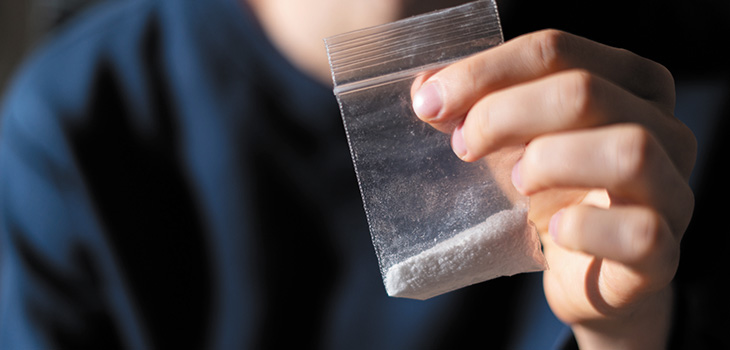
Marie Law, Director of Toxicology at AlphaBiolabs, explains why drugs may appear in test results, despite the donor denying use of them
As a leading provider of legally instructed drug testing, we are frequently asked to explain how a sample donor could test positive for a substance they claim never to have used.
These queries are increasingly common, particularly in family law cases where drug testing is used to assess parenting capacity, monitor abstinence, or confirm compliance with court orders.
Legal professionals may receive a toxicology report showing one or more drugs not disclosed by the donor and not anticipated at instruction. While the accuracy of the analysis is not in question, such results can raise serious concerns—especially where the donor’s denial appears credible.
The illicit drug market is increasingly characterised by contamination and deliberate mixing of substances. Users are often unaware that what they are taking has been cut with, substituted for, or combined with other drugs, some of which are significantly more potent or harmful.
This means that, in some cases, a toxicology report may show the presence of drugs the donor did not knowingly consume.
‘Poly drug use’ refers to the use of two or more substances within a given timeframe. This may be deliberate – to enhance or moderate effects – or unintentional, where a drug has been contaminated or mis-sold.
Some combinations have street names. ‘Calvin Klein’ (or CK), for example, refers to the concurrent use of cocaine and ketamine.
With no regulation or quality control in illicit drug manufacturing, substances are routinely cut or laced with others to increase profit margins or intensify effects.
At AlphaBiolabs, we have seen a rise in samples testing positive for multiple drug groups. For counsel, this highlights the importance of instructing comprehensive toxicology testing, including screening beyond standard panels, particularly where behaviours or symptoms cannot be explained by a single substance.
Illicit drugs are often adulterated with other drugs, masking agents or bulking agents such as sugars. Of growing concern is the rise of synthetic opioids, particularly nitazenes, in the UK drug supply.
In 2022, the Advisory Council on the Misuse of Drugs (ACMD) reported that over 25% of cocaine samples and more than 50% of heroin/diamorphine samples seized in the UK contained isotonitazene, a powerful nitazene analogue. Separately, Public Health Scotland has linked another nitazene, ‘Pyro’ (N-pyrrolidino etonitazene), to a sharp rise in drug-related deaths across Scotland (August 2025).
In such cases, a positive test result may reflect contamination rather than deliberate use – a distinction with significant legal implications.
One such example at AlphaBiolabs involved a donor (Mr X) whose hair sample tested positive for five substances: THC, cocaine, norcocaine, benzoylecgonine, and ketamine.
While Mr X accepted the presence of the other substances, he strongly denied taking ketamine, saying: ‘I haven’t even seen ketamine. I don’t know anyone who uses it, or even how to use it. I would not be able to get it if I tried – I don’t have a horse, and I’m not a vet!’
AlphaBiolabs is an award-winning, UKAS 17025 and Lab 51-accredited laboratory with 20+ years’ experience supporting family law professionals, barristers, social workers and local authorities.
We provide legally admissible drug and alcohol testing using a range of sample types, including hair, nails, blood, oral fluid, urine, and breath, with bespoke repeat testing schedules available.
We also test for the widest range of substances including the most-abused drugs as well as ‘non-standard’ drugs eg steroids, prescription medications, hallucinogens, nitazenes, and other emerging synthetic opioids. Custom testing panels can be created to suit your case.
And with our Price Promise, where we will beat any like-for-like quote by a further 10%, you know that you are guaranteed to get the best value for money.
For more information, contact our New Enquiry team on 0333 600 1300 / testing@alphabiolabs.com or complete our online quote form at www.alphabiolabs.co.uk/legal-test-forms.

As a leading provider of legally instructed drug testing, we are frequently asked to explain how a sample donor could test positive for a substance they claim never to have used.
These queries are increasingly common, particularly in family law cases where drug testing is used to assess parenting capacity, monitor abstinence, or confirm compliance with court orders.
Legal professionals may receive a toxicology report showing one or more drugs not disclosed by the donor and not anticipated at instruction. While the accuracy of the analysis is not in question, such results can raise serious concerns—especially where the donor’s denial appears credible.
The illicit drug market is increasingly characterised by contamination and deliberate mixing of substances. Users are often unaware that what they are taking has been cut with, substituted for, or combined with other drugs, some of which are significantly more potent or harmful.
This means that, in some cases, a toxicology report may show the presence of drugs the donor did not knowingly consume.
‘Poly drug use’ refers to the use of two or more substances within a given timeframe. This may be deliberate – to enhance or moderate effects – or unintentional, where a drug has been contaminated or mis-sold.
Some combinations have street names. ‘Calvin Klein’ (or CK), for example, refers to the concurrent use of cocaine and ketamine.
With no regulation or quality control in illicit drug manufacturing, substances are routinely cut or laced with others to increase profit margins or intensify effects.
At AlphaBiolabs, we have seen a rise in samples testing positive for multiple drug groups. For counsel, this highlights the importance of instructing comprehensive toxicology testing, including screening beyond standard panels, particularly where behaviours or symptoms cannot be explained by a single substance.
Illicit drugs are often adulterated with other drugs, masking agents or bulking agents such as sugars. Of growing concern is the rise of synthetic opioids, particularly nitazenes, in the UK drug supply.
In 2022, the Advisory Council on the Misuse of Drugs (ACMD) reported that over 25% of cocaine samples and more than 50% of heroin/diamorphine samples seized in the UK contained isotonitazene, a powerful nitazene analogue. Separately, Public Health Scotland has linked another nitazene, ‘Pyro’ (N-pyrrolidino etonitazene), to a sharp rise in drug-related deaths across Scotland (August 2025).
In such cases, a positive test result may reflect contamination rather than deliberate use – a distinction with significant legal implications.
One such example at AlphaBiolabs involved a donor (Mr X) whose hair sample tested positive for five substances: THC, cocaine, norcocaine, benzoylecgonine, and ketamine.
While Mr X accepted the presence of the other substances, he strongly denied taking ketamine, saying: ‘I haven’t even seen ketamine. I don’t know anyone who uses it, or even how to use it. I would not be able to get it if I tried – I don’t have a horse, and I’m not a vet!’
AlphaBiolabs is an award-winning, UKAS 17025 and Lab 51-accredited laboratory with 20+ years’ experience supporting family law professionals, barristers, social workers and local authorities.
We provide legally admissible drug and alcohol testing using a range of sample types, including hair, nails, blood, oral fluid, urine, and breath, with bespoke repeat testing schedules available.
We also test for the widest range of substances including the most-abused drugs as well as ‘non-standard’ drugs eg steroids, prescription medications, hallucinogens, nitazenes, and other emerging synthetic opioids. Custom testing panels can be created to suit your case.
And with our Price Promise, where we will beat any like-for-like quote by a further 10%, you know that you are guaranteed to get the best value for money.
For more information, contact our New Enquiry team on 0333 600 1300 / testing@alphabiolabs.com or complete our online quote form at www.alphabiolabs.co.uk/legal-test-forms.
Marie Law, Director of Toxicology at AlphaBiolabs, explains why drugs may appear in test results, despite the donor denying use of them

The Chair of the Bar reports back
By Kem Kemal, CEO, Henry Dannell
By BSK Financial Planning
Mário Barroso, Head of R&D and Method Development at AlphaBiolabs
Susie Griffin on the admin that keeps barristers from billable work
Clement Cowley, Partner at The Penny Group, explains how global events can influence the performance of pensions and ISAs, and why taking a long-term approach to investing is often the most effective strategy

Kick off your career at the Bar Council’s Pupillage Fair this October – it’s one of the most valuable opportunities for aspiring barristers, says Amelia Clegg
Join us on Saturday 21 November 2026 at Leeds Beckett University and see for yourself why the North continues to be an exceptional place to build a career at the Bar
The golden age of advocacy? David Langwallner pays homage to the filmic if contentious barrister Sir Edward Carson and some of his contemporaries
Henry Fingerhut outlines what the Bar Standards Board AI guidance means for early career barristers
Not yet, says Jacob Turner. Regulation, unlike the technology itself, is a domain the legal profession can still control