*/
In January 2025, the Bar Council marked the International Day of the Endangered Lawyer by highlighting that some barristers in England and Wales have face threats, harassment, and intimidation at the hands of state and non-state actors because of their international legal work.
Barristers told the Bar Council they had faced targeted attacks including cyber harassment, threatening or impersonating emails, repeated and sustained hacking attempts and ‘privilege phishing’ which seeks to persuade those who are targeted to divulge sensitive information. Barristers also said they had been subjected to physical surveillance including being followed or photographed at international events.
Barbara Mills KC, Chair of the Bar, said: ‘The Bar Council is supporting our members and colleagues abroad who face multiple attacks and threats. In 2025 we want to see a renewed emphasis placed on promoting the important role of independent legal practitioners and adherence to the rule of law.’
In May, the Council of Europe launched the European Convention for the Protection of the Profession of Lawyer aimed to provide enhanced safeguards for legal professionals carrying out their daily work. The Council of Bars and Law Societies of Europe (CCBE) had suggested the idea of a convention because they were able to identify multiple challenges such as lawyers being associated with their client or causes, lawyers in some jurisdictions being persecuted or disbarred, and the title of lawyer being increasingly used as a pejorative term.
So far 17 countries have signed the convention. At least eight countries (including six member states of the Council of Europe) must ratify the convention for it to enter into force. The convention once ratified will be open to Council of Europe non-member states. This year the Bar Council has been encouraging colleagues around the world to lobby governments to apply to sign the treaty.
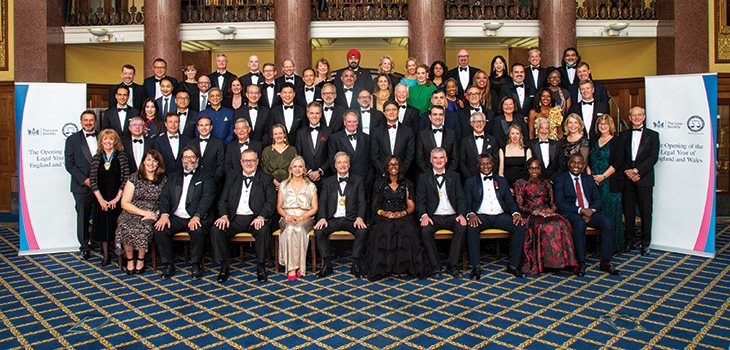
In September as part of the Opening of the Legal Year, Bar and Law Society leaders from around the world convened in London to discuss the threats facing the global profession and the urgent need to bolster coordination and safeguards.
The panel of guest speakers included the Istanbul Bar Association President Professor Dr Ibrahim Kaboglu, the American Bar Association President Michelle Behnke, the Law Society of Zimbabwe President Lison Ncube and the Law Association for Asia and the Pacific President Shyam Divan alongside the Law Society of England and Wales President Richard Atkinson and Chair of the Bar Barbara Mills KC.
Barbara Mills KC said: ‘There are patterns of intimidation that show we are facing an increasing hostile environment for lawyers globally… [we] are coming together to share experiences, to learn from each other and to offer support that is coordinated across jurisdictions. As a globally connected profession, we must work together to protect one another.’
Richard Atkinson said: ‘Lawyers must be able to carry out their duties and uphold the rule of law safely and independently, free from undue interference. This matters to every single person. When the rule of law is under threat, it affects not only lawyers but also the everyday lives, rights and freedoms of all people and their communities.’
The event discussed the specific challenges in different jurisdictions and how the new Council of Europe Convention as well as the long-standing UN Basic Principles on the Role of Lawyers can be used to defend lawyers and, by extension, the rights of the people they serve.
In October, the Bar Council of England and Wales joined with the Law Society of England and Wales, the Law Society of Scotland, the Faculty of Advocates, the Bar of Northern Ireland and the Law Society of Northern Ireland to express grave concern about the climate of increasing hostility towards lawyers and judges in the UK. Our joint statement described politically motivated attacks on the legal profession as ‘irresponsible and dangerous’.
The statement made clear that barristers, solicitors and judges have been subjected to violence, death threats and rape threats. Some have faced threats to their family members, and law firms and offices have been repeatedly set upon by protestors.
The Times newspaper has reported that some immigration judges are too ‘scared’ to work for fear of being targeted by either the press, politicians or angry members of the public.
In a blog in September, a patron of the Immigration Law Practitioners’ Association (ILPA) Elspeth Guild highlighted that immigration law practitioners have faced different waves of threats and attack. For example, in 2024 the police advised practitioners that were targeted to take specific actions to protect themselves, their staff, clients and premises. Lawyers had their neighbours come and help them board up office windows.
Guild also points out that such attacks have ‘become a new dimension of the troubled relationship between migration and racist violence’. She added: ‘Ours is not a field where practitioners are easily intimidated or cowed. One does not choose immigration, border controls and refugee protection law if one is seeking a simple, uncomplicated life… we undertake to protect the most vulnerable in our society from violence and abuse. As all practitioners know, those who are vulnerable make easy targets… Their defence is the measure by which our society is judged and is our obligation as legal practitioners.’
The joint statement by the Bars, Faculty and Law Societies in the UK in October stated: ‘Lawyers should never suffer adverse consequences because they are identified with their clients or their clients’ causes. Lawyers are not their clients. Those who are unpopular or despised are still entitled to access the courts just as much as anyone else. Nobody is above the law, including politicians. Nobody is beneath the law’s protections.’
Various lawyers and judges that have been named by politicians or the press have been willing to talk to me about their experiences anonymously. One described finding out they had been named whilst on holiday with their children and said the experience was ‘frightening’. Another said that a close family member is now following their location all the time on their phone and had called them out of fear. The family member said: ‘I thought someone had murdered you’.
Colleagues have been forced to take action to keep safe. They have installed video cameras, alarms, panic buttons and video doorbells at home. They have deleted their social media accounts and removed personal information, including home address, off the internet.
These experiences may deter barristers from practising in specific areas of law. One described immigration law as ‘interesting and rewarding work’ they would have previously recommended to colleagues – but not anymore. They added that they ‘never saw it coming that you could be attacked for doing pro bono work that was helping vulnerable people’. Another described the targeting as ‘picking on people with a history of working in the migrant sector’.
There was some concern expressed that there could be a shift in the dynamic of who wants to join the judiciary. The experience of being targeted could ‘count against you’ for those who are part-time judges and may want to progress to full-time judicial roles or barristers who want to apply for silk. There is a concern that being targeted may damage careers as there is a fear that reputations are tarnished by the attacks in the media and adverse publicity.
In a statement issued in July, ILPA said: ‘Those who have fled dangerous places to come here must be allowed to exercise their right to seek asylum in the UK, not be met with violence and hatred. Those who support them through the provision of legal services must be allowed to discharge their professional duties without hindrance, harassment or fear for their own safety and that of their families. Anything less jeopardises the integrity of our legal system and ultimately the UK’s democracy and rule of law.’
It is not inconceivable in the current climate that the focus on targeting immigration lawyers and judges is a warning to others. The type of targeting we have already seen could spread to other areas of practice based on fluctuating changes to political rhetoric, media reporting and social attitudes.
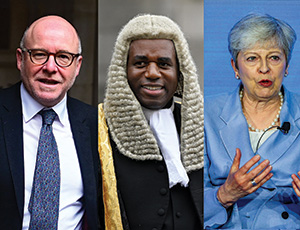
The Attorney General Lord Hermer told the Mirror: ‘In recent weeks and months, there has been a worrying trend of individually naming and attacking judges and lawyers.’ He suggested that the ‘toxic atmosphere’ was a risk to ongoing legal proceedings, hurt victims of crime and was making ‘good lawyers and judges’ reconsider their careers.
The Deputy Prime Minister, Secretary of State for Justice and Lord Chancellor David Lammy MP said: ‘I take very seriously my constitutional responsibility to uphold the independence of the judiciary and that is all of our judges.’
Former Prime Minister Theresa May said that politicians should not ‘question the integrity of our justices’ or accuse them of ‘political bias’. She added: ‘By undermining the judiciary we further erode public trust in the institutions of our democracy and therefore in democracy itself.’
On 21 October, the Sentencing Bill had its Committee Stage in the House of Commons. During the proceedings, Labour MP Sarah Russell said: ‘Our judges in the UK are some of the best in the world. The independence of our judiciary is an absolutely fundamental premise of our democracy, and the way in which it has been talked about recently treats it with complete disdain… I am a lawyer and I spent 13 years in practice. I have never met a judge who was anything but genuinely committed to the apolitical upholding of the law. It is incredibly important that we continue to recognise and promote those principles… Britain has exported £9.5 billion in legal services in the last year. One of the reasons for that level of success is that there is genuine belief in our judiciary… We have to understand the importance of the British rule of law and we need to promote and uphold it at all costs. Those who do not do so damage our country.’
In the subsequent parliamentary debate, she said: ‘We need immigration judges to be able to stand up and serve the judiciary. Many judges take a pay cut to become a judge, and they deserve our genuine respect.’
Lawyers should never suffer adverse consequences because they are identified with their clients or their clients’ causes. This is a universal principle of the global legal profession.
Lawyers like any other citizens are also entitled to freedom of expression, belief, association and assembly. They have the right to take part in public discussion of matters concerning the law, the administration of justice and the promotion and protection of human rights.
Those who wish to attack lawyers, judges and the rule of law will not want to stop. The Bar Council is the voice of the profession and remains committed to standing up for lawyers in 2026.
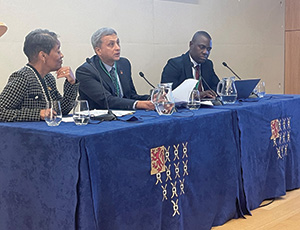
The panel of guest speakers at the Opening of the Legal Year included (from left to right) the American Bar Association President Michelle Behnke, the Law Association for Asia and the Pacific President Shyam Divan and the Law Society of Zimbabwe President Lison Ncube.
‘Council of Europe adopts international convention on protecting lawyers’, Council of Europe News Room, 12 March 2025
‘Vilifying lawyers puts them at risk’, Joint Statement by The Bar Council of England and Wales, the Law Society of England and Wales, the Law Society of Scotland, the Faculty of Advocates, the Bar of Northern Ireland and the Law Society of Northern Ireland
‘Immigration judges too scared to work’, The Times (£)
‘Solidarity and Immigration Law Practitioners’, Elspeth Guild, ILPA Blog, 4 September 2025
‘ILPA Statement on the Anniversary of the Summer 2024 Riots’, ILPA, 30 July 2025
‘Attorney General warns Tory attacks on justice could see judges quit and trials delayed’, Mirror, Alexander Brown, 19 October 2025
‘Robert Jenrick “should apologise” for attacks on judges, David Lammy says’, Mirror, Alexander Brown, 23 October 2025
‘Theresa May criticises Tory policy on net zero, judges and human rights’, Telegraph & Argus, 27 October 2025
Sarah Russell MP, Sentencing Bill, Hansard Volume 773: debated on Tuesday 21 October 2025
Sarah Kavanagh is Head of Media and Communications at the Bar Council. Sarah joined the Bar Council in October 2021 and worked previously for the National Union of Journalists in the UK and Ireland.
In January 2025, the Bar Council marked the International Day of the Endangered Lawyer by highlighting that some barristers in England and Wales have face threats, harassment, and intimidation at the hands of state and non-state actors because of their international legal work.
Barristers told the Bar Council they had faced targeted attacks including cyber harassment, threatening or impersonating emails, repeated and sustained hacking attempts and ‘privilege phishing’ which seeks to persuade those who are targeted to divulge sensitive information. Barristers also said they had been subjected to physical surveillance including being followed or photographed at international events.
Barbara Mills KC, Chair of the Bar, said: ‘The Bar Council is supporting our members and colleagues abroad who face multiple attacks and threats. In 2025 we want to see a renewed emphasis placed on promoting the important role of independent legal practitioners and adherence to the rule of law.’
In May, the Council of Europe launched the European Convention for the Protection of the Profession of Lawyer aimed to provide enhanced safeguards for legal professionals carrying out their daily work. The Council of Bars and Law Societies of Europe (CCBE) had suggested the idea of a convention because they were able to identify multiple challenges such as lawyers being associated with their client or causes, lawyers in some jurisdictions being persecuted or disbarred, and the title of lawyer being increasingly used as a pejorative term.
So far 17 countries have signed the convention. At least eight countries (including six member states of the Council of Europe) must ratify the convention for it to enter into force. The convention once ratified will be open to Council of Europe non-member states. This year the Bar Council has been encouraging colleagues around the world to lobby governments to apply to sign the treaty.
In September as part of the Opening of the Legal Year, Bar and Law Society leaders from around the world convened in London to discuss the threats facing the global profession and the urgent need to bolster coordination and safeguards.
The panel of guest speakers included the Istanbul Bar Association President Professor Dr Ibrahim Kaboglu, the American Bar Association President Michelle Behnke, the Law Society of Zimbabwe President Lison Ncube and the Law Association for Asia and the Pacific President Shyam Divan alongside the Law Society of England and Wales President Richard Atkinson and Chair of the Bar Barbara Mills KC.
Barbara Mills KC said: ‘There are patterns of intimidation that show we are facing an increasing hostile environment for lawyers globally… [we] are coming together to share experiences, to learn from each other and to offer support that is coordinated across jurisdictions. As a globally connected profession, we must work together to protect one another.’
Richard Atkinson said: ‘Lawyers must be able to carry out their duties and uphold the rule of law safely and independently, free from undue interference. This matters to every single person. When the rule of law is under threat, it affects not only lawyers but also the everyday lives, rights and freedoms of all people and their communities.’
The event discussed the specific challenges in different jurisdictions and how the new Council of Europe Convention as well as the long-standing UN Basic Principles on the Role of Lawyers can be used to defend lawyers and, by extension, the rights of the people they serve.
In October, the Bar Council of England and Wales joined with the Law Society of England and Wales, the Law Society of Scotland, the Faculty of Advocates, the Bar of Northern Ireland and the Law Society of Northern Ireland to express grave concern about the climate of increasing hostility towards lawyers and judges in the UK. Our joint statement described politically motivated attacks on the legal profession as ‘irresponsible and dangerous’.
The statement made clear that barristers, solicitors and judges have been subjected to violence, death threats and rape threats. Some have faced threats to their family members, and law firms and offices have been repeatedly set upon by protestors.
The Times newspaper has reported that some immigration judges are too ‘scared’ to work for fear of being targeted by either the press, politicians or angry members of the public.
In a blog in September, a patron of the Immigration Law Practitioners’ Association (ILPA) Elspeth Guild highlighted that immigration law practitioners have faced different waves of threats and attack. For example, in 2024 the police advised practitioners that were targeted to take specific actions to protect themselves, their staff, clients and premises. Lawyers had their neighbours come and help them board up office windows.
Guild also points out that such attacks have ‘become a new dimension of the troubled relationship between migration and racist violence’. She added: ‘Ours is not a field where practitioners are easily intimidated or cowed. One does not choose immigration, border controls and refugee protection law if one is seeking a simple, uncomplicated life… we undertake to protect the most vulnerable in our society from violence and abuse. As all practitioners know, those who are vulnerable make easy targets… Their defence is the measure by which our society is judged and is our obligation as legal practitioners.’
The joint statement by the Bars, Faculty and Law Societies in the UK in October stated: ‘Lawyers should never suffer adverse consequences because they are identified with their clients or their clients’ causes. Lawyers are not their clients. Those who are unpopular or despised are still entitled to access the courts just as much as anyone else. Nobody is above the law, including politicians. Nobody is beneath the law’s protections.’
Various lawyers and judges that have been named by politicians or the press have been willing to talk to me about their experiences anonymously. One described finding out they had been named whilst on holiday with their children and said the experience was ‘frightening’. Another said that a close family member is now following their location all the time on their phone and had called them out of fear. The family member said: ‘I thought someone had murdered you’.
Colleagues have been forced to take action to keep safe. They have installed video cameras, alarms, panic buttons and video doorbells at home. They have deleted their social media accounts and removed personal information, including home address, off the internet.
These experiences may deter barristers from practising in specific areas of law. One described immigration law as ‘interesting and rewarding work’ they would have previously recommended to colleagues – but not anymore. They added that they ‘never saw it coming that you could be attacked for doing pro bono work that was helping vulnerable people’. Another described the targeting as ‘picking on people with a history of working in the migrant sector’.
There was some concern expressed that there could be a shift in the dynamic of who wants to join the judiciary. The experience of being targeted could ‘count against you’ for those who are part-time judges and may want to progress to full-time judicial roles or barristers who want to apply for silk. There is a concern that being targeted may damage careers as there is a fear that reputations are tarnished by the attacks in the media and adverse publicity.
In a statement issued in July, ILPA said: ‘Those who have fled dangerous places to come here must be allowed to exercise their right to seek asylum in the UK, not be met with violence and hatred. Those who support them through the provision of legal services must be allowed to discharge their professional duties without hindrance, harassment or fear for their own safety and that of their families. Anything less jeopardises the integrity of our legal system and ultimately the UK’s democracy and rule of law.’
It is not inconceivable in the current climate that the focus on targeting immigration lawyers and judges is a warning to others. The type of targeting we have already seen could spread to other areas of practice based on fluctuating changes to political rhetoric, media reporting and social attitudes.
The Attorney General Lord Hermer told the Mirror: ‘In recent weeks and months, there has been a worrying trend of individually naming and attacking judges and lawyers.’ He suggested that the ‘toxic atmosphere’ was a risk to ongoing legal proceedings, hurt victims of crime and was making ‘good lawyers and judges’ reconsider their careers.
The Deputy Prime Minister, Secretary of State for Justice and Lord Chancellor David Lammy MP said: ‘I take very seriously my constitutional responsibility to uphold the independence of the judiciary and that is all of our judges.’
Former Prime Minister Theresa May said that politicians should not ‘question the integrity of our justices’ or accuse them of ‘political bias’. She added: ‘By undermining the judiciary we further erode public trust in the institutions of our democracy and therefore in democracy itself.’
On 21 October, the Sentencing Bill had its Committee Stage in the House of Commons. During the proceedings, Labour MP Sarah Russell said: ‘Our judges in the UK are some of the best in the world. The independence of our judiciary is an absolutely fundamental premise of our democracy, and the way in which it has been talked about recently treats it with complete disdain… I am a lawyer and I spent 13 years in practice. I have never met a judge who was anything but genuinely committed to the apolitical upholding of the law. It is incredibly important that we continue to recognise and promote those principles… Britain has exported £9.5 billion in legal services in the last year. One of the reasons for that level of success is that there is genuine belief in our judiciary… We have to understand the importance of the British rule of law and we need to promote and uphold it at all costs. Those who do not do so damage our country.’
In the subsequent parliamentary debate, she said: ‘We need immigration judges to be able to stand up and serve the judiciary. Many judges take a pay cut to become a judge, and they deserve our genuine respect.’
Lawyers should never suffer adverse consequences because they are identified with their clients or their clients’ causes. This is a universal principle of the global legal profession.
Lawyers like any other citizens are also entitled to freedom of expression, belief, association and assembly. They have the right to take part in public discussion of matters concerning the law, the administration of justice and the promotion and protection of human rights.
Those who wish to attack lawyers, judges and the rule of law will not want to stop. The Bar Council is the voice of the profession and remains committed to standing up for lawyers in 2026.
The panel of guest speakers at the Opening of the Legal Year included (from left to right) the American Bar Association President Michelle Behnke, the Law Association for Asia and the Pacific President Shyam Divan and the Law Society of Zimbabwe President Lison Ncube.
‘Council of Europe adopts international convention on protecting lawyers’, Council of Europe News Room, 12 March 2025
‘Vilifying lawyers puts them at risk’, Joint Statement by The Bar Council of England and Wales, the Law Society of England and Wales, the Law Society of Scotland, the Faculty of Advocates, the Bar of Northern Ireland and the Law Society of Northern Ireland
‘Immigration judges too scared to work’, The Times (£)
‘Solidarity and Immigration Law Practitioners’, Elspeth Guild, ILPA Blog, 4 September 2025
‘ILPA Statement on the Anniversary of the Summer 2024 Riots’, ILPA, 30 July 2025
‘Attorney General warns Tory attacks on justice could see judges quit and trials delayed’, Mirror, Alexander Brown, 19 October 2025
‘Robert Jenrick “should apologise” for attacks on judges, David Lammy says’, Mirror, Alexander Brown, 23 October 2025
‘Theresa May criticises Tory policy on net zero, judges and human rights’, Telegraph & Argus, 27 October 2025
Sarah Russell MP, Sentencing Bill, Hansard Volume 773: debated on Tuesday 21 October 2025

The Chair of the Bar reports back
By Kem Kemal, CEO, Henry Dannell
By BSK Financial Planning
Mário Barroso, Head of R&D and Method Development at AlphaBiolabs
Susie Griffin on the admin that keeps barristers from billable work
Clement Cowley, Partner at The Penny Group, explains how global events can influence the performance of pensions and ISAs, and why taking a long-term approach to investing is often the most effective strategy

Kick off your career at the Bar Council’s Pupillage Fair this October – it’s one of the most valuable opportunities for aspiring barristers, says Amelia Clegg
The golden age of advocacy? David Langwallner pays homage to the filmic if contentious barrister Sir Edward Carson and some of his contemporaries
Henry Fingerhut outlines what the Bar Standards Board AI guidance means for early career barristers
The Ministry of Justice will match-fund up to 100 criminal pupillages, with grants available to criminal chambers across England and Wales. Similar to the COIC scheme, the grants will match-fund pupillages additional to those otherwise offered without government funding
Not yet, says Jacob Turner. Regulation, unlike the technology itself, is a domain the legal profession can still control