*/
Abolishing juries is nothing new. By William Byfield
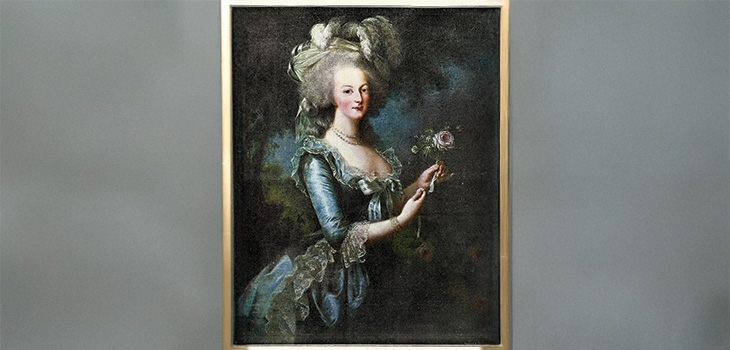
December 31, 2025 – Marie Antoinette
Sometimes, one feels very old: particularly when watching Strictly Come Dancing. But the surest way to feel positively ancient is to watch the blank expression on the face of a teenager when you mention a legendary star of stage or screen, or a classic film of yore of which they have never heard. Our connected historical memory, as opposed to what we can study, is not that good nor that long, as I recently discovered.
I have noted before the truly dreadful change that occurred when the Lord Chancellor’s appointment became not holding perhaps the greatest office of state but instead occupying a rather tawdry position even with the Justice add-on. This new combined office was an act of constitutional vandalism in 2005 by those, sadly lawyers themselves, who saw hypothetical conflicts of interest in holding an office combining legislature, executive and judiciary instead of realising that this was its strength and uniqueness. It was the jewel in the crown, avoiding the problems created by strict separation of the three roles, an undesirable state that can be seen in countries who followed Montesquieu too strictly, such as the United States where they produced a separated system enshrining gridlock – missing, as possibly Montesquieu did himself, the clever twist in the English version.
That’s now all dirty water under the bridge and we are stuck as lawyers with the limp protection offered by an office which now commands little respect and into which politicians are shoved when a government is formed, or a reshuffle occurs; popped there to await either the big job that is just around the corner or the retirement party with cheap white wine.
I was reminded of the fallibility of historical memory when I went to a party on Boxing Day where the principal guest was a very famous lawyer now aged 101. I was rather terrified of meeting him, even at my age. As a result, I arrived a little early and saw him sitting in a chair by the fire (we were in rural parts). I must say that I thought he had changed a lot from his more youthful photographs but that was obviously to be expected. He looked terribly and frighteningly old.
‘May I say what a great pleasure it is to meet you,’ I gushed. ‘You were one of my very great heroes at the Bar.’ There was a pause before he said: ‘I wasn’t at the Bar. I’m his son.’ Father, by contrast, looked about 30 years younger than his offspring when he came into the room in a wheelchair. I was still reeling from the previous embarrassment, ameliorated somewhat by a lovely lunch of what we used to call ‘Bubble & Squeak’ or, more prosaically, the leftovers from Christmas Day in a giant fry-up.
Paul, his son, did not drink alcohol although I notice that the great man took rather a lot, including the port. ‘It’s easier to digest than food at my age,’ he told us. When the ruby red liquid in the decanter was down as low as the candles on the table, the topic of scything the jury system either au Lammy or Levesonoise arose.
There were the usual arguments on both sides. A rather dry civil practitioner, called Petroc Graham, said: ‘We have single judges making decisions without any problems.’ A Chancery practitioner, Alastair Wilson, looked up and said sneeringly: ‘I wouldn’t put it quite as high as that.’ And our somewhat tenuous knowledge of Anglo-Saxon history, Henry II and Magna Carta was spread as thickly as the brandy butter.
Then with over 100 years of experience, our great guest spoke. Suddenly, time receded, as his mellifluous voice, beautifully paced, working in harmony with his eyes as he looked at each of us in turn, uttered his Doom: ‘Where was everyone when they abolished that great link between the law and the people before? It was abolished in civil trials, in libel cases, in actions against the police and where were they when we abolished Grand Juries, old-style committal hearings – testing the evidence at its freshest? And what of when they first started restricting trial by jury and abolishing any peremptory challenge? The case made was always the same, honouring the great god Efficiency. Yet we have the greatest backlog ever in our crumbling courtrooms. Ladies and gentlemen, and others, the game was lost a long time ago.’ He sat back in his chair with a sad smile and his age returned.
That was when I reached, out of turn, for the port. I needed it for a quite different reason.
William Byfield is the pseudonym of a senior member of the Bar. Gutteridge Chambers, and the events that happen there, are entirely fictitious.
December 31, 2025 – Marie Antoinette
Sometimes, one feels very old: particularly when watching Strictly Come Dancing. But the surest way to feel positively ancient is to watch the blank expression on the face of a teenager when you mention a legendary star of stage or screen, or a classic film of yore of which they have never heard. Our connected historical memory, as opposed to what we can study, is not that good nor that long, as I recently discovered.
I have noted before the truly dreadful change that occurred when the Lord Chancellor’s appointment became not holding perhaps the greatest office of state but instead occupying a rather tawdry position even with the Justice add-on. This new combined office was an act of constitutional vandalism in 2005 by those, sadly lawyers themselves, who saw hypothetical conflicts of interest in holding an office combining legislature, executive and judiciary instead of realising that this was its strength and uniqueness. It was the jewel in the crown, avoiding the problems created by strict separation of the three roles, an undesirable state that can be seen in countries who followed Montesquieu too strictly, such as the United States where they produced a separated system enshrining gridlock – missing, as possibly Montesquieu did himself, the clever twist in the English version.
That’s now all dirty water under the bridge and we are stuck as lawyers with the limp protection offered by an office which now commands little respect and into which politicians are shoved when a government is formed, or a reshuffle occurs; popped there to await either the big job that is just around the corner or the retirement party with cheap white wine.
I was reminded of the fallibility of historical memory when I went to a party on Boxing Day where the principal guest was a very famous lawyer now aged 101. I was rather terrified of meeting him, even at my age. As a result, I arrived a little early and saw him sitting in a chair by the fire (we were in rural parts). I must say that I thought he had changed a lot from his more youthful photographs but that was obviously to be expected. He looked terribly and frighteningly old.
‘May I say what a great pleasure it is to meet you,’ I gushed. ‘You were one of my very great heroes at the Bar.’ There was a pause before he said: ‘I wasn’t at the Bar. I’m his son.’ Father, by contrast, looked about 30 years younger than his offspring when he came into the room in a wheelchair. I was still reeling from the previous embarrassment, ameliorated somewhat by a lovely lunch of what we used to call ‘Bubble & Squeak’ or, more prosaically, the leftovers from Christmas Day in a giant fry-up.
Paul, his son, did not drink alcohol although I notice that the great man took rather a lot, including the port. ‘It’s easier to digest than food at my age,’ he told us. When the ruby red liquid in the decanter was down as low as the candles on the table, the topic of scything the jury system either au Lammy or Levesonoise arose.
There were the usual arguments on both sides. A rather dry civil practitioner, called Petroc Graham, said: ‘We have single judges making decisions without any problems.’ A Chancery practitioner, Alastair Wilson, looked up and said sneeringly: ‘I wouldn’t put it quite as high as that.’ And our somewhat tenuous knowledge of Anglo-Saxon history, Henry II and Magna Carta was spread as thickly as the brandy butter.
Then with over 100 years of experience, our great guest spoke. Suddenly, time receded, as his mellifluous voice, beautifully paced, working in harmony with his eyes as he looked at each of us in turn, uttered his Doom: ‘Where was everyone when they abolished that great link between the law and the people before? It was abolished in civil trials, in libel cases, in actions against the police and where were they when we abolished Grand Juries, old-style committal hearings – testing the evidence at its freshest? And what of when they first started restricting trial by jury and abolishing any peremptory challenge? The case made was always the same, honouring the great god Efficiency. Yet we have the greatest backlog ever in our crumbling courtrooms. Ladies and gentlemen, and others, the game was lost a long time ago.’ He sat back in his chair with a sad smile and his age returned.
That was when I reached, out of turn, for the port. I needed it for a quite different reason.
Abolishing juries is nothing new. By William Byfield

The Chair of the Bar reports back
By Kem Kemal, CEO, Henry Dannell
By BSK Financial Planning
Mário Barroso, Head of R&D and Method Development at AlphaBiolabs
Susie Griffin on the admin that keeps barristers from billable work
Clement Cowley, Partner at The Penny Group, explains how global events can influence the performance of pensions and ISAs, and why taking a long-term approach to investing is often the most effective strategy

Kick off your career at the Bar Council’s Pupillage Fair this October – it’s one of the most valuable opportunities for aspiring barristers, says Amelia Clegg
Join us on Saturday 21 November 2026 at Leeds Beckett University and see for yourself why the North continues to be an exceptional place to build a career at the Bar
The golden age of advocacy? David Langwallner pays homage to the filmic if contentious barrister Sir Edward Carson and some of his contemporaries
Henry Fingerhut outlines what the Bar Standards Board AI guidance means for early career barristers
Not yet, says Jacob Turner. Regulation, unlike the technology itself, is a domain the legal profession can still control