*/
December brings A Christmas Carol back in focus. Dickens was a great, if critical, writer about our profession (particularly in Bleak House) and although Bob Cratchitt was not a lawyer’s clerk he was, no doubt, influenced by Dickens’ experience as a court reporter and the great poverty of his childhood.
A Christmas Carol has been filmed many times with a parade of grand older men of cinema playing Ebenezer Scrooge: Patrick Stewart (1999), Michael Caine (1992), George C Scott (1984), Albert Finney (1970) and, above all, Alistair Sim (1951) in an incandescent performance.
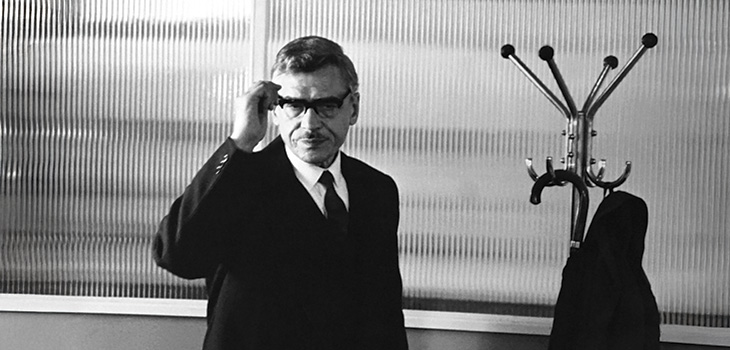
The plight of Cratchitt brings to mind Bartleby, The Scrivener by Herman Melville (1853), now regarded as one of the great short novels in the English language. Influenced by Melville’s own personal commercial failure, the book is about a lawyer, a law firm and a scrivener. It was filmed elegantly with the late great Paul Scofield in the role of head of the firm. Though transposed from lawyers in 19th century New York to accountants of London in the soulless 70s, Bartleby is apposite to our time and profession given concerns about mental health, wellbeing and isolation at work and employment practices. At one level Bartleby is like Cratchitt but with a benevolent benefactor, rather than Scrooge. So, it is A Christmas Carol for lawyers.
Thus, a compassionate but unnamed elderly figure runs a firm specialising in non-contentious work with rich clients for an easy life. In the book, The Lawyer (the narrator) has three scriveners, more commonly referred to law copyists or clerks to a set of chambers or firm. It might apply to a paralegal today. Document production, footnote checking, drafting. The sort of corporate drudgery that many apprentices or pupils face. The scriveners are evocatively described and one of them is castigated for efforts at creativity and originality rather than mere copying.
As the business expands, Bartleby is employed. At first, the clerk is excellent and industrious but then, with constant iteration, he refuses to do any work, repeating the mantra: ‘I prefer not to.’
Thus, Bartleby will not consent to clerking and refuses to be ‘reasonable’. The reasonable economic man, much like the man on the Clapham omnibus, had become the feature of the time. Bartleby becomes a non-working squatter in the office, there night and day. It becomes the talk of the town. Something must be done, but what? His employer even offers him free-of-charge accommodation in his own abode. The firm decamps to a different office but despite a notice to quit, Bartleby remains a gentleman of leisure in its former office. Eventually he is evicted as a vagrant and imprisoned, where he refuses to eat and dies, for the act mentioned in the text of defying authority. One of Kafka’s great parables about the law The Hunger Artist (1922) comes to mind and has a similar narrative.
The novel closes with a codicil. After Bartleby’s death, it was discovered he had hitherto worked in a dead letter office which The Lawyer narrator thinks must have got to him. So perhaps Melville was writing about the dead or living dead of ghost capitalism, as Arundhati Roy recently termed it.
Bartley is ‘buried with kings and counsellors’, a phrase pregnant with Shakespearean resonance, and the novel concludes with the line: ‘Ah Bartleby, humanity.’
What should we take from this? Perhaps that a legitimate revulsion to overwork and excessive demands is healthy for the soul, maybe not long-term the bank balance, but the work-life balance. Also, that obeying every order can damage your physical and mental health and increasingly land an individual in trouble.
Dickens summarised A Christmas Carol thus (which says something about his motivation): ‘Cheerful views, sharp anatomisation of humbug, jolly good temper… and a vein of glowing, hearty, generous, mirthful, beaming reference in everything to Home, and Fireside.’
So Happy Holidays in these challenging times and remember it is important to say, ‘I prefer not to’, some of the time.

David Langwallner is a graduate of the Harvard Law School and the London School of Economics. He is a barrister at 1MCB and was 2015 Irish Lawyer of the Year for his work as director of the Irish Innocence Project.
December brings A Christmas Carol back in focus. Dickens was a great, if critical, writer about our profession (particularly in Bleak House) and although Bob Cratchitt was not a lawyer’s clerk he was, no doubt, influenced by Dickens’ experience as a court reporter and the great poverty of his childhood.
A Christmas Carol has been filmed many times with a parade of grand older men of cinema playing Ebenezer Scrooge: Patrick Stewart (1999), Michael Caine (1992), George C Scott (1984), Albert Finney (1970) and, above all, Alistair Sim (1951) in an incandescent performance.
The plight of Cratchitt brings to mind Bartleby, The Scrivener by Herman Melville (1853), now regarded as one of the great short novels in the English language. Influenced by Melville’s own personal commercial failure, the book is about a lawyer, a law firm and a scrivener. It was filmed elegantly with the late great Paul Scofield in the role of head of the firm. Though transposed from lawyers in 19th century New York to accountants of London in the soulless 70s, Bartleby is apposite to our time and profession given concerns about mental health, wellbeing and isolation at work and employment practices. At one level Bartleby is like Cratchitt but with a benevolent benefactor, rather than Scrooge. So, it is A Christmas Carol for lawyers.
Thus, a compassionate but unnamed elderly figure runs a firm specialising in non-contentious work with rich clients for an easy life. In the book, The Lawyer (the narrator) has three scriveners, more commonly referred to law copyists or clerks to a set of chambers or firm. It might apply to a paralegal today. Document production, footnote checking, drafting. The sort of corporate drudgery that many apprentices or pupils face. The scriveners are evocatively described and one of them is castigated for efforts at creativity and originality rather than mere copying.
As the business expands, Bartleby is employed. At first, the clerk is excellent and industrious but then, with constant iteration, he refuses to do any work, repeating the mantra: ‘I prefer not to.’
Thus, Bartleby will not consent to clerking and refuses to be ‘reasonable’. The reasonable economic man, much like the man on the Clapham omnibus, had become the feature of the time. Bartleby becomes a non-working squatter in the office, there night and day. It becomes the talk of the town. Something must be done, but what? His employer even offers him free-of-charge accommodation in his own abode. The firm decamps to a different office but despite a notice to quit, Bartleby remains a gentleman of leisure in its former office. Eventually he is evicted as a vagrant and imprisoned, where he refuses to eat and dies, for the act mentioned in the text of defying authority. One of Kafka’s great parables about the law The Hunger Artist (1922) comes to mind and has a similar narrative.
The novel closes with a codicil. After Bartleby’s death, it was discovered he had hitherto worked in a dead letter office which The Lawyer narrator thinks must have got to him. So perhaps Melville was writing about the dead or living dead of ghost capitalism, as Arundhati Roy recently termed it.
Bartley is ‘buried with kings and counsellors’, a phrase pregnant with Shakespearean resonance, and the novel concludes with the line: ‘Ah Bartleby, humanity.’
What should we take from this? Perhaps that a legitimate revulsion to overwork and excessive demands is healthy for the soul, maybe not long-term the bank balance, but the work-life balance. Also, that obeying every order can damage your physical and mental health and increasingly land an individual in trouble.
Dickens summarised A Christmas Carol thus (which says something about his motivation): ‘Cheerful views, sharp anatomisation of humbug, jolly good temper… and a vein of glowing, hearty, generous, mirthful, beaming reference in everything to Home, and Fireside.’
So Happy Holidays in these challenging times and remember it is important to say, ‘I prefer not to’, some of the time.

The Chair of the Bar reports back
Susie Griffin on the admin that keeps barristers from billable work
Clement Cowley, Partner at The Penny Group, explains how global events can influence the performance of pensions and ISAs, and why taking a long-term approach to investing is often the most effective strategy
Mário Barroso, Head of R&D and Method Development at AlphaBiolabs, discusses what family law professionals need to know about hallucinogens, from the main hallucinogenic drugs encountered in family proceedings, to their effects and the testing options available
Harmony Christian Ministries is the latest charity to benefit from a £500 donation from AlphaBiolabs via the company’s Giving Back initiative
By David Green

The golden age of advocacy? David Langwallner pays homage to the filmic if contentious barrister Sir Edward Carson and some of his contemporaries
Leah Arthur, a pupil, and her second seat supervisor, John Goss, share their perspectives on building a productive pupil-supervisor relationship
Henry Fingerhut outlines what the Bar Standards Board AI guidance means for early career barristers
The Ministry of Justice will match-fund up to 100 criminal pupillages, with grants available to criminal chambers across England and Wales. Similar to the COIC scheme, the grants will match-fund pupillages additional to those otherwise offered without government funding
Not yet, says Jacob Turner. Regulation, unlike the technology itself, is a domain the legal profession can still control