*/

Georgia-Mae Chung on the challenges of navigating grief within the legal profession and her work with Sarah Lucy Cooper to create a bereavement policy for chambers. With the policy recently endorsed by the Bar Council, they urge chambers to prioritise its adoption
In the summer of 2022, I was 24 years old. I had moved to London the year before and begun working as a trainee legal adviser at the Thames and Stratford Magistrates’ Courts. I had just finished a second round of pupillage applications and, having been reserved but not received an offer, was preparing myself for a third round in the new year. My mind was occupied with thoughts of job opportunities, article writing and advocacy competitions; how I could make myself a better candidate?
In mid-August, my mum became very ill suddenly and was hospitalised. She died two weeks later. It is not an exaggeration to say that she was my best friend and my role model. I adored her and always will and I will take any opportunity that I can to talk about her.
Among the vast and unpredictable circumstances that bereavement can bring about, I learned about the reality of navigating my grief while working in law. The legal sector is no doubt better known for its high-pressure, unrelenting pace than its allowance for the wellbeing and recovery of those who work within it. It was this difficulty, alongside my wish to speak about my mum that led me to organise Aggrieved events.
During these events, I chair a panel with four other individuals who work in law or study it. We speak about our personal experiences of grief, how we have navigated it and how we have tried to manage it alongside our commitments and lifestyles.
Aggrieved began as a collaboration with Middle Temple, which hosted the first event. Since then, three more panels have been held at my chambers where Aggrieved has become a biannual regularity. It was as part of the first event that I got to know Sarah Lucy Cooper, a family barrister at Thomas More Chambers and a Family Recorder. Sarah had volunteered to be a panellist. Like me, her mother had died when she was in her mid-20s. Sarah was in the middle of her pupillage and her late mother had also been a family barrister at Hardwicke Building (as it then was) and as a result was well known around the Bar, triggering enquiries about her at inopportune moments in Sarah’s professional life.
During discussions in the run-up to the first event, it became clear to us that many sets of chambers did not have a bereavement policy. I realised that I, personally, had been lucky to have been employed at the time of my loss so that I had the protection of the leave allowed in my contract. Those who are at the self-employed Bar are not so fortunate.
Despite my description above of the traditions of the legal sector, things have begun to improve. It is this progressive changing of attitudes that has led to such movements as the recent Harman Report on bullying, the Criminal Bar Association’s surveys and reports regarding the wellbeing of its members, and the South Eastern Circuit’s research into kindness.
It is reassuring to witness this change at an early stage of my career at the Bar. However, I have noted that bereavement is still an area that is neglected. A clear indicator of this came when it was suggested to me that mine was the first event specifically about the topic that had been held at Middle Temple.
We will all, almost certainly, experience a form of bereavement at some point in our lives, and yet it can be a difficult subject to approach. Its effects are unpredictable for those going through it firsthand. Moreover, I think that there is a tendency for those who wish to provide support to bereaved individuals to struggle to determine how to approach giving that support. This often seems to be for fear of making the situation worse or getting it wrong.
This appeared to myself and Sarah to be all the more reason to find a way to talk about it and how we at the Bar can improve those very difficult days after bereavement.
Sarah noted that a new policy had been adopted by the judiciary in 2023 for bereavement and together we considered how that might be adopted such that it was relevant to self-employed barristers and their clerks, bearing in mind the unusual contractual and employment relationships and methods of working of the self-employed Bar. One of the particular issues for us was the daily reality of dealing with new clients, new opponents, new judges and new court staff which adds to the toll on anyone seeking to explain their personal circumstances.
We therefore got to work and drafted a policy tailored for the self-employed Bar but covering employed barristers, pupils, clerks and other staff. This policy was then considered, revised and approved by a policy committee of the Bar Council including Peter Grieves-Smith, eventually being launched last summer by 2025 Chair of the Bar Barbara Mills KC.
The policy itself is a mixture of a basic outline of the legal protection in place (or not) plus practical tips and some recommendations as to how to manage communications within a busy chambers, at court, with solicitors and otherwise. Our intention is that it is a living document and will not gather dust on a metaphorical digital shelf.
Please do therefore have a good read now with a view to implementing such a policy sooner rather later and circulating it to all members of chambers. Sadly, bereavement can be sudden but, with some thought beforehand, an awful situation can be made a little less bad.
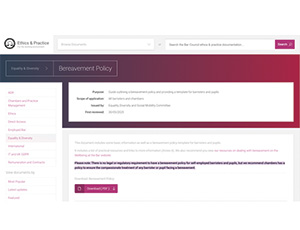
Drafted by Georgia-Mae Chung and Sarah Lucy Cooper, the bereavement policy for chambers contains practical suggestions as well as an overview of the current obligations in relation to bereavement. Please read and implement it in chambers. See also ‘Dealing with bereavement’, Wellbeing at the Bar.
The next event, planned for Spring 2026, will be advertised on www.mountfordchambers.com.
Samaritans: call the free (24/7) confidential helpline 116 123 or visit samaritans.org
Befrienders Worldwide: please visit befrienders.org
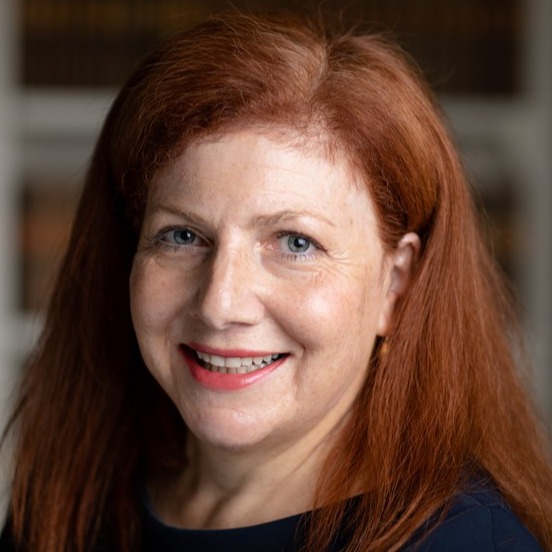
Sarah Lucy Cooper is a specialist international family law barrister called in 1993 who practises from Thomas More Chambers. She is a family Recorder, mediator and family arbitrator. She is a Latinophile with a love of Latin American music, literature and art, as well as dogs, yoga and marmalade making.
In the summer of 2022, I was 24 years old. I had moved to London the year before and begun working as a trainee legal adviser at the Thames and Stratford Magistrates’ Courts. I had just finished a second round of pupillage applications and, having been reserved but not received an offer, was preparing myself for a third round in the new year. My mind was occupied with thoughts of job opportunities, article writing and advocacy competitions; how I could make myself a better candidate?
In mid-August, my mum became very ill suddenly and was hospitalised. She died two weeks later. It is not an exaggeration to say that she was my best friend and my role model. I adored her and always will and I will take any opportunity that I can to talk about her.
Among the vast and unpredictable circumstances that bereavement can bring about, I learned about the reality of navigating my grief while working in law. The legal sector is no doubt better known for its high-pressure, unrelenting pace than its allowance for the wellbeing and recovery of those who work within it. It was this difficulty, alongside my wish to speak about my mum that led me to organise Aggrieved events.
During these events, I chair a panel with four other individuals who work in law or study it. We speak about our personal experiences of grief, how we have navigated it and how we have tried to manage it alongside our commitments and lifestyles.
Aggrieved began as a collaboration with Middle Temple, which hosted the first event. Since then, three more panels have been held at my chambers where Aggrieved has become a biannual regularity. It was as part of the first event that I got to know Sarah Lucy Cooper, a family barrister at Thomas More Chambers and a Family Recorder. Sarah had volunteered to be a panellist. Like me, her mother had died when she was in her mid-20s. Sarah was in the middle of her pupillage and her late mother had also been a family barrister at Hardwicke Building (as it then was) and as a result was well known around the Bar, triggering enquiries about her at inopportune moments in Sarah’s professional life.
During discussions in the run-up to the first event, it became clear to us that many sets of chambers did not have a bereavement policy. I realised that I, personally, had been lucky to have been employed at the time of my loss so that I had the protection of the leave allowed in my contract. Those who are at the self-employed Bar are not so fortunate.
Despite my description above of the traditions of the legal sector, things have begun to improve. It is this progressive changing of attitudes that has led to such movements as the recent Harman Report on bullying, the Criminal Bar Association’s surveys and reports regarding the wellbeing of its members, and the South Eastern Circuit’s research into kindness.
It is reassuring to witness this change at an early stage of my career at the Bar. However, I have noted that bereavement is still an area that is neglected. A clear indicator of this came when it was suggested to me that mine was the first event specifically about the topic that had been held at Middle Temple.
We will all, almost certainly, experience a form of bereavement at some point in our lives, and yet it can be a difficult subject to approach. Its effects are unpredictable for those going through it firsthand. Moreover, I think that there is a tendency for those who wish to provide support to bereaved individuals to struggle to determine how to approach giving that support. This often seems to be for fear of making the situation worse or getting it wrong.
This appeared to myself and Sarah to be all the more reason to find a way to talk about it and how we at the Bar can improve those very difficult days after bereavement.
Sarah noted that a new policy had been adopted by the judiciary in 2023 for bereavement and together we considered how that might be adopted such that it was relevant to self-employed barristers and their clerks, bearing in mind the unusual contractual and employment relationships and methods of working of the self-employed Bar. One of the particular issues for us was the daily reality of dealing with new clients, new opponents, new judges and new court staff which adds to the toll on anyone seeking to explain their personal circumstances.
We therefore got to work and drafted a policy tailored for the self-employed Bar but covering employed barristers, pupils, clerks and other staff. This policy was then considered, revised and approved by a policy committee of the Bar Council including Peter Grieves-Smith, eventually being launched last summer by 2025 Chair of the Bar Barbara Mills KC.
The policy itself is a mixture of a basic outline of the legal protection in place (or not) plus practical tips and some recommendations as to how to manage communications within a busy chambers, at court, with solicitors and otherwise. Our intention is that it is a living document and will not gather dust on a metaphorical digital shelf.
Please do therefore have a good read now with a view to implementing such a policy sooner rather later and circulating it to all members of chambers. Sadly, bereavement can be sudden but, with some thought beforehand, an awful situation can be made a little less bad.
Drafted by Georgia-Mae Chung and Sarah Lucy Cooper, the bereavement policy for chambers contains practical suggestions as well as an overview of the current obligations in relation to bereavement. Please read and implement it in chambers. See also ‘Dealing with bereavement’, Wellbeing at the Bar.
The next event, planned for Spring 2026, will be advertised on www.mountfordchambers.com.
Samaritans: call the free (24/7) confidential helpline 116 123 or visit samaritans.org
Befrienders Worldwide: please visit befrienders.org
Georgia-Mae Chung on the challenges of navigating grief within the legal profession and her work with Sarah Lucy Cooper to create a bereavement policy for chambers. With the policy recently endorsed by the Bar Council, they urge chambers to prioritise its adoption

The Chair of the Bar reports back
By Kem Kemal, CEO, Henry Dannell
By BSK Financial Planning
Mário Barroso, Head of R&D and Method Development at AlphaBiolabs
Susie Griffin on the admin that keeps barristers from billable work
Clement Cowley, Partner at The Penny Group, explains how global events can influence the performance of pensions and ISAs, and why taking a long-term approach to investing is often the most effective strategy

Kick off your career at the Bar Council’s Pupillage Fair this October – it’s one of the most valuable opportunities for aspiring barristers, says Amelia Clegg
Join us on Saturday 21 November 2026 at Leeds Beckett University and see for yourself why the North continues to be an exceptional place to build a career at the Bar
The golden age of advocacy? David Langwallner pays homage to the filmic if contentious barrister Sir Edward Carson and some of his contemporaries
Henry Fingerhut outlines what the Bar Standards Board AI guidance means for early career barristers
Not yet, says Jacob Turner. Regulation, unlike the technology itself, is a domain the legal profession can still control