*/
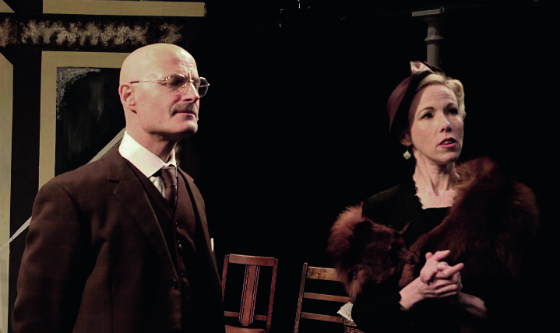 Nigel Pascoe QC reviews the recent staging of Judgement at Nuremberg at the Bridewell Theatre to which lawyer-actors brought their forensic skills
Judging the Judges is a diverting philosophical exercise. The Bar are at it every day. But in the third Nuremberg trial it happened with a vengeance when four Nazi Judges faced an American panel of three. Was it to be victor’s justice and the least they deserved? Or were there real defences in law which could be deployed?
In recent years, Judgement at Nuremberg has been staged at the Tricycle Theatre as well as other lawyer’s productions, including 12 Angry Men, Inherit The Wind and To Kill a Mockingbird ; all directed very successfully by Sally Knyvette. Any lawyer-actors would love the chance to bring their forensic skills to a professional venue and professionally directed, they can bring authentic attack and real flair to these classic court-room dramas: so again with this new staging at the Bridewell Theatre. The great virtue of this compelling play is that without ever losing its moral core, it is pretty even-handed in examining the issues and particularly who knew what of the Holocaust in legal and civilian circles. It reaches the right conclusion, but in the process, also allows us to follow the fall of a great but flawed German judge. Unlike his co-defendants whom he despises, this Judge has the moral courage to condemn himself. In dramatic terms then, a stonking great speech for a lawyer-actor and a marvellous central part - the fair and modest small-town American Judge.
We were not disappointed.This was a tremendous production, brilliantly directed by Sally Knyvette, taut, clearly spoken and generating real tension and engagement in the issues. The lawyers were living out their dreams along with some professionals, all to support the Paul’s Cancer Support Centre. But this was no amateur production. Pin-sharp casting produced some fantastic performances and a very high level of ensemble playing. As Judge Haywood, Stephen Boyd was totally convincing, a calm and beautifully controlled performance. Crispian Cartwright as Ernst Janning gave the performance of a lifetime: a truly brilliant piece of stagecraft, delivered with immense and chilling control. Peter Hill energetically represented Janning with admirable command and presence. Peter Dodge was a powerful prosecutor, giving no ground.
In the smaller roles, the standards remained impressively high. Iain Christie narrated with total assurance and control as well as being a clearly drawn tight-lipped Nazi defendant. Rachel Lawrence caught splendidly the ambiguity of the German widow. Although her soldier husband had already been hanged, she retained an affection for America and perhaps for Judge Haywood. Peter Cowell was quite superb as a German witness and Caroline Eady skilfully caught the fear of Maria Wallner. Rob McCreath doubled very persuasively, whilst Caroline Havers was a charming and confident local German. Jonathan Taylor an impressive and confident escort. No weaknesses at all in the supporting players. The music, haunting and evocative; high praise to Tim Phillips. Finally a thrilling and disturbing choreography of Khristallnacht by Thea Stanton. Definitely a huge success. Equity applications in the post.
Nigel Pascoe QC, Pump Court Chambers
We were not disappointed.This was a tremendous production, brilliantly directed by Sally Knyvette, taut, clearly spoken and generating real tension and engagement in the issues. The lawyers were living out their dreams along with some professionals, all to support the Paul’s Cancer Support Centre. But this was no amateur production. Pin-sharp casting produced some fantastic performances and a very high level of ensemble playing. As Judge Haywood, Stephen Boyd was totally convincing, a calm and beautifully controlled performance. Crispian Cartwright as Ernst Janning gave the performance of a lifetime: a truly brilliant piece of stagecraft, delivered with immense and chilling control. Peter Hill energetically represented Janning with admirable command and presence. Peter Dodge was a powerful prosecutor, giving no ground.
In the smaller roles, the standards remained impressively high. Iain Christie narrated with total assurance and control as well as being a clearly drawn tight-lipped Nazi defendant. Rachel Lawrence caught splendidly the ambiguity of the German widow. Although her soldier husband had already been hanged, she retained an affection for America and perhaps for Judge Haywood. Peter Cowell was quite superb as a German witness and Caroline Eady skilfully caught the fear of Maria Wallner. Rob McCreath doubled very persuasively, whilst Caroline Havers was a charming and confident local German. Jonathan Taylor an impressive and confident escort. No weaknesses at all in the supporting players. The music, haunting and evocative; high praise to Tim Phillips. Finally a thrilling and disturbing choreography of Khristallnacht by Thea Stanton. Definitely a huge success. Equity applications in the post.
Nigel Pascoe QC, Pump Court Chambers
Nigel Pascoe QC reviews the recent staging of Judgement at Nuremberg at the Bridewell Theatre to which lawyer-actors brought their forensic skills
Judging the Judges is a diverting philosophical exercise. The Bar are at it every day. But in the third Nuremberg trial it happened with a vengeance when four Nazi Judges faced an American panel of three. Was it to be victor’s justice and the least they deserved? Or were there real defences in law which could be deployed?
In recent years, Judgement at Nuremberg has been staged at the Tricycle Theatre as well as other lawyer’s productions, including 12 Angry Men, Inherit The Wind and To Kill a Mockingbird; all directed very successfully by Sally Knyvette. Any lawyer-actors would love the chance to bring their forensic skills to a professional venue and professionally directed, they can bring authentic attack and real flair to these classic court-room dramas: so again with this new staging at the Bridewell Theatre. The great virtue of this compelling play is that without ever losing its moral core, it is pretty even-handed in examining the issues and particularly who knew what of the Holocaust in legal and civilian circles. It reaches the right conclusion, but in the process, also allows us to follow the fall of a great but flawed German judge. Unlike his co-defendants whom he despises, this Judge has the moral courage to condemn himself. In dramatic terms then, a stonking great speech for a lawyer-actor and a marvellous central part - the fair and modest small-town American Judge.


The Chair of the Bar reports back
Clement Cowley, Partner at The Penny Group, explains how global events can influence the performance of pensions and ISAs, and why taking a long-term approach to investing is often the most effective strategy
Mário Barroso, Head of R&D and Method Development at AlphaBiolabs, discusses what family law professionals need to know about hallucinogens, from the main hallucinogenic drugs encountered in family proceedings, to their effects and the testing options available
Harmony Christian Ministries is the latest charity to benefit from a £500 donation from AlphaBiolabs via the company’s Giving Back initiative
By David Green
Mário Barroso, Head of R&D and Method Development at AlphaBiolabs, examines the forensic science underpinning hair drug testing, its evidential scope and limitations, and why it remains the gold standard for evidencing patterns of drug use in family proceedings
At the start of her term, Chair of the Bar 2026 Kirsty Brimelow KC set out a series of priorities for the year ahead. One of those priorities was children in the justice system
As the world becomes more digital, Barbara Vinagre Mota examines international research into the mental health consequences of judges’ exposure to graphic and immersive evidence, highlighting the importance of support systems
In an era of patient-centred care and growing concern over misconduct in medical settings, why do women still lack the right to choose women consultants for examination and treatment? Charles Davey investigates
Reviewed by Daniel Barnett
James McNeill Whistler at Tate Britain until 27 September Rothko in Florence at Palazzo Strozzi until 23 August Reviewed by Stephen Cragg KC