*/
© Haresh Sood
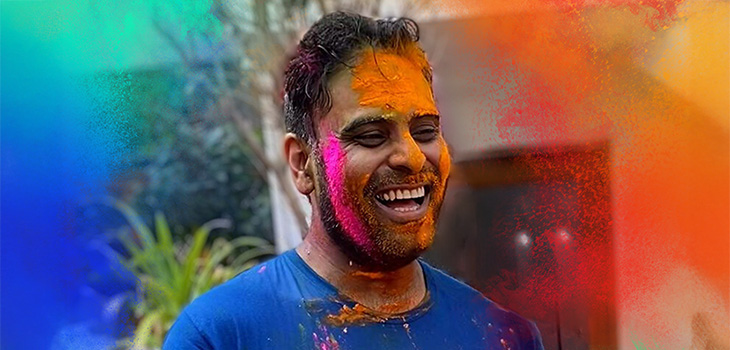
Since the age of 17, along with many of my friends, I have engaged in various educational and charitable awareness-raising projects. As I approached my 40s, having worked across journalism, acting, teaching and law, I wanted to find a single platform to share what I have learned over the years – with the aim of making people feel, reflect and learn. The journalist in me wanted to communicate, the teacher in me wanted to educate, the actor in me wanted to demonstrate, the writer in me wanted to articulate, and the lawyer in me continues to advocate for change.
So, as I wrote in an article for Counsel a few years ago, to merge these strands I became a filmmaker, graduating with a distinction for my MA from the film school at Sheffield Hallam University, where I trained under BAFTA awardees Saskia Wilson and Colin Pons.
I still maintain my practice as a barrister, which I thoroughly enjoy – in education, employment, entertainment (film) and expenses law, making me a veritable e-lawyer! Meanwhile, I believe it is very important to pay attention to our creative as well as professional aspirations.
Coming from a diverse background, I aspire to reflect my own diversity in film projects which also have a legal undertone. My first documentary, My Niece’s Big Fat Delhi Wedding, received accolades at international film festivals for which I am truly grateful. However, the key issue I was trying to spotlight was the overexpenditure at Indian weddings which can also happen in many other communities.
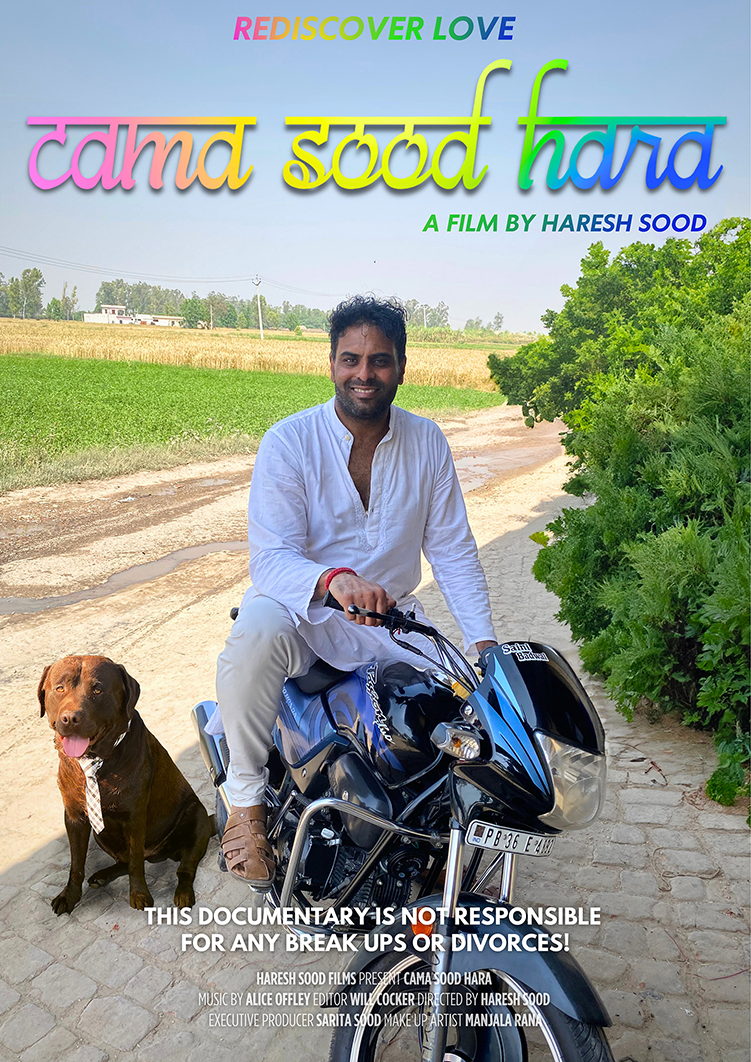
My second documentary, Cama Sood Hara, is a spin on the ancient Hindu text and launched this year. It is produced by Sarita Sood, co-written by Satyawathi Yadav, edited by Will Cocker and shot with an extensive cast and crew team of 250 people in five countries. I share my story as a South Asian man growing up in a global Indian community that is primarily focused on the end goal – to be married. I wanted to highlight the reality of the Indian matrimonial system and its dark underbelly. The film further discusses marriage, relationships and happiness at the back end of loss which makes the film relatable to all. I am really pleased to hear that audiences are connecting with the plethora of issues covered.
One of my hopes is to encourage people to think about the ‘L’ words we overlook in our lives. The ‘L’ words will be personal to an individual and can help us through some of the most difficult periods of our lives. For me, my chocolate labrador Pancho has been an absolute saviour. Furthermore, my thorough research into relationships for this project has developed into a unique theory, the ‘I’ theory, which people are kind enough to describe as insightful. Judge for yourself – I encourage the legal fraternity, especially family lawyers, to come and watch this film.
I would also like to persuade fellow advocates to take a moment and consider tapping into the dreams and ambitions they may have pushed aside. This whole experience of filmmaking and touring nationally and internationally, alongside my practice as a barrister, has made my 40s a wonderful time, especially with Pancho by my side.
Cama Sood Hara is on release nationwide at cinemas including Arc and Beck Theatre. Visit www.camasoodhara.com to find out more. Haresh would welcome collaborating with fellow advocates on unique topics relating to the law for his next documentary and his podcast, Haresh’s Soodio.
© Haresh Sood

Since the age of 17, along with many of my friends, I have engaged in various educational and charitable awareness-raising projects. As I approached my 40s, having worked across journalism, acting, teaching and law, I wanted to find a single platform to share what I have learned over the years – with the aim of making people feel, reflect and learn. The journalist in me wanted to communicate, the teacher in me wanted to educate, the actor in me wanted to demonstrate, the writer in me wanted to articulate, and the lawyer in me continues to advocate for change.
So, as I wrote in an article for Counsel a few years ago, to merge these strands I became a filmmaker, graduating with a distinction for my MA from the film school at Sheffield Hallam University, where I trained under BAFTA awardees Saskia Wilson and Colin Pons.
I still maintain my practice as a barrister, which I thoroughly enjoy – in education, employment, entertainment (film) and expenses law, making me a veritable e-lawyer! Meanwhile, I believe it is very important to pay attention to our creative as well as professional aspirations.
Coming from a diverse background, I aspire to reflect my own diversity in film projects which also have a legal undertone. My first documentary, My Niece’s Big Fat Delhi Wedding, received accolades at international film festivals for which I am truly grateful. However, the key issue I was trying to spotlight was the overexpenditure at Indian weddings which can also happen in many other communities.
My second documentary, Cama Sood Hara, is a spin on the ancient Hindu text and launched this year. It is produced by Sarita Sood, co-written by Satyawathi Yadav, edited by Will Cocker and shot with an extensive cast and crew team of 250 people in five countries. I share my story as a South Asian man growing up in a global Indian community that is primarily focused on the end goal – to be married. I wanted to highlight the reality of the Indian matrimonial system and its dark underbelly. The film further discusses marriage, relationships and happiness at the back end of loss which makes the film relatable to all. I am really pleased to hear that audiences are connecting with the plethora of issues covered.
One of my hopes is to encourage people to think about the ‘L’ words we overlook in our lives. The ‘L’ words will be personal to an individual and can help us through some of the most difficult periods of our lives. For me, my chocolate labrador Pancho has been an absolute saviour. Furthermore, my thorough research into relationships for this project has developed into a unique theory, the ‘I’ theory, which people are kind enough to describe as insightful. Judge for yourself – I encourage the legal fraternity, especially family lawyers, to come and watch this film.
I would also like to persuade fellow advocates to take a moment and consider tapping into the dreams and ambitions they may have pushed aside. This whole experience of filmmaking and touring nationally and internationally, alongside my practice as a barrister, has made my 40s a wonderful time, especially with Pancho by my side.
Cama Sood Hara is on release nationwide at cinemas including Arc and Beck Theatre. Visit www.camasoodhara.com to find out more. Haresh would welcome collaborating with fellow advocates on unique topics relating to the law for his next documentary and his podcast, Haresh’s Soodio.
© Haresh Sood

The Chair of the Bar reports back
By BSK Financial Planning
Susie Griffin on the admin that keeps barristers from billable work
Clement Cowley, Partner at The Penny Group, explains how global events can influence the performance of pensions and ISAs, and why taking a long-term approach to investing is often the most effective strategy
Mário Barroso, Head of R&D and Method Development at AlphaBiolabs, discusses what family law professionals need to know about hallucinogens, from the main hallucinogenic drugs encountered in family proceedings, to their effects and the testing options available
Harmony Christian Ministries is the latest charity to benefit from a £500 donation from AlphaBiolabs via the company’s Giving Back initiative

Kick off your career at the Bar Council’s Pupillage Fair this October – it’s one of the most valuable opportunities for aspiring barristers, says Amelia Clegg
The golden age of advocacy? David Langwallner pays homage to the filmic if contentious barrister Sir Edward Carson and some of his contemporaries
Henry Fingerhut outlines what the Bar Standards Board AI guidance means for early career barristers
The Ministry of Justice will match-fund up to 100 criminal pupillages, with grants available to criminal chambers across England and Wales. Similar to the COIC scheme, the grants will match-fund pupillages additional to those otherwise offered without government funding
Not yet, says Jacob Turner. Regulation, unlike the technology itself, is a domain the legal profession can still control