*/
A newly qualified adventure in the Supreme Court is followed by a more literal experience
First day as a fully qualified barrister and first appearance in the Supreme Court are often the most anticipated and memorable moments in a barrister’s life. I was fortunate to have experienced both events on the same day.
During my second six, I was instructed in a matter listed for 7 May in the Supreme Court; a linked appeal involving two interested parties and two appellants with four Queen’s Counsel and nine other barristers. A five-member bench consisting of Lady Hale, Lord Carnwath, Lord Briggs, Lady Arden and Lord Sales sat to hear the appeal.
As the only pupil barrister I undertook a hefty part of the leg work, such as preparing the authorities bundle and other procedural matters. I was aware of the legal arguments having encountered the Court of Appeal authority on the matter at various occasions in the immigration tribunals. The preparation for the Supreme Court case was, however, a completely different enterprise, with material from the Court of Justice of the European Union, primary and secondary sources of European law as well as domestic judicial decisions and legislation. These had to be procured in a specific manner to be put before the Supreme Court. I contacted foreign lawyers and was greatly surprised by the immediate help received and their level of interest in the proceedings.
This was a huge learning curve for someone in my position. Generally, pupil barristers are increasingly exposed to higher courts over the course of pupillage. Yet I was to be thrust into the midst of the most supreme; a court of final appeal.
Whilst basking in the light of this realisation, and also my pending qualification, it struck me that I was due to qualify on 7 May – the same day as I was due to appear in the Supreme Court. Immediately I started preparations for registering completion of my pupillage and I am grateful to the staff at the Bar Standards Board for their prompt assistance and consideration.
The day finally arrived, and what a day it was. I was one of the first people to arrive at the Supreme Court. It would be an understatement to say that I was excited. The hearing began and the five justices, whom I had only read about until this day, entered the courtroom. It dawned upon me that this is finally happening. Our legal submissions were presented by the eminent silk Thomas Roe QC. The justices intervened with questions that pierced straight into the heart of the complex legal arguments being made by both sides.
I found myself frantically flicking through papers and bundles to ensure that Mr Roe had all the relevant responses and material before him. The day ended on schedule, with the determination being reserved and the realisation that all those months of preparation had essentially boiled down to one day! We now await the judgment.
I received comments on social media describing my appearance before the Supreme Court as a ‘baptism by fire’. My literal baptism by fire occurred a month after I appeared before Lady Hale et al, as a part of my officer cadet training over an intense weekend. I was carrying out a simulated section attack when a 5.56mm blank cartridge fired from a neighboring soldier’s rifle landed directly on my neck, causing severe burns. The paramedics just about cleared me to continue my training which I gratefully did, before attending my hearings the following week. I requested permission from judges to appear in a collarless tunic shirt, which often was the subject of an interesting post-hearing conversation.
I am proud to be a part of the legal profession and the British Army. Both professions have a long history, strong code, life-changing impact and they promote discipline, integrity and the ability to make decisions in a controlled environment like no other career.
Ahmad Badar is a human rights and public law barrister who represents private/corporate clients and government departments. He is due to commission as a Royal Signals Army Officer in November 2019.
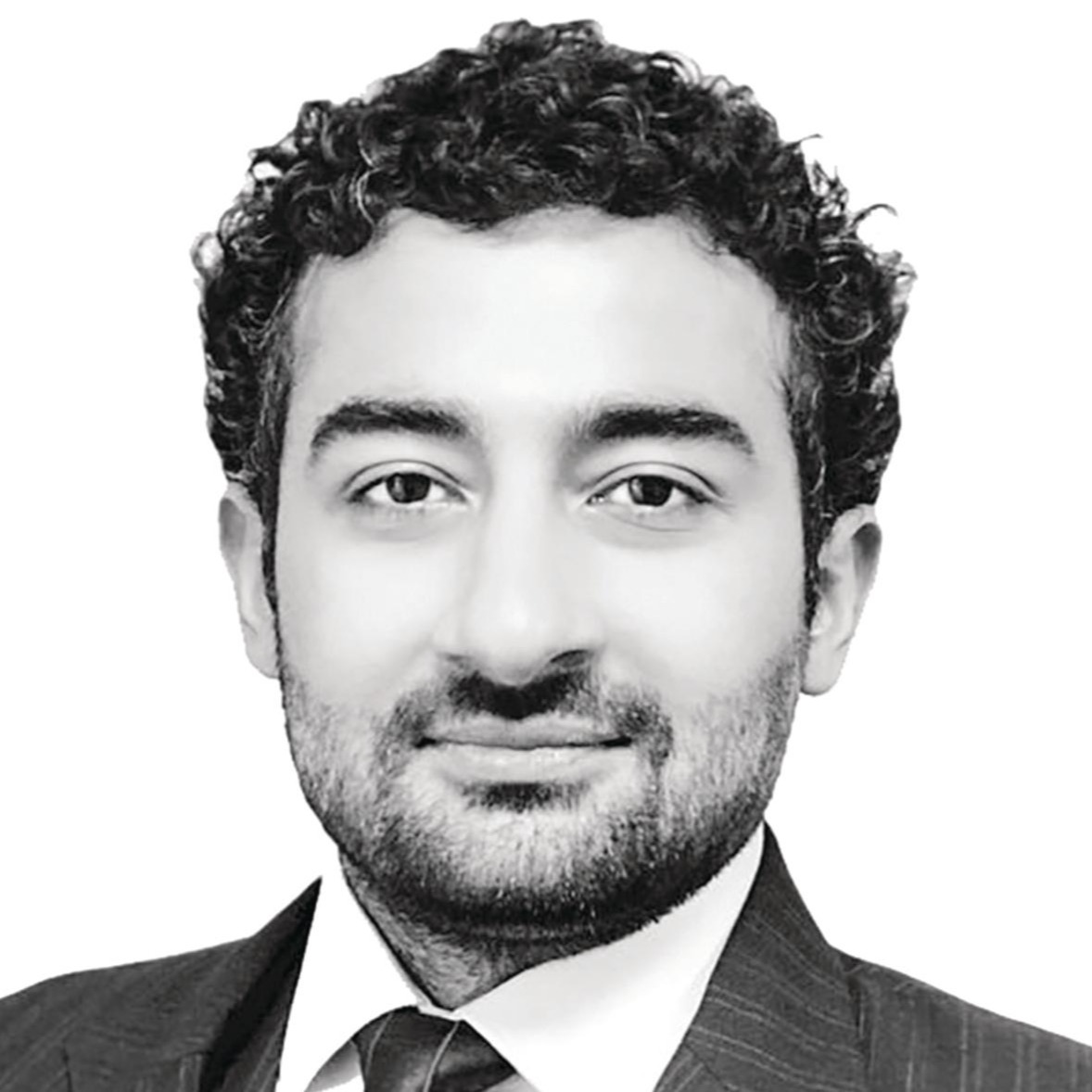
Ahmad Badar is a human rights and public law barrister at 10 King’s Bench Walk and posted at 10 Stone Buildings, Lincoln’s Inn Army Reserve Centre.
First day as a fully qualified barrister and first appearance in the Supreme Court are often the most anticipated and memorable moments in a barrister’s life. I was fortunate to have experienced both events on the same day.
During my second six, I was instructed in a matter listed for 7 May in the Supreme Court; a linked appeal involving two interested parties and two appellants with four Queen’s Counsel and nine other barristers. A five-member bench consisting of Lady Hale, Lord Carnwath, Lord Briggs, Lady Arden and Lord Sales sat to hear the appeal.
As the only pupil barrister I undertook a hefty part of the leg work, such as preparing the authorities bundle and other procedural matters. I was aware of the legal arguments having encountered the Court of Appeal authority on the matter at various occasions in the immigration tribunals. The preparation for the Supreme Court case was, however, a completely different enterprise, with material from the Court of Justice of the European Union, primary and secondary sources of European law as well as domestic judicial decisions and legislation. These had to be procured in a specific manner to be put before the Supreme Court. I contacted foreign lawyers and was greatly surprised by the immediate help received and their level of interest in the proceedings.
This was a huge learning curve for someone in my position. Generally, pupil barristers are increasingly exposed to higher courts over the course of pupillage. Yet I was to be thrust into the midst of the most supreme; a court of final appeal.
Whilst basking in the light of this realisation, and also my pending qualification, it struck me that I was due to qualify on 7 May – the same day as I was due to appear in the Supreme Court. Immediately I started preparations for registering completion of my pupillage and I am grateful to the staff at the Bar Standards Board for their prompt assistance and consideration.
The day finally arrived, and what a day it was. I was one of the first people to arrive at the Supreme Court. It would be an understatement to say that I was excited. The hearing began and the five justices, whom I had only read about until this day, entered the courtroom. It dawned upon me that this is finally happening. Our legal submissions were presented by the eminent silk Thomas Roe QC. The justices intervened with questions that pierced straight into the heart of the complex legal arguments being made by both sides.
I found myself frantically flicking through papers and bundles to ensure that Mr Roe had all the relevant responses and material before him. The day ended on schedule, with the determination being reserved and the realisation that all those months of preparation had essentially boiled down to one day! We now await the judgment.
I received comments on social media describing my appearance before the Supreme Court as a ‘baptism by fire’. My literal baptism by fire occurred a month after I appeared before Lady Hale et al, as a part of my officer cadet training over an intense weekend. I was carrying out a simulated section attack when a 5.56mm blank cartridge fired from a neighboring soldier’s rifle landed directly on my neck, causing severe burns. The paramedics just about cleared me to continue my training which I gratefully did, before attending my hearings the following week. I requested permission from judges to appear in a collarless tunic shirt, which often was the subject of an interesting post-hearing conversation.
I am proud to be a part of the legal profession and the British Army. Both professions have a long history, strong code, life-changing impact and they promote discipline, integrity and the ability to make decisions in a controlled environment like no other career.
Ahmad Badar is a human rights and public law barrister who represents private/corporate clients and government departments. He is due to commission as a Royal Signals Army Officer in November 2019.
A newly qualified adventure in the Supreme Court is followed by a more literal experience


The Chair of the Bar reports back
Susie Griffin on the admin that keeps barristers from billable work
Clement Cowley, Partner at The Penny Group, explains how global events can influence the performance of pensions and ISAs, and why taking a long-term approach to investing is often the most effective strategy
Mário Barroso, Head of R&D and Method Development at AlphaBiolabs, discusses what family law professionals need to know about hallucinogens, from the main hallucinogenic drugs encountered in family proceedings, to their effects and the testing options available
Harmony Christian Ministries is the latest charity to benefit from a £500 donation from AlphaBiolabs via the company’s Giving Back initiative
By David Green
At the start of her term, Chair of the Bar 2026 Kirsty Brimelow KC set out a series of priorities for the year ahead. One of those priorities was children in the justice system
As the world becomes more digital, Barbara Vinagre Mota examines international research into the mental health consequences of judges’ exposure to graphic and immersive evidence, highlighting the importance of support systems
In an era of patient-centred care and growing concern over misconduct in medical settings, why do women still lack the right to choose women consultants for examination and treatment? Charles Davey investigates
Reviewed by Daniel Barnett
James McNeill Whistler at Tate Britain until 27 September Rothko in Florence at Palazzo Strozzi until 23 August Reviewed by Stephen Cragg KC