*/
Indemnity – Negligence. Following a flood at a recently constructed block of flats, the building owner commenced proceedings against the main contractor which led to a series of claims against the chain of sub-contractors. The judge found that the mechanical sub-sub-sub-contractor (Robson) had been liable for two defects in workmanship which had been the principal cause of the flood with the result that the Robson was liable under the indemnity clause contained in the agreement by which it had been engaged by HSE. The Court of Appeal, Civil Division, upheld that decision and found that HSE's failure to inspect the work properly, even when the breaches should have been detected upon a reasonable inspection of the work, had not shut out its claim under the indemnity. It could not have been presumed that the parties had intended to confine the indemnity clause only to workmanship breaches which had been invisible upon reasonable inspection.
Indemnity – Negligence. Following a flood at a recently constructed block of flats, the building owner commenced proceedings against the main contractor which led to a series of claims against the chain of sub-contractors. The judge found that the mechanical sub-sub-sub-contractor (Robson) had been liable for two defects in workmanship which had been the principal cause of the flood with the result that the Robson was liable under the indemnity clause contained in the agreement by which it had been engaged by HSE. The Court of Appeal, Civil Division, upheld that decision and found that HSE's failure to inspect the work properly, even when the breaches should have been detected upon a reasonable inspection of the work, had not shut out its claim under the indemnity. It could not have been presumed that the parties had intended to confine the indemnity clause only to workmanship breaches which had been invisible upon reasonable inspection.
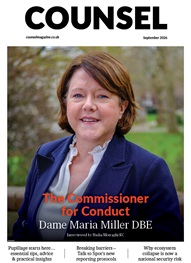

The Chair of the Bar reports back
Clement Cowley, Partner at The Penny Group, explains how global events can influence the performance of pensions and ISAs, and why taking a long-term approach to investing is often the most effective strategy
Mário Barroso, Head of R&D and Method Development at AlphaBiolabs, discusses what family law professionals need to know about hallucinogens, from the main hallucinogenic drugs encountered in family proceedings, to their effects and the testing options available
Harmony Christian Ministries is the latest charity to benefit from a £500 donation from AlphaBiolabs via the company’s Giving Back initiative
By David Green
Mário Barroso, Head of R&D and Method Development at AlphaBiolabs, examines the forensic science underpinning hair drug testing, its evidential scope and limitations, and why it remains the gold standard for evidencing patterns of drug use in family proceedings
At the start of her term, Chair of the Bar 2026 Kirsty Brimelow KC set out a series of priorities for the year ahead. One of those priorities was children in the justice system
As the world becomes more digital, Barbara Vinagre Mota examines international research into the mental health consequences of judges’ exposure to graphic and immersive evidence, highlighting the importance of support systems
In an era of patient-centred care and growing concern over misconduct in medical settings, why do women still lack the right to choose women consultants for examination and treatment? Charles Davey investigates
Reviewed by Daniel Barnett
James McNeill Whistler at Tate Britain until 27 September Rothko in Florence at Palazzo Strozzi until 23 August Reviewed by Stephen Cragg KC