*/
Securing stability for the publicly funded Bar and the need for all barristers to modernise in the fast-moving legal landscape have been set at the heart of the agenda for 2010 by the new Bar Council Chairman, Nick Green QC.
“The Bar has made great strides in recent years to improve diversity and equality in the profession. These very positive steps are jeopardised by recent government cuts, which do nothing to make the profession a more attractive place to come for a student saddled with a substantial debt as he or she leaves education and training,” he warned.
In his inaugural speech he condemned recent cuts in family and criminal legal aid, contrasting Ministerial and civil servants’ pay increases of one per cent with reductions of 18 per cent in legal aid pay. In the profession’s strongest warning yet over the legal aid crisis, Nick Green said: “When members of the Bar see civil servants and Ministers taking an 18 per cent pay cut, then we shall be silent. Until then we shall challenge unfair and irrational pay cuts with the utmost vigour.” As rates declined, the risk was that there would be insufficient advocates prepared to take on the cases.
Turning to moves to liberalise the rules governing the Bar’s provision of legal services, Nick Green said that these were changes that could not be ignored. “Over the next 12 months the Bar must begin to examine its methods of working. New choices on the menu will not appeal to all. But for some they may be critical.” In future, the Bar might consider opening its doors to all specialist advocates, including solicitor advocates, he foresaw.
Nick Green said he would be introducing measures to improve the internal operations of the Bar Council and its secretariat, in particular to improve communication with the profession. A panel of experienced juniors would be drafted in to assist with the Bar’s representations to government and more widely.
In his inaugural speech he condemned recent cuts in family and criminal legal aid, contrasting Ministerial and civil servants’ pay increases of one per cent with reductions of 18 per cent in legal aid pay. In the profession’s strongest warning yet over the legal aid crisis, Nick Green said: “When members of the Bar see civil servants and Ministers taking an 18 per cent pay cut, then we shall be silent. Until then we shall challenge unfair and irrational pay cuts with the utmost vigour.” As rates declined, the risk was that there would be insufficient advocates prepared to take on the cases.
Turning to moves to liberalise the rules governing the Bar’s provision of legal services, Nick Green said that these were changes that could not be ignored. “Over the next 12 months the Bar must begin to examine its methods of working. New choices on the menu will not appeal to all. But for some they may be critical.” In future, the Bar might consider opening its doors to all specialist advocates, including solicitor advocates, he foresaw.
Nick Green said he would be introducing measures to improve the internal operations of the Bar Council and its secretariat, in particular to improve communication with the profession. A panel of experienced juniors would be drafted in to assist with the Bar’s representations to government and more widely.
Securing stability for the publicly funded Bar and the need for all barristers to modernise in the fast-moving legal landscape have been set at the heart of the agenda for 2010 by the new Bar Council Chairman, Nick Green QC.
“The Bar has made great strides in recent years to improve diversity and equality in the profession. These very positive steps are jeopardised by recent government cuts, which do nothing to make the profession a more attractive place to come for a student saddled with a substantial debt as he or she leaves education and training,” he warned.
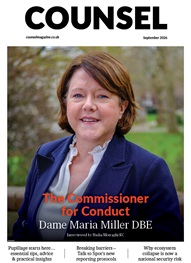

The Chair of the Bar reports back
Susie Griffin on the admin that keeps barristers from billable work
Clement Cowley, Partner at The Penny Group, explains how global events can influence the performance of pensions and ISAs, and why taking a long-term approach to investing is often the most effective strategy
Mário Barroso, Head of R&D and Method Development at AlphaBiolabs, discusses what family law professionals need to know about hallucinogens, from the main hallucinogenic drugs encountered in family proceedings, to their effects and the testing options available
Harmony Christian Ministries is the latest charity to benefit from a £500 donation from AlphaBiolabs via the company’s Giving Back initiative
By David Green
At the start of her term, Chair of the Bar 2026 Kirsty Brimelow KC set out a series of priorities for the year ahead. One of those priorities was children in the justice system
As the world becomes more digital, Barbara Vinagre Mota examines international research into the mental health consequences of judges’ exposure to graphic and immersive evidence, highlighting the importance of support systems
In an era of patient-centred care and growing concern over misconduct in medical settings, why do women still lack the right to choose women consultants for examination and treatment? Charles Davey investigates
Reviewed by Daniel Barnett
James McNeill Whistler at Tate Britain until 27 September Rothko in Florence at Palazzo Strozzi until 23 August Reviewed by Stephen Cragg KC