*/
I said last month that we and the Criminal Bar Association had urged everyone who would listen on the need to achieve parity between prosecution and defence fees. We were delighted when the Director of Public Prosecutions Max Hill KC trailed the news at the February Bar Council meeting that the Treasury had approved the necessary funding to be provided to the Crown Prosecution Service. But this is not the end of the debate on publicly funded criminal fees. It is only the end of the beginning.
The 15% increase for defence work is merely the emergency sticking plaster recommended by the Bellamy Review to redress the most acute consequences of years of underfunding. The next steps lie with the Criminal Legal Aid Review Board (CLARB). The board needs to put the funding of criminal work, for both solicitors and barristers, on a sustainable long-term footing, and it needs to ensure that the system is designed so that the funding scheme has no perverse incentives and aligns properly with the aims of Better Case Management.
So, who is chairing this critically important review board? We still don’t know! We are now on the second interim chair. The Ministry of Justice (MOJ) needs to get a grip on this and get CLARB going properly by appointing a permanent chair.
I greatly enjoyed my visit to Preston and Manchester to meet members of the Northern Circuit and new Circuit Leader Jaime Hamilton KC. I returned with two clear messages.
Firstly, the jury is out on the question of whether s 28 hearings will improve delays and achieve fairer outcomes, but with a unanimous view that it is unlikely to do so unless proper resources are made available in terms of getting decent facilities both to record and playback s 28 evidence. The impact of a complainant’s evidence, badly recorded and on small screens with poor audio, is bound to be compromised. I was told of a case where one complainant’s evidence had been given using s 28 and the jury sent a note asking why they had not heard evidence from her. It seemed they had not considered the recorded evidence to have the same weight or seriousness as evidence given in person.
Secondly, everyone is grappling with the challenges to chambers of remote working. How to get people into chambers? How to maintain all the positive things we get from interacting with colleagues informally and face-to-face? There are no easy answers.
It has been announced that Alan Kershaw will succeed Dr Helen Phillips as Chair of the LSB starting in April. I look forward to working with Mr Kershaw and want to put on record our thanks to Dr Phillips.
We remain in dialogue with the LSB over the proper extent of its role. There are disagreements. We do not believe that it is the role of the LSB to ‘reshape legal services’, not least because many important front-line legal services are provided by unregulated providers of advice, in relation to whom the LSB has no role at all.
The LSB’s principal role is the oversight of the Approved Regulators, and it has further identified roles given to it by statute. But making strategies for the entire legal services sector are not among its statutory functions. We do not seek to amend or review the 2007 Act, but we need an open debate about what role the LSB has been given by Parliament.
We seek an MOJ review of the performance and role of the LSB. The LSB does not oppose such a review, but, disappointingly, it does not actively support one either, saying it is a matter for the MOJ. We will continue to press the Ministry to carry out a review.
This year’s Authorisation to Practise round has now started. You have a choice when it comes to paying the Bar Representation Fee (BRF). Not all aspects of the Bar Council’s work representing the profession can be funded through the Practising Certificate Fee and much of the Bar Council’s vital work would be impossible without individual contributions to the BRF. The BRF is only £160 (and it is tax deductible for the self-employed).
You will also get a chance to support the work of Advocate, the Bar’s fabulous pro bono charity. Last year your contributions made up almost half of Advocate’s income and enabled the appointment of four caseworkers in the North, Midlands, and Wales in the organisation’s noble pursuit of becoming a truly national charity. Please support the Bar Council and Advocate this year.
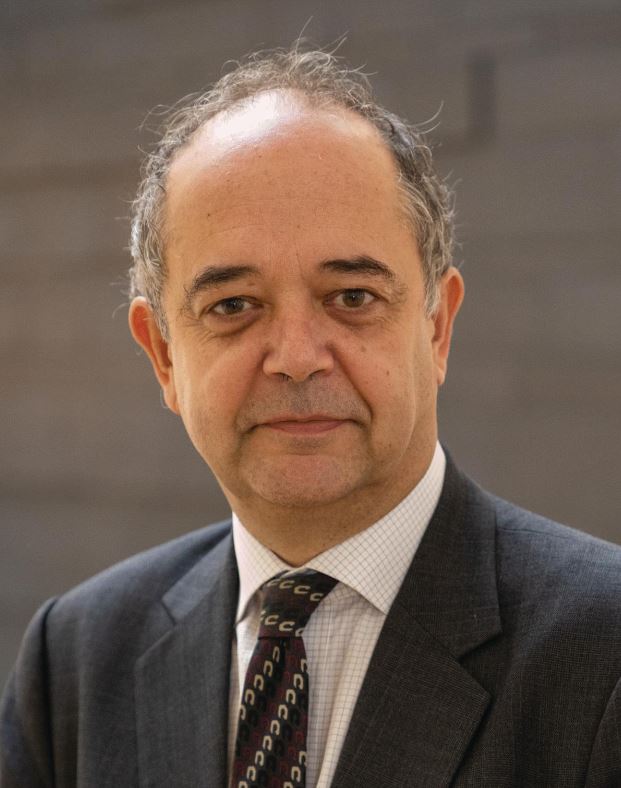
Nick Vineall KC returned to practice at 4 Pump Court after his term as Chair of the Bar 2023. Prior to that, he was Joint Head of Chambers at 4 Pump Court and sat as a Deputy High Court Judge. Nick practises in commercial, construction and financial services law. He was awarded ‘Social Mobility Bar Champion of the Year’ at the Legal 500 ESG UK Awards 2024.
I said last month that we and the Criminal Bar Association had urged everyone who would listen on the need to achieve parity between prosecution and defence fees. We were delighted when the Director of Public Prosecutions Max Hill KC trailed the news at the February Bar Council meeting that the Treasury had approved the necessary funding to be provided to the Crown Prosecution Service. But this is not the end of the debate on publicly funded criminal fees. It is only the end of the beginning.
The 15% increase for defence work is merely the emergency sticking plaster recommended by the Bellamy Review to redress the most acute consequences of years of underfunding. The next steps lie with the Criminal Legal Aid Review Board (CLARB). The board needs to put the funding of criminal work, for both solicitors and barristers, on a sustainable long-term footing, and it needs to ensure that the system is designed so that the funding scheme has no perverse incentives and aligns properly with the aims of Better Case Management.
So, who is chairing this critically important review board? We still don’t know! We are now on the second interim chair. The Ministry of Justice (MOJ) needs to get a grip on this and get CLARB going properly by appointing a permanent chair.
I greatly enjoyed my visit to Preston and Manchester to meet members of the Northern Circuit and new Circuit Leader Jaime Hamilton KC. I returned with two clear messages.
Firstly, the jury is out on the question of whether s 28 hearings will improve delays and achieve fairer outcomes, but with a unanimous view that it is unlikely to do so unless proper resources are made available in terms of getting decent facilities both to record and playback s 28 evidence. The impact of a complainant’s evidence, badly recorded and on small screens with poor audio, is bound to be compromised. I was told of a case where one complainant’s evidence had been given using s 28 and the jury sent a note asking why they had not heard evidence from her. It seemed they had not considered the recorded evidence to have the same weight or seriousness as evidence given in person.
Secondly, everyone is grappling with the challenges to chambers of remote working. How to get people into chambers? How to maintain all the positive things we get from interacting with colleagues informally and face-to-face? There are no easy answers.
It has been announced that Alan Kershaw will succeed Dr Helen Phillips as Chair of the LSB starting in April. I look forward to working with Mr Kershaw and want to put on record our thanks to Dr Phillips.
We remain in dialogue with the LSB over the proper extent of its role. There are disagreements. We do not believe that it is the role of the LSB to ‘reshape legal services’, not least because many important front-line legal services are provided by unregulated providers of advice, in relation to whom the LSB has no role at all.
The LSB’s principal role is the oversight of the Approved Regulators, and it has further identified roles given to it by statute. But making strategies for the entire legal services sector are not among its statutory functions. We do not seek to amend or review the 2007 Act, but we need an open debate about what role the LSB has been given by Parliament.
We seek an MOJ review of the performance and role of the LSB. The LSB does not oppose such a review, but, disappointingly, it does not actively support one either, saying it is a matter for the MOJ. We will continue to press the Ministry to carry out a review.
This year’s Authorisation to Practise round has now started. You have a choice when it comes to paying the Bar Representation Fee (BRF). Not all aspects of the Bar Council’s work representing the profession can be funded through the Practising Certificate Fee and much of the Bar Council’s vital work would be impossible without individual contributions to the BRF. The BRF is only £160 (and it is tax deductible for the self-employed).
You will also get a chance to support the work of Advocate, the Bar’s fabulous pro bono charity. Last year your contributions made up almost half of Advocate’s income and enabled the appointment of four caseworkers in the North, Midlands, and Wales in the organisation’s noble pursuit of becoming a truly national charity. Please support the Bar Council and Advocate this year.

The Chair of the Bar reports back
Susie Griffin on the admin that keeps barristers from billable work
Clement Cowley, Partner at The Penny Group, explains how global events can influence the performance of pensions and ISAs, and why taking a long-term approach to investing is often the most effective strategy
Mário Barroso, Head of R&D and Method Development at AlphaBiolabs, discusses what family law professionals need to know about hallucinogens, from the main hallucinogenic drugs encountered in family proceedings, to their effects and the testing options available
Harmony Christian Ministries is the latest charity to benefit from a £500 donation from AlphaBiolabs via the company’s Giving Back initiative
By David Green

The golden age of advocacy? David Langwallner pays homage to the filmic if contentious barrister Sir Edward Carson and some of his contemporaries
Leah Arthur, a pupil, and her second seat supervisor, John Goss, share their perspectives on building a productive pupil-supervisor relationship
Henry Fingerhut outlines what the Bar Standards Board AI guidance means for early career barristers
The Ministry of Justice will match-fund up to 100 criminal pupillages, with grants available to criminal chambers across England and Wales. Similar to the COIC scheme, the grants will match-fund pupillages additional to those otherwise offered without government funding
Not yet, says Jacob Turner. Regulation, unlike the technology itself, is a domain the legal profession can still control