*/
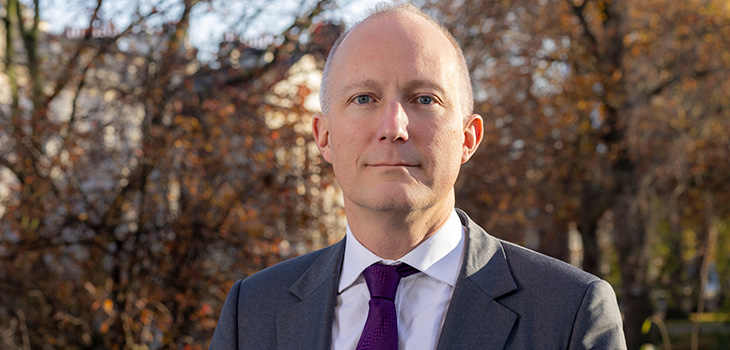
Sam Townend KC, the new Chair of the Bar, outlines some key themes and priorities for the coming year
Welcome back to work. I hope you had a restful break and recharged your batteries. As Chair of the Bar, and in the Bar Council’s 130th year, it is a privilege to be representing the profession in what is highly likely to be a general election year.
The focus for the Bar Council in 2024 will be looking outwards; to engage with political parties and put forward a compelling case for the further investment that is desperately needed for our justice system over the next five years.
The criminal justice system is at the point of structural failure; immediate and substantial action is required now. The outstanding case load is the largest it has ever been with 66,547 outstanding cases at the end of September 2023 (6% above the previous year). The time between charge and trial is ever extending and for every fortnight that goes by, the average time for each case to get to trial extends by a day. Ten per cent of criminal cases are now outstanding for two years or more. If it were not for the excellence and commitment of the judges, staff, solicitors and barristers who work in the system it would already be wholly discredited in the eyes of the public.
The family court system is not faring much better with private law cases (including child custody cases) taking on average 47 weeks to reach a final order, continuing an upward trend since the middle of 2016.
The current position is unsustainable and though it may be perceived that ‘there are no votes in it’, we must speak up about the parlous position of the justice system and seek change.
Sir Christopher (now Lord) Bellamy KC’s November 2021 minimum financial recommendations that formed part of the Independent Review of Criminal Legal Aid are inadequate to meet the needs of the moment. For the Bar the recommendations were substantially applied from September 2022, but the backlogs are now 10% higher than when he published his review and timeliness is 25% worse.
The Crown Court still has a workforce problem; barristers continue to leave criminal practice, there remains a lack of prosecution and defence barristers and this is contributing to the high ineffective trial rate.
In November 2023, the Policy Exchange think tank published a report entitled: The ‘Wicked and the Redeemable’ A Long-Term Plan to Fix a Criminal Justice System in Crisis. The report identifies a 40% reduction in the total criminal legal aid fee payments to barristers since 2011/12. The Bar Council endorses the report’s recommendation to immediately increase publicly funded barristers’ fee-income in the Crown Courts by 10% in addition to the existing 15% increase already applied and annual at-inflation increases for at least five years thereafter.
Delays and other problems are symptomatic of long-term underfunding. We will be making the case for more investment in the system as a whole and access to justice must remain paramount in our arguments.
The Bar Council’s November 2023 earnings report laid bare the continuing substantial earnings discrepancy between men and women barristers. As a starting point we will focus on the cohort where the problem should be easiest to address – the call band of 0-3 years with a 17% disparity in earnings between men and women.
Barristers have reported to the Bar Council their experiences of increasing levels of inappropriate behaviour at the Bar and consequently, the Bar Council is commissioning a review to consider and identify solutions. We want to give everyone an opportunity to set the terms of reference, so please submit your thoughts and help us identify good examples of existing initiatives. Some behaviours that my generation tolerated as part of professional life are no longer acceptable, even if they ever were, and we all have a role in changing the culture. It is not enough to leave it all to the Bar Standards Board following a complaint.
Challenges to the Rule of Law are sadly ever-present and from different sources. This is something that my predecessor, Nick Vineall KC, was vigilant about during his term of office. In stressing the importance of the principle of the Rule of Law in all we do, I hope to continue that work so ably led by Nick last year.
Despite the many difficulties, the Bar remains a brilliant profession to be a part of and a wonderful career. The work is immensely varied and interesting (even for a construction barrister like me).
I look forward to representing you and promoting the Bar this year.

Sam Townend KC is Chair of the Bar 2024. Sam is a silk at Keating Chambers and practises in domestic and international construction, energy and professional negligence work. He is a mediator and adjudicator, and a Bencher at Lincoln's Inn.
Welcome back to work. I hope you had a restful break and recharged your batteries. As Chair of the Bar, and in the Bar Council’s 130th year, it is a privilege to be representing the profession in what is highly likely to be a general election year.
The focus for the Bar Council in 2024 will be looking outwards; to engage with political parties and put forward a compelling case for the further investment that is desperately needed for our justice system over the next five years.
The criminal justice system is at the point of structural failure; immediate and substantial action is required now. The outstanding case load is the largest it has ever been with 66,547 outstanding cases at the end of September 2023 (6% above the previous year). The time between charge and trial is ever extending and for every fortnight that goes by, the average time for each case to get to trial extends by a day. Ten per cent of criminal cases are now outstanding for two years or more. If it were not for the excellence and commitment of the judges, staff, solicitors and barristers who work in the system it would already be wholly discredited in the eyes of the public.
The family court system is not faring much better with private law cases (including child custody cases) taking on average 47 weeks to reach a final order, continuing an upward trend since the middle of 2016.
The current position is unsustainable and though it may be perceived that ‘there are no votes in it’, we must speak up about the parlous position of the justice system and seek change.
Sir Christopher (now Lord) Bellamy KC’s November 2021 minimum financial recommendations that formed part of the Independent Review of Criminal Legal Aid are inadequate to meet the needs of the moment. For the Bar the recommendations were substantially applied from September 2022, but the backlogs are now 10% higher than when he published his review and timeliness is 25% worse.
The Crown Court still has a workforce problem; barristers continue to leave criminal practice, there remains a lack of prosecution and defence barristers and this is contributing to the high ineffective trial rate.
In November 2023, the Policy Exchange think tank published a report entitled: The ‘Wicked and the Redeemable’ A Long-Term Plan to Fix a Criminal Justice System in Crisis. The report identifies a 40% reduction in the total criminal legal aid fee payments to barristers since 2011/12. The Bar Council endorses the report’s recommendation to immediately increase publicly funded barristers’ fee-income in the Crown Courts by 10% in addition to the existing 15% increase already applied and annual at-inflation increases for at least five years thereafter.
Delays and other problems are symptomatic of long-term underfunding. We will be making the case for more investment in the system as a whole and access to justice must remain paramount in our arguments.
The Bar Council’s November 2023 earnings report laid bare the continuing substantial earnings discrepancy between men and women barristers. As a starting point we will focus on the cohort where the problem should be easiest to address – the call band of 0-3 years with a 17% disparity in earnings between men and women.
Barristers have reported to the Bar Council their experiences of increasing levels of inappropriate behaviour at the Bar and consequently, the Bar Council is commissioning a review to consider and identify solutions. We want to give everyone an opportunity to set the terms of reference, so please submit your thoughts and help us identify good examples of existing initiatives. Some behaviours that my generation tolerated as part of professional life are no longer acceptable, even if they ever were, and we all have a role in changing the culture. It is not enough to leave it all to the Bar Standards Board following a complaint.
Challenges to the Rule of Law are sadly ever-present and from different sources. This is something that my predecessor, Nick Vineall KC, was vigilant about during his term of office. In stressing the importance of the principle of the Rule of Law in all we do, I hope to continue that work so ably led by Nick last year.
Despite the many difficulties, the Bar remains a brilliant profession to be a part of and a wonderful career. The work is immensely varied and interesting (even for a construction barrister like me).
I look forward to representing you and promoting the Bar this year.
Sam Townend KC, the new Chair of the Bar, outlines some key themes and priorities for the coming year

The Chair of the Bar reports back
By Kem Kemal, CEO, Henry Dannell
By BSK Financial Planning
Mário Barroso, Head of R&D and Method Development at AlphaBiolabs
Susie Griffin on the admin that keeps barristers from billable work
Clement Cowley, Partner at The Penny Group, explains how global events can influence the performance of pensions and ISAs, and why taking a long-term approach to investing is often the most effective strategy

Kick off your career at the Bar Council’s Pupillage Fair this October – it’s one of the most valuable opportunities for aspiring barristers, says Amelia Clegg
The golden age of advocacy? David Langwallner pays homage to the filmic if contentious barrister Sir Edward Carson and some of his contemporaries
Henry Fingerhut outlines what the Bar Standards Board AI guidance means for early career barristers
The Ministry of Justice will match-fund up to 100 criminal pupillages, with grants available to criminal chambers across England and Wales. Similar to the COIC scheme, the grants will match-fund pupillages additional to those otherwise offered without government funding
Not yet, says Jacob Turner. Regulation, unlike the technology itself, is a domain the legal profession can still control