*/
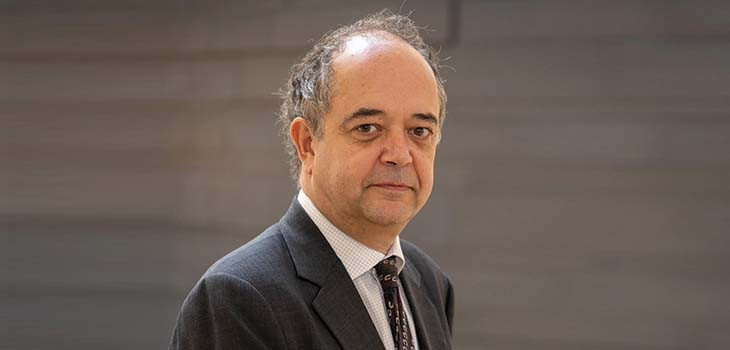
I hope you managed a good break over Christmas. If you get to the end of this column, I have a suggestion for a modest New Year’s resolution!
My predecessor Mark Fenhalls KC carried out fantastic work last year – both visibly and invisibly. Thank you, Mark, and good luck as you head back to practice.
It is a great privilege to become the Chair of the Bar. I look forward to working with the Inns, Circuits, Specialist Bar Associations (SBAs) and with all registered barristers to ensure that the Bar Council is a strong voice for our profession.
I want to articulate the core principles which I believe we all share: it is critical for the rule of law to maintain a strong and diverse profession of independent advocates, whose professional role is to advise and represent our clients with integrity and determination as fully as the law permits. We are not a branch of law enforcement. We do not choose our clients or their causes. We are not to be associated with our client’s causes simply by virtue of fulfilling our professional obligation to represent and advise without fear or favour.
On the international front I will promote the choice of English law and jurisdiction. English law is the best developed commercial dispute mechanism in the world. As a result of the widespread choice of English law, the UK legal services sector can attract to London a huge number of international arbitrations, and the legal sector is a massive contributor to our economy.
But this pre-eminent position is endangered if those looking from abroad see only crumbling courts, shortages of judges, long waits for hearing dates and huge backlogs of cases waiting to be heard. Starving the system of resources is grossly unfair to those who look to the courts for swift resolution of their disputes. It is also economically short-sighted.
We need an increase in prosecution fees. Max Hill KC, Director of Public Prosecutions, told Parliament last year: ‘We don’t ask that prosecutors are paid a penny more than those who defend, but we do say that they must be paid the same.’ I agree.
The important work of the Crown Court Improvement Group led by Lord Justice Edis brings together all the agencies who contribute to the efficiency of the Crown Court. The single biggest difference to Crown Court backlogs would be achieved if more of the guilty pleas which are currently made at late stages were made at the plea and trial preparation hearing. This is a key aim of the recently updated Better Case Management Guide. Please read it.
In 2023 key parliamentary priorities for the Bar Council are likely to include the Bill of Rights (if pursued) and retained EU law legislation. And there is one proposed legislative change that is close to home: to add to the Legal Services Act a new regulatory objective of ‘promoting the prevention and detection of economic crime’ (but, strangely you might think, not other types of crime). This proposal arises from muddled thinking. All legal professionals are bound by laws about money laundering and terrorist financing. The new objective will not change that, but it does risk muddying the waters, and giving the impression that lawyers are part of the state’s machinery for the prevention or detection of crime. We are not. We are not an extension of the police force.
As we look forward to a new year it is worth remembering that the students who secure pupillage and tenancy now, are the Bar of the future. I believe we all want a profession which is a pure meritocracy, in which gender, race, sexuality, accent or background simply make no difference to whether you succeed, and the only things that matter are ability, and capacity for hard work. Recruitment to our profession is remarkably diverse, but even there we can make improvements.
I would like to make it easier for chambers to access tools that permit contextualised assessment of candidates for pupillage. We also need to do more to ensure that patterns of retention and progression are fair, working to break down prejudices about what sort of barrister is good at a particular type of work. Above all, I want chambers never to be afraid to collect and interrogate data about earnings and distribution of work – to see whether there are disparities that need to be understood and then addressed. The Race at the Bar report has stimulated great work by some chambers and SBAs. Our recent progress report found that 9 out of 10 chambers that responded had adopted one or more of the recommendations. But not all chambers responded. Did yours? Do you know what your chambers is doing? Perhaps a modest New Year’s resolution would be to find out.
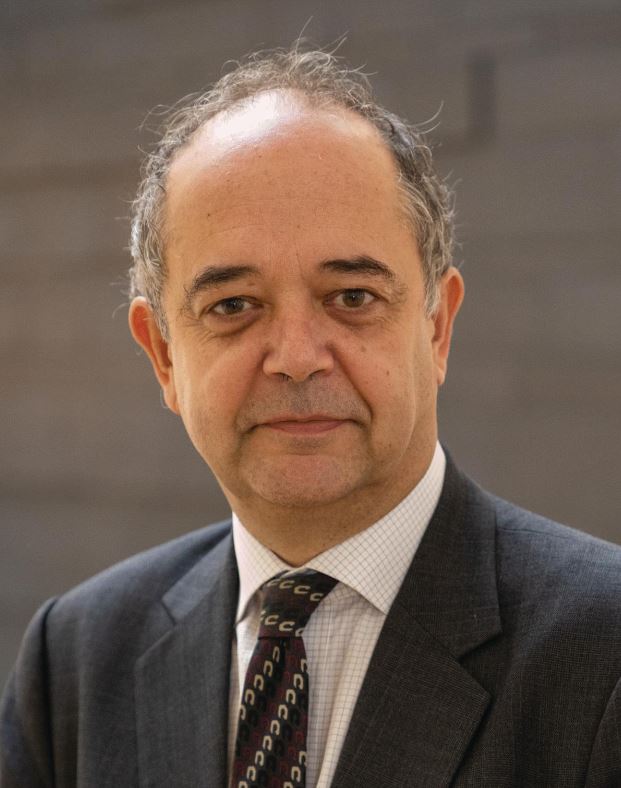
Nick Vineall KC returned to practice at 4 Pump Court after his term as Chair of the Bar 2023. Prior to that, he was Joint Head of Chambers at 4 Pump Court and sat as a Deputy High Court Judge. Nick practises in commercial, construction and financial services law. He was awarded ‘Social Mobility Bar Champion of the Year’ at the Legal 500 ESG UK Awards 2024.
I hope you managed a good break over Christmas. If you get to the end of this column, I have a suggestion for a modest New Year’s resolution!
My predecessor Mark Fenhalls KC carried out fantastic work last year – both visibly and invisibly. Thank you, Mark, and good luck as you head back to practice.
It is a great privilege to become the Chair of the Bar. I look forward to working with the Inns, Circuits, Specialist Bar Associations (SBAs) and with all registered barristers to ensure that the Bar Council is a strong voice for our profession.
I want to articulate the core principles which I believe we all share: it is critical for the rule of law to maintain a strong and diverse profession of independent advocates, whose professional role is to advise and represent our clients with integrity and determination as fully as the law permits. We are not a branch of law enforcement. We do not choose our clients or their causes. We are not to be associated with our client’s causes simply by virtue of fulfilling our professional obligation to represent and advise without fear or favour.
On the international front I will promote the choice of English law and jurisdiction. English law is the best developed commercial dispute mechanism in the world. As a result of the widespread choice of English law, the UK legal services sector can attract to London a huge number of international arbitrations, and the legal sector is a massive contributor to our economy.
But this pre-eminent position is endangered if those looking from abroad see only crumbling courts, shortages of judges, long waits for hearing dates and huge backlogs of cases waiting to be heard. Starving the system of resources is grossly unfair to those who look to the courts for swift resolution of their disputes. It is also economically short-sighted.
We need an increase in prosecution fees. Max Hill KC, Director of Public Prosecutions, told Parliament last year: ‘We don’t ask that prosecutors are paid a penny more than those who defend, but we do say that they must be paid the same.’ I agree.
The important work of the Crown Court Improvement Group led by Lord Justice Edis brings together all the agencies who contribute to the efficiency of the Crown Court. The single biggest difference to Crown Court backlogs would be achieved if more of the guilty pleas which are currently made at late stages were made at the plea and trial preparation hearing. This is a key aim of the recently updated Better Case Management Guide. Please read it.
In 2023 key parliamentary priorities for the Bar Council are likely to include the Bill of Rights (if pursued) and retained EU law legislation. And there is one proposed legislative change that is close to home: to add to the Legal Services Act a new regulatory objective of ‘promoting the prevention and detection of economic crime’ (but, strangely you might think, not other types of crime). This proposal arises from muddled thinking. All legal professionals are bound by laws about money laundering and terrorist financing. The new objective will not change that, but it does risk muddying the waters, and giving the impression that lawyers are part of the state’s machinery for the prevention or detection of crime. We are not. We are not an extension of the police force.
As we look forward to a new year it is worth remembering that the students who secure pupillage and tenancy now, are the Bar of the future. I believe we all want a profession which is a pure meritocracy, in which gender, race, sexuality, accent or background simply make no difference to whether you succeed, and the only things that matter are ability, and capacity for hard work. Recruitment to our profession is remarkably diverse, but even there we can make improvements.
I would like to make it easier for chambers to access tools that permit contextualised assessment of candidates for pupillage. We also need to do more to ensure that patterns of retention and progression are fair, working to break down prejudices about what sort of barrister is good at a particular type of work. Above all, I want chambers never to be afraid to collect and interrogate data about earnings and distribution of work – to see whether there are disparities that need to be understood and then addressed. The Race at the Bar report has stimulated great work by some chambers and SBAs. Our recent progress report found that 9 out of 10 chambers that responded had adopted one or more of the recommendations. But not all chambers responded. Did yours? Do you know what your chambers is doing? Perhaps a modest New Year’s resolution would be to find out.

The Chair of the Bar reports back
By Kem Kemal, CEO, Henry Dannell
By BSK Financial Planning
Mário Barroso, Head of R&D and Method Development at AlphaBiolabs
Susie Griffin on the admin that keeps barristers from billable work
Clement Cowley, Partner at The Penny Group, explains how global events can influence the performance of pensions and ISAs, and why taking a long-term approach to investing is often the most effective strategy

Kick off your career at the Bar Council’s Pupillage Fair this October – it’s one of the most valuable opportunities for aspiring barristers, says Amelia Clegg
Join us on Saturday 21 November 2026 at Leeds Beckett University and see for yourself why the North continues to be an exceptional place to build a career at the Bar
The golden age of advocacy? David Langwallner pays homage to the filmic if contentious barrister Sir Edward Carson and some of his contemporaries
Henry Fingerhut outlines what the Bar Standards Board AI guidance means for early career barristers
Not yet, says Jacob Turner. Regulation, unlike the technology itself, is a domain the legal profession can still control