*/

© Shutterstock
Kate West discusses how best to interpret a drug test report, and the common misconceptions about what can be learnt from a drug test
Drug tests remain a fundamental part of family court proceedings, especially in instances where the safety of a child is paramount.
Once hair, nail, urine, and/or oral fluid samples have been collected by a trained clinician under chain of custody conditions, testing can begin at the laboratory, and the Reporting Scientist will collate the results into a clear, concise document that can be easily interpreted in court.
But how easy is it to interpret a drug test report? And what can’t be learnt from the results?
When a person consumes drugs, the parent drug and a proportion of its metabolites are released into the bloodstream, before being excreted from the body in a variety of ways.
Although methods such as urine or oral fluid testing can only show us what a person has consumed in the past couple of days, the rate at which hair and nails grow means that both hair and nail drug testing can provide us with a ‘wide window’ of detection for drugs and their metabolites (up to 12 months).
AlphaBiolabs offers two types of drug test report. A Certificate of Analysis is included as standard for legally-instructed drug tests and details which substances were (and were not) detected within the sample. A Statement of Witness is a more in-depth report with full analytical results, interpretation, and conclusions, and is available for an additional fee.
While both documents are invaluable for court proceedings, a Statement of Witness provides the most comprehensive interpretation of the findings, including disclosures provided at the time of sample collection (e.g. any hair treatments or prescribed medications) and the professional and objective expert opinion of the Reporting Scientist.
A drug test report will tell you whether one or more drugs were detected in an individual’s sample during a set period, depending on which testing method has been used (up to 12 months for head hair, body hair and nails), with the amount of each substance considered either above or below cut-off levels.
However, head hair analysis is the only testing method that gives us the potential to determine a pattern of drug use over time, using segmented analysis to identify trends such as an increase or decrease in usage, depending on the length of hair selected (1cm of head hair = one month of growth).
AlphaBiolabs follows the Society of Hair Testing guidelines for cut-off levels (where applicable) for hair sample types.
A drug test can tell us which drugs are likely to have been consumed during the period prior to samples being collected, but no drug test can tell us the following:
While head hair analysis can provide us with a more detailed insight into an individual’s pattern of substance misuse, we can still only say whether the drug is present in the sample during the period for which we are testing – not the exact date or time of day when it was taken. There is also no way to tell how a substance was ingested using laboratory analysis.
Similarly, because of the way drugs are broken down by the body – with the parent drug and only a proportion of its metabolites excreted – it is impossible to determine exactly how much of a substance was taken prior to sample collection.
It is well documented that hair treatments including bleaching, perming, dyeing and excessive straightening have the potential to affect the results of a head hair drug test. However, it is not possible to specifically determine to what extent the treatment may have impacted the results.
For an even more thorough insight, AlphaBiolabs offers a free Drug Screen Plus service that will tell you whether any additional substances were present that you did not specifically ask us to test for at the time of instruction.
AlphaBiolabs has been providing drug testing solutions for the legal sector for over 15 years, including sample collection and analysis at our UKAS-accredited and award-winning UK laboratory.
We also offer free sample collection for legally-instructed drug tests from our 11 nationwide walk-in centres.
For expert advice on which drug test is best for your client, call the AlphaBiolabs Customer Services team on 0330 600 1300 or email testing@alphabiolabs.com and a member of the Legal Team will be in touch.
For further information please visit: https://www.alphabiolabs.co.uk
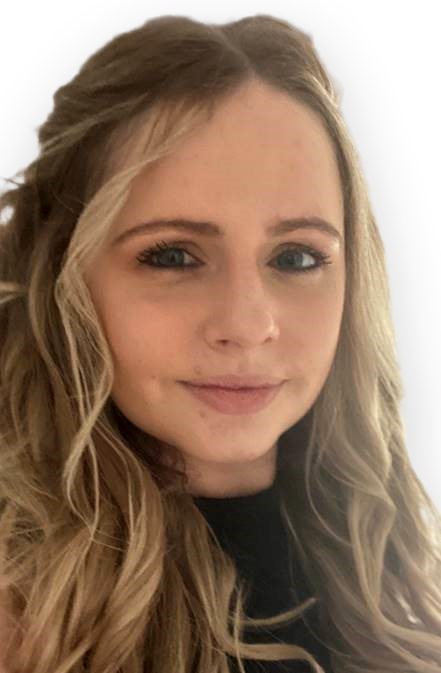
Kate West is Senior Toxicology Reporting Scientist at AlphaBiolabs. Kate joined AlphaBiolabs in 2018, bringing a wealth of experience from a background in forensic science. Her main responsibilities include writing Statement of Witness and Certificate of Analysis reports for legally-instructed drug and alcohol tests, and mentoring and training other members of the Toxicology Reporting team. Kate holds an MSc in Forensic Toxicology by Research and a BSc with Honours in Biomedical Science and is frequently called upon to give evidence in court, reporting on complex child cases. Website: https://www.alphabiolabs.co.uk
Drug tests remain a fundamental part of family court proceedings, especially in instances where the safety of a child is paramount.
Once hair, nail, urine, and/or oral fluid samples have been collected by a trained clinician under chain of custody conditions, testing can begin at the laboratory, and the Reporting Scientist will collate the results into a clear, concise document that can be easily interpreted in court.
But how easy is it to interpret a drug test report? And what can’t be learnt from the results?
When a person consumes drugs, the parent drug and a proportion of its metabolites are released into the bloodstream, before being excreted from the body in a variety of ways.
Although methods such as urine or oral fluid testing can only show us what a person has consumed in the past couple of days, the rate at which hair and nails grow means that both hair and nail drug testing can provide us with a ‘wide window’ of detection for drugs and their metabolites (up to 12 months).
AlphaBiolabs offers two types of drug test report. A Certificate of Analysis is included as standard for legally-instructed drug tests and details which substances were (and were not) detected within the sample. A Statement of Witness is a more in-depth report with full analytical results, interpretation, and conclusions, and is available for an additional fee.
While both documents are invaluable for court proceedings, a Statement of Witness provides the most comprehensive interpretation of the findings, including disclosures provided at the time of sample collection (e.g. any hair treatments or prescribed medications) and the professional and objective expert opinion of the Reporting Scientist.
A drug test report will tell you whether one or more drugs were detected in an individual’s sample during a set period, depending on which testing method has been used (up to 12 months for head hair, body hair and nails), with the amount of each substance considered either above or below cut-off levels.
However, head hair analysis is the only testing method that gives us the potential to determine a pattern of drug use over time, using segmented analysis to identify trends such as an increase or decrease in usage, depending on the length of hair selected (1cm of head hair = one month of growth).
AlphaBiolabs follows the Society of Hair Testing guidelines for cut-off levels (where applicable) for hair sample types.
A drug test can tell us which drugs are likely to have been consumed during the period prior to samples being collected, but no drug test can tell us the following:
While head hair analysis can provide us with a more detailed insight into an individual’s pattern of substance misuse, we can still only say whether the drug is present in the sample during the period for which we are testing – not the exact date or time of day when it was taken. There is also no way to tell how a substance was ingested using laboratory analysis.
Similarly, because of the way drugs are broken down by the body – with the parent drug and only a proportion of its metabolites excreted – it is impossible to determine exactly how much of a substance was taken prior to sample collection.
It is well documented that hair treatments including bleaching, perming, dyeing and excessive straightening have the potential to affect the results of a head hair drug test. However, it is not possible to specifically determine to what extent the treatment may have impacted the results.
For an even more thorough insight, AlphaBiolabs offers a free Drug Screen Plus service that will tell you whether any additional substances were present that you did not specifically ask us to test for at the time of instruction.
AlphaBiolabs has been providing drug testing solutions for the legal sector for over 15 years, including sample collection and analysis at our UKAS-accredited and award-winning UK laboratory.
We also offer free sample collection for legally-instructed drug tests from our 11 nationwide walk-in centres.
For expert advice on which drug test is best for your client, call the AlphaBiolabs Customer Services team on 0330 600 1300 or email testing@alphabiolabs.com and a member of the Legal Team will be in touch.
For further information please visit: https://www.alphabiolabs.co.uk
Kate West discusses how best to interpret a drug test report, and the common misconceptions about what can be learnt from a drug test


Update from the Chair of the Bar
By David Green
Mário Barroso, Head of R&D and Method Development at AlphaBiolabs, examines the forensic science underpinning hair drug testing, its evidential scope and limitations, and why it remains the gold standard for evidencing patterns of drug use in family proceedings
Unlocking your aged debt to fund your tax in one easy step. By Philip N Bristow
Clement Cowley, Partner at The Penny Group, discusses the upcoming changes to pensions and Inheritance Tax and the potential impact on your financial future
Save the Children UK is the latest charity to benefit from a £500 donation from AlphaBiolabs via the company’s Giving Back initiative
James McNeill Whistler at Tate Britain until 27 September Rothko in Florence at Palazzo Strozzi until 23 August Reviewed by Stephen Cragg KC
The Chief Legal Officer to the Metropolitan Police, barrister Brett Welch, tells Anthony Inglese CB about his mission and the work to turn the Met around
Barrister apprenticeships – shortly to provide the fourth pathway to the Bar – are an ideal opportunity to support local talent and ‘grow your own’, say Tim Coulson and Dr Jane Dennehy
Grok around and find out – or not? Mariya Peykova investigates the nudification scandal, what the law has to say about sexually explicit deepfakes, and whether stronger regulation is needed
Oliver Lewis spotlights an overlooked yet rapidly evolving area of law – coercive and controlling behaviour within care contexts


.tmb-carlisting.jpg?sfvrsn=9ca7ad96_1)