*/
A terrifying film relevant to lawyers then and now, writes David Langwallner
‘You may hang these boys; you may hang them by the neck until they are dead. But in doing it you will turn your face toward the past... I am pleading for the future; I am pleading for a time when hatred and cruelty will not control the hearts of men. When we can learn by reason and judgment and understanding and faith that all life is worth saving, and that mercy is the highest attribute of man.’ From Clarence Darrow’s 12-hour closing speech in Leopold & Loeb 1924
The greatest American trial lawyer of the century, in terms of notoriety and success, was Clarence Darrow. Unlike other trial lawyers, he stood for certain things. Darrow was part of the movement known as Progressivism, a belief (now somewhat quaint) in scientific progress and pragmatism; the notion that society should develop in progressive terms.
Darrow did not judge his clients or shy away from controversy – whoever they were and however viewed in the eyes of the public. Thus, the sobriquet ‘lawyer for the damned’.
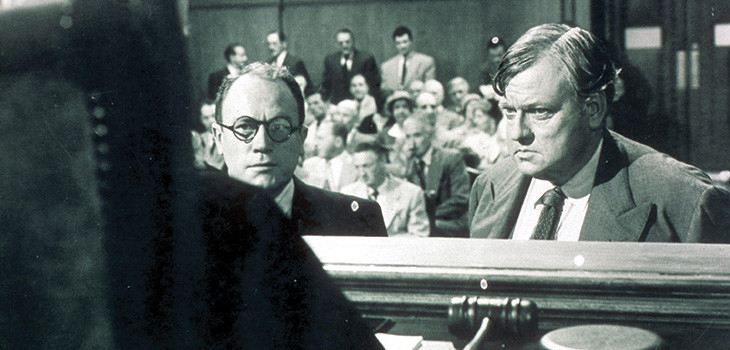
The damned in this case were Leopold and Loeb, subjects of the film Compulsion. Based on the 1956 novel of the same name by Meyer Levin and directed by the renowned Richard Fleischer, this is a fictionalised account of the murder trial. (There was a suit by Leopold against Levin for playing fast and loose with the truth but it was dismissed; any privacy rights forfeited by the so-called ‘crime of the century’.)
In spirit, the film stays close to the fundamental truth of what happened. Imbued with a sense of privileged Übermensch superiority, Dean Stockwell plays Judd Steiner (based on Nathan Leopold Jr) and Bradford Dillman plays Artie Strauss (based on Richard Loeb), rich college students who kill a younger boy, Paulie Kessler (based on Bobby Franks) in order to commit the ‘perfect crime’. But the key evidence of Steiner’s unusual eyeglasses undermines them, as does his unusual candour in condemning the boy to the police, as well as a clearly fabricated alibi.
Orson Welles (typecast) plays famed attorney Jonathan Wilk (based on Darrow) who is urged to adopt a not guilty but insane plea. He thought rightly no jury would buy it. Born to rule. Noblesse oblige. It would not have played well. But in our darker age? E G Marshall plays District Attorney Harold Horn who also, to some extent, puts Wilk on trial. In fact, for his late career Darrow was always on trial. It was a case of trying the lawyer and his ideas as well as his client.
Therein ensues the most important sentencing hearing in history, arguably since Socrates. Diminished responsibility leading ultimately to no death penalty. The greatest plea in mitigation. Saved from hanging by one of the most famous and impassioned closing speeches against capital punishment.
Darrow as a progressive was not a believer in free will but argued that societal considerations, environment and hereditary shaped a person’s destiny whatever their background. Thus, even Leopold and Loeb were, in his view, victims of circumstances – a remarkable extension of human empathy.
He succeeded brilliantly although the judge did not, in point of fact, accept the psychiatric evidence. Ultimately, sub silentio it influenced the life imprisonment sentence. The judge said he decided in accordance with precedent to discount the closing speech. I doubt it. It is the finest of the greatest of American trial lawyer speeches.
But there are even more significant observations relevant to our time. Compulsion is about the imposition of power by the over-entitled in our neo liberal universe and the assumption of superiority based on, what exactly? It is about, in today’s criminal lawyer terms, coercive and abusive relationships based on power and the inequality of bargaining. Not least money and influence.
It might be noted that Leopold and Loeb not only gave rise to Compulsion but also indirectly to Alfred Hitchcock’s Rope (1948), where the murder is of a more vulnerable adult – in effect, the phenomenon of the younger cuckooing the older adult. Another feature of coercive behaviour and sadly redolent of our age.
Welles recovered from the disappointment of not being selected to direct Compulsion (and the neglect of his masterpiece Touch of Evil) with a Cannes Film Festival Award for Best Actor. It was the statue he used to stub out cigars, he told me once in The Gate Theatre Bar in Dublin. His incandescent performance was just another ‘nixer’ to pay the bills – which is not to negate the message of this terrifying film.
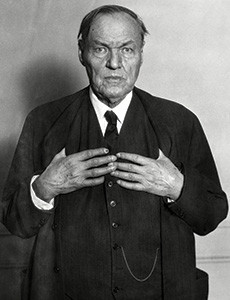

David Langwallner is a graduate of the Harvard Law School and the London School of Economics. He is a barrister at 1MCB and was 2015 Irish Lawyer of the Year for his work as director of the Irish Innocence Project.
‘You may hang these boys; you may hang them by the neck until they are dead. But in doing it you will turn your face toward the past... I am pleading for the future; I am pleading for a time when hatred and cruelty will not control the hearts of men. When we can learn by reason and judgment and understanding and faith that all life is worth saving, and that mercy is the highest attribute of man.’ From Clarence Darrow’s 12-hour closing speech in Leopold & Loeb 1924
The greatest American trial lawyer of the century, in terms of notoriety and success, was Clarence Darrow. Unlike other trial lawyers, he stood for certain things. Darrow was part of the movement known as Progressivism, a belief (now somewhat quaint) in scientific progress and pragmatism; the notion that society should develop in progressive terms.
Darrow did not judge his clients or shy away from controversy – whoever they were and however viewed in the eyes of the public. Thus, the sobriquet ‘lawyer for the damned’.
The damned in this case were Leopold and Loeb, subjects of the film Compulsion. Based on the 1956 novel of the same name by Meyer Levin and directed by the renowned Richard Fleischer, this is a fictionalised account of the murder trial. (There was a suit by Leopold against Levin for playing fast and loose with the truth but it was dismissed; any privacy rights forfeited by the so-called ‘crime of the century’.)
In spirit, the film stays close to the fundamental truth of what happened. Imbued with a sense of privileged Übermensch superiority, Dean Stockwell plays Judd Steiner (based on Nathan Leopold Jr) and Bradford Dillman plays Artie Strauss (based on Richard Loeb), rich college students who kill a younger boy, Paulie Kessler (based on Bobby Franks) in order to commit the ‘perfect crime’. But the key evidence of Steiner’s unusual eyeglasses undermines them, as does his unusual candour in condemning the boy to the police, as well as a clearly fabricated alibi.
Orson Welles (typecast) plays famed attorney Jonathan Wilk (based on Darrow) who is urged to adopt a not guilty but insane plea. He thought rightly no jury would buy it. Born to rule. Noblesse oblige. It would not have played well. But in our darker age? E G Marshall plays District Attorney Harold Horn who also, to some extent, puts Wilk on trial. In fact, for his late career Darrow was always on trial. It was a case of trying the lawyer and his ideas as well as his client.
Therein ensues the most important sentencing hearing in history, arguably since Socrates. Diminished responsibility leading ultimately to no death penalty. The greatest plea in mitigation. Saved from hanging by one of the most famous and impassioned closing speeches against capital punishment.
Darrow as a progressive was not a believer in free will but argued that societal considerations, environment and hereditary shaped a person’s destiny whatever their background. Thus, even Leopold and Loeb were, in his view, victims of circumstances – a remarkable extension of human empathy.
He succeeded brilliantly although the judge did not, in point of fact, accept the psychiatric evidence. Ultimately, sub silentio it influenced the life imprisonment sentence. The judge said he decided in accordance with precedent to discount the closing speech. I doubt it. It is the finest of the greatest of American trial lawyer speeches.
But there are even more significant observations relevant to our time. Compulsion is about the imposition of power by the over-entitled in our neo liberal universe and the assumption of superiority based on, what exactly? It is about, in today’s criminal lawyer terms, coercive and abusive relationships based on power and the inequality of bargaining. Not least money and influence.
It might be noted that Leopold and Loeb not only gave rise to Compulsion but also indirectly to Alfred Hitchcock’s Rope (1948), where the murder is of a more vulnerable adult – in effect, the phenomenon of the younger cuckooing the older adult. Another feature of coercive behaviour and sadly redolent of our age.
Welles recovered from the disappointment of not being selected to direct Compulsion (and the neglect of his masterpiece Touch of Evil) with a Cannes Film Festival Award for Best Actor. It was the statue he used to stub out cigars, he told me once in The Gate Theatre Bar in Dublin. His incandescent performance was just another ‘nixer’ to pay the bills – which is not to negate the message of this terrifying film.
A terrifying film relevant to lawyers then and now, writes David Langwallner

The Chair of the Bar reports back
Susie Griffin on the admin that keeps barristers from billable work
Clement Cowley, Partner at The Penny Group, explains how global events can influence the performance of pensions and ISAs, and why taking a long-term approach to investing is often the most effective strategy
Mário Barroso, Head of R&D and Method Development at AlphaBiolabs, discusses what family law professionals need to know about hallucinogens, from the main hallucinogenic drugs encountered in family proceedings, to their effects and the testing options available
Harmony Christian Ministries is the latest charity to benefit from a £500 donation from AlphaBiolabs via the company’s Giving Back initiative
By David Green

At the start of her term, Chair of the Bar 2026 Kirsty Brimelow KC set out a series of priorities for the year ahead. One of those priorities was children in the justice system
As the world becomes more digital, Barbara Vinagre Mota examines international research into the mental health consequences of judges’ exposure to graphic and immersive evidence, highlighting the importance of support systems
In an era of patient-centred care and growing concern over misconduct in medical settings, why do women still lack the right to choose women consultants for examination and treatment? Charles Davey investigates
Reviewed by Daniel Barnett
James McNeill Whistler at Tate Britain until 27 September Rothko in Florence at Palazzo Strozzi until 23 August Reviewed by Stephen Cragg KC