*/
As I write this column the number of daily COVID-19 fatalities has reached what may be a peak. Although the pressures on the NHS could not be more intense, there is hope that the rate of infection is falling. The vaccination programme is also proceeding swiftly with the ambition to vaccinate all adults by September of this year. A new President has been inaugurated on the steps of the Capitol Building in Washington. It seems appropriate to begin to take stock.
It is apparent that the effects on the Bar have not been equally felt. That is also true of society more widely. There is a real concern that we will see declining social mobility as a result of increasing economic and educational inequalities. While the impact of the pandemic on health has been concentrated in the over-60s, the longer term social damage is likely to disproportionately affect younger people, particularly those under 25. Many of the solutions are complex, interdependent and will require a coordinated response at State level.
But we cannot allow that to excuse the need to do what can be done in the legal profession to meet the challenges of stalling social mobility. Unfulfilled lives and wasted talent are not just unfair outcomes for individuals but also damage us a whole. There are additional risks for our own profession, where the most socially mobile areas of practice are also the most diverse and most heavily dependent on publicly funded work.
In the short term, tackling these problems will require us to take steps to ensure that the number of pupillages in the most affected areas does not fall and that all pupillage selection exercises have an increased focus on ensuring that a person’s background does not determine their chance of success.
The Pupillage Gateway opened for applications on 4 January and closes on 8 February. There are already over 400 pupillages on offer (excluding those offered outside of the mandatory timetable). Significant development work has been undertaken to improve the Gateway from both an accessibility and equality and diversity perspective over the past two years, with more to come.
There remains a concern that the overall number of pupillages in criminal sets will fall. I am pleased to say that one of the initiatives announced in my inaugural address has borne fruit; commercial sets are now funding pupillages at the criminal Bar which would otherwise not have been available. Such emergency and partial responses are, of course, no substitute for a solution to the root causes of the problem. We are pressing the government to expedite the Criminal Legal Aid Review and to put publicly funded criminal work on a sustainable footing.
However, I cannot help but feel that we also have an opportunity to reconsider the way in which recruitment and admission to the Bar is organised and funded. The number of those completing the Bar Professional Training Course remains disproportionate to the number of pupillages on offer, even allowing for healthy competition and the need to provide open access to training. It is evident that good candidates do fall through the net and that the present system favours those who have the resources to fund the Bar Course and, if necessary, apply in successive years. I hope that in collaboration with others we can, in 2021, renew attempts to address and solve these perennial problems which are central to ensuring that we find and recruit the best candidates from all backgrounds.
In addition, we must continue to dispel myths about the Bar which dissuade applicants and fuel mistaken beliefs that the Bar is only open to those from a narrow and particular social background. The Bar Council’s social mobility campaign, launched in 2018 under the Twitter hashtag #IAmTheBar, aimed to give an accurate representation of what the modern Bar looks like. It produced compelling stories of success at the Bar from a wide range of often underrepresented backgrounds; in some cases, in the face of considerable educational and social disadvantage. There is a consistent theme; once initial hurdles were cleared our profession does offer collegiate support and encouragement and barristers from all backgrounds can thrive. I am convinced that there is a genuine desire within the Bar to ‘level up’, to produce a modern profession which reflects the breath and diversity of our population and gives a fair opportunity to all who have the talent and determination to practise at the Bar.
The spin-off from that initial campaign, #BecomingTheBar, is now under way. I know that not everyone visits the Bar Council website or Twitter page regularly, or at all, but I would encourage you to make the trip on this occasion. You will be both informed and inspired.
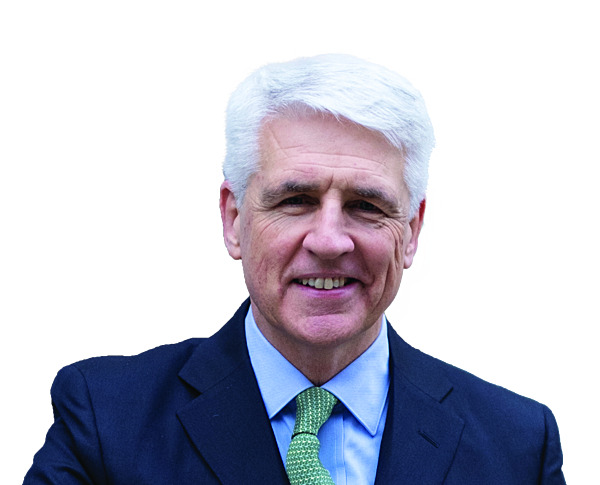
Derek Sweeting KC is Chair of the Bar for 2021. He is a silk at 7BR.
As I write this column the number of daily COVID-19 fatalities has reached what may be a peak. Although the pressures on the NHS could not be more intense, there is hope that the rate of infection is falling. The vaccination programme is also proceeding swiftly with the ambition to vaccinate all adults by September of this year. A new President has been inaugurated on the steps of the Capitol Building in Washington. It seems appropriate to begin to take stock.
It is apparent that the effects on the Bar have not been equally felt. That is also true of society more widely. There is a real concern that we will see declining social mobility as a result of increasing economic and educational inequalities. While the impact of the pandemic on health has been concentrated in the over-60s, the longer term social damage is likely to disproportionately affect younger people, particularly those under 25. Many of the solutions are complex, interdependent and will require a coordinated response at State level.
But we cannot allow that to excuse the need to do what can be done in the legal profession to meet the challenges of stalling social mobility. Unfulfilled lives and wasted talent are not just unfair outcomes for individuals but also damage us a whole. There are additional risks for our own profession, where the most socially mobile areas of practice are also the most diverse and most heavily dependent on publicly funded work.
In the short term, tackling these problems will require us to take steps to ensure that the number of pupillages in the most affected areas does not fall and that all pupillage selection exercises have an increased focus on ensuring that a person’s background does not determine their chance of success.
The Pupillage Gateway opened for applications on 4 January and closes on 8 February. There are already over 400 pupillages on offer (excluding those offered outside of the mandatory timetable). Significant development work has been undertaken to improve the Gateway from both an accessibility and equality and diversity perspective over the past two years, with more to come.
There remains a concern that the overall number of pupillages in criminal sets will fall. I am pleased to say that one of the initiatives announced in my inaugural address has borne fruit; commercial sets are now funding pupillages at the criminal Bar which would otherwise not have been available. Such emergency and partial responses are, of course, no substitute for a solution to the root causes of the problem. We are pressing the government to expedite the Criminal Legal Aid Review and to put publicly funded criminal work on a sustainable footing.
However, I cannot help but feel that we also have an opportunity to reconsider the way in which recruitment and admission to the Bar is organised and funded. The number of those completing the Bar Professional Training Course remains disproportionate to the number of pupillages on offer, even allowing for healthy competition and the need to provide open access to training. It is evident that good candidates do fall through the net and that the present system favours those who have the resources to fund the Bar Course and, if necessary, apply in successive years. I hope that in collaboration with others we can, in 2021, renew attempts to address and solve these perennial problems which are central to ensuring that we find and recruit the best candidates from all backgrounds.
In addition, we must continue to dispel myths about the Bar which dissuade applicants and fuel mistaken beliefs that the Bar is only open to those from a narrow and particular social background. The Bar Council’s social mobility campaign, launched in 2018 under the Twitter hashtag #IAmTheBar, aimed to give an accurate representation of what the modern Bar looks like. It produced compelling stories of success at the Bar from a wide range of often underrepresented backgrounds; in some cases, in the face of considerable educational and social disadvantage. There is a consistent theme; once initial hurdles were cleared our profession does offer collegiate support and encouragement and barristers from all backgrounds can thrive. I am convinced that there is a genuine desire within the Bar to ‘level up’, to produce a modern profession which reflects the breath and diversity of our population and gives a fair opportunity to all who have the talent and determination to practise at the Bar.
The spin-off from that initial campaign, #BecomingTheBar, is now under way. I know that not everyone visits the Bar Council website or Twitter page regularly, or at all, but I would encourage you to make the trip on this occasion. You will be both informed and inspired.

The Chair of the Bar reports back
Susie Griffin on the admin that keeps barristers from billable work
Clement Cowley, Partner at The Penny Group, explains how global events can influence the performance of pensions and ISAs, and why taking a long-term approach to investing is often the most effective strategy
Mário Barroso, Head of R&D and Method Development at AlphaBiolabs, discusses what family law professionals need to know about hallucinogens, from the main hallucinogenic drugs encountered in family proceedings, to their effects and the testing options available
Harmony Christian Ministries is the latest charity to benefit from a £500 donation from AlphaBiolabs via the company’s Giving Back initiative
By David Green
At the start of her term, Chair of the Bar 2026 Kirsty Brimelow KC set out a series of priorities for the year ahead. One of those priorities was children in the justice system
As the world becomes more digital, Barbara Vinagre Mota examines international research into the mental health consequences of judges’ exposure to graphic and immersive evidence, highlighting the importance of support systems
In an era of patient-centred care and growing concern over misconduct in medical settings, why do women still lack the right to choose women consultants for examination and treatment? Charles Davey investigates
Reviewed by Daniel Barnett
James McNeill Whistler at Tate Britain until 27 September Rothko in Florence at Palazzo Strozzi until 23 August Reviewed by Stephen Cragg KC