*/

Classics and the law: coming full circle, Sir Rupert Jackson shares his cultural life and times
In this series individuals are asked to write about ‘cultural influences that have made them the person they are today’. That is no easy task. Barristers (and most judges are barristers at heart) don’t like talking about themselves. It is much easier to talk about things or other people. But anyway, here goes.
At Cambridge, before switching to law, I read classics for two years. That has been a major cultural influence on my life. It is a solid foundation for a career in the law. It is also an enduring source of pleasure. During the present lockdown, I am dipping into medieval Latin (Bede).
The notion that studying dead languages and the ancient world is good preparation for a legal career has recently come under attack. This is partly because it is seen as being élitist. It is not. The opposite is the case. A growing number of state schools, both primary and secondary, are teaching classics: Latin, Greek, ancient history and classical studies. Children from non-élite backgrounds can take advantage of this. Some proceed to A levels in classics and from there to good universities. Classics can be an engine of social mobility.
One remarkable feature of the ancient texts is the extent to which they talk about Britain. We even get a passing mention in Herodotus: ‘οὔτε νήσους οἶδα Κασσιτερίδας ἐούσας, ἐκ τῶν ὁ κασσίτερος ἡμῖν φοιτᾷ’ – ‘I do not know anything about the islands called Cassiterides, from which we get our tin’ (The Histories 3.115.1). There is a much fuller discussion of Britain in Dio Cassius, Tacitus, Ammianus Marcellinus and other classical authors.
These works have spurred me to make an in-depth study of Britain during the Roman period. That was a remarkable stage of our history. England and Wales emerged from being a mass of small fluid communities into something resembling a nation state. Over four centuries there was much intermarriage between the occupying army and the local population, best described as Romano-Britons. Admittedly we were a slave-based society and part of a massive Empire, first as a province, later as a ‘diocese’. This was hardly consonant with twenty-first century mores, but people saw things differently then.
The mindset of the ancient world was totally different to our own. To take just one example, blood sports in which participants killed each other was a popular form of light entertainment. You can see one amphitheatre where all this happened in the basement below London Guildhall. Even trainee gladiators killed one another, seemingly as a way of weeding out weaker students. A mosaic depicting a practical exercise, in which one trainee slaughters another, adorns the dining room floor of Bignor villa. Wealthy Romano-Britons could enjoy this jolly scene while having dinner.
In recent years I have spent much of my leisure time visiting Roman sites around the country, with long-suffering friends and family members. I have also spent a great deal of time reading archaeological reports, deciphering inscriptions and talking to the real experts, especially Professor Martin Millett at Cambridge. This was an eye-opening experience. At each stage, I have been compiling my own analysis. I have also been trying to condense the material into a clear narrative.
Carrying out a historical project brings immediate rewards. You are not just ‘reading history books’ or trailing round villas, looking at yet another hypocaust. You are visiting the sites with a purpose. And you are fitting what you see into an overall scheme: a sort of case plan. Just as studying classics provides a solid foundation for a career in the law – so 50 years practising law is ideal preparation for examining archaeological and literary evidence, then writing about ancient history.
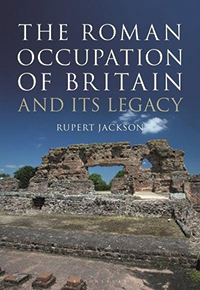
The product of my labours to date is a new book published by Bloomsbury, The Roman Occupation of Britain and its Legacy.
This book tells the ‘story’ of Roman Britain from the late Iron Age through to AD 409. It can be hard work for anyone reading through many pages of historical narrative, even if the text is enlivened with a few Latin quotations. I have therefore introduced some humour when opportunities arose. I have also done my best to make the book readable and enjoyable.
All post-tax royalties from this book will go to Classics for All. That is a charity which promotes and funds the teaching of classics in state schools, with an emphasis on schools in areas of social deprivation. Over the last 10 years it has provided £1.35m funding for this purpose and has reached 970 state schools.
In this series individuals are asked to write about ‘cultural influences that have made them the person they are today’. That is no easy task. Barristers (and most judges are barristers at heart) don’t like talking about themselves. It is much easier to talk about things or other people. But anyway, here goes.
At Cambridge, before switching to law, I read classics for two years. That has been a major cultural influence on my life. It is a solid foundation for a career in the law. It is also an enduring source of pleasure. During the present lockdown, I am dipping into medieval Latin (Bede).
The notion that studying dead languages and the ancient world is good preparation for a legal career has recently come under attack. This is partly because it is seen as being élitist. It is not. The opposite is the case. A growing number of state schools, both primary and secondary, are teaching classics: Latin, Greek, ancient history and classical studies. Children from non-élite backgrounds can take advantage of this. Some proceed to A levels in classics and from there to good universities. Classics can be an engine of social mobility.
One remarkable feature of the ancient texts is the extent to which they talk about Britain. We even get a passing mention in Herodotus: ‘οὔτε νήσους οἶδα Κασσιτερίδας ἐούσας, ἐκ τῶν ὁ κασσίτερος ἡμῖν φοιτᾷ’ – ‘I do not know anything about the islands called Cassiterides, from which we get our tin’ (The Histories 3.115.1). There is a much fuller discussion of Britain in Dio Cassius, Tacitus, Ammianus Marcellinus and other classical authors.
These works have spurred me to make an in-depth study of Britain during the Roman period. That was a remarkable stage of our history. England and Wales emerged from being a mass of small fluid communities into something resembling a nation state. Over four centuries there was much intermarriage between the occupying army and the local population, best described as Romano-Britons. Admittedly we were a slave-based society and part of a massive Empire, first as a province, later as a ‘diocese’. This was hardly consonant with twenty-first century mores, but people saw things differently then.
The mindset of the ancient world was totally different to our own. To take just one example, blood sports in which participants killed each other was a popular form of light entertainment. You can see one amphitheatre where all this happened in the basement below London Guildhall. Even trainee gladiators killed one another, seemingly as a way of weeding out weaker students. A mosaic depicting a practical exercise, in which one trainee slaughters another, adorns the dining room floor of Bignor villa. Wealthy Romano-Britons could enjoy this jolly scene while having dinner.
In recent years I have spent much of my leisure time visiting Roman sites around the country, with long-suffering friends and family members. I have also spent a great deal of time reading archaeological reports, deciphering inscriptions and talking to the real experts, especially Professor Martin Millett at Cambridge. This was an eye-opening experience. At each stage, I have been compiling my own analysis. I have also been trying to condense the material into a clear narrative.
Carrying out a historical project brings immediate rewards. You are not just ‘reading history books’ or trailing round villas, looking at yet another hypocaust. You are visiting the sites with a purpose. And you are fitting what you see into an overall scheme: a sort of case plan. Just as studying classics provides a solid foundation for a career in the law – so 50 years practising law is ideal preparation for examining archaeological and literary evidence, then writing about ancient history.
The product of my labours to date is a new book published by Bloomsbury, The Roman Occupation of Britain and its Legacy.
This book tells the ‘story’ of Roman Britain from the late Iron Age through to AD 409. It can be hard work for anyone reading through many pages of historical narrative, even if the text is enlivened with a few Latin quotations. I have therefore introduced some humour when opportunities arose. I have also done my best to make the book readable and enjoyable.
All post-tax royalties from this book will go to Classics for All. That is a charity which promotes and funds the teaching of classics in state schools, with an emphasis on schools in areas of social deprivation. Over the last 10 years it has provided £1.35m funding for this purpose and has reached 970 state schools.
Classics and the law: coming full circle, Sir Rupert Jackson shares his cultural life and times


The Chair of the Bar reports back
Susie Griffin on the admin that keeps barristers from billable work
Clement Cowley, Partner at The Penny Group, explains how global events can influence the performance of pensions and ISAs, and why taking a long-term approach to investing is often the most effective strategy
Mário Barroso, Head of R&D and Method Development at AlphaBiolabs, discusses what family law professionals need to know about hallucinogens, from the main hallucinogenic drugs encountered in family proceedings, to their effects and the testing options available
Harmony Christian Ministries is the latest charity to benefit from a £500 donation from AlphaBiolabs via the company’s Giving Back initiative
By David Green
At the start of her term, Chair of the Bar 2026 Kirsty Brimelow KC set out a series of priorities for the year ahead. One of those priorities was children in the justice system
As the world becomes more digital, Barbara Vinagre Mota examines international research into the mental health consequences of judges’ exposure to graphic and immersive evidence, highlighting the importance of support systems
In an era of patient-centred care and growing concern over misconduct in medical settings, why do women still lack the right to choose women consultants for examination and treatment? Charles Davey investigates
Reviewed by Daniel Barnett
James McNeill Whistler at Tate Britain until 27 September Rothko in Florence at Palazzo Strozzi until 23 August Reviewed by Stephen Cragg KC